Is This the Best Time to Sell Gold? 2026 Market Guide
Is This the Best Time to Sell Gold: As of late July 2026, gold is trading at roughly $4,430 per troy ounce — well up from where 2025 began, but down from the all-time intraday high of $5,589 hit in January 2026 — which means the honest answer to “is this the best time to sell gold” is: it depends on your entry price, your timeline, and whether you believe the current consolidation is a pause or a peak. There’s no single correct answer that applies to every investor.
Below, we break down today’s market snapshot, the bullish and bearish cases from major banks, and the factors that should actually drive your decision.
Today’s Gold Market Snapshot
Gold’s run through 2025 and into early 2026 was historic. The metal surged more than 68% through 2025 — its strongest annual performance since the late 1970s — breaching $4,000 for the first time in October 2025 before smashing through $5,000 and touching an intraday all-time high of $5,589 per ounce on January 28, 2026.
Since that peak, gold has pulled back into a wide consolidation range, trading in the $4,100–$4,700 band through the first half of 2026 and sitting at approximately $4,430 per troy ounce as of late July 2026.
That rally was driven by a familiar mix of macro forces: persistent inflation concerns, aggressive central bank gold buying (over 1,000 tonnes in 2025 alone), a softer US Dollar, and continued geopolitical uncertainty.
The question now facing anyone holding physical gold, jewelry, or gold ETFs is whether this year’s pullback from record highs marks a buying opportunity, a plateau, or the start of a longer correction — and that’s exactly why the phrase “is this the best time to sell gold” is trending among investors right now.
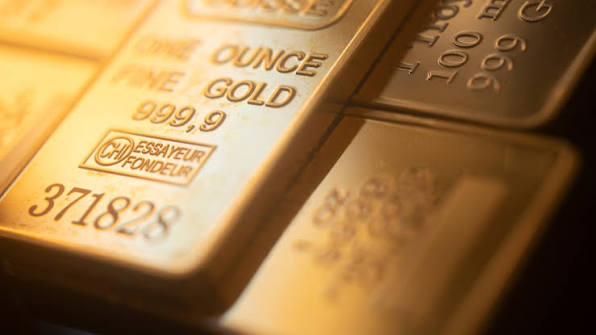
If You’re Selling: What You’ll Actually Get Paid
Selling physical gold today at $4,430/oz doesn’t mean you’ll receive that exact figure. Dealers typically pay somewhere between 70% and 90% of spot price for scrap gold or jewelry, after accounting for refining fees that commonly run 5–10%.
If you bought a 1-ounce bar in 2023 at roughly $2,000, selling today at spot would still represent a substantial gain — but the real payout depends heavily on the buyer.
Always compare quotes from multiple reputable dealers before selling, since the spread between offers can be significant, and a supplier working on mine-direct margins rather than heavy retail markup can often quote closer to true spot value on both the buy and sell side.
The Bullish Case: Why Some Analysts Say Hold
Several major banks remain constructive on gold well beyond current levels. JPMorgan’s commodity desk maintains a year-end 2026 target of roughly $6,000 per ounce, with potential to reach $6,300 by the end of 2027, built on what the bank calls a “structural demand thesis” — the view that central bank diversification and portfolio “debasement protection” are becoming permanent features of institutional allocation, not temporary hedges. Wells Fargo Investment Institute has set an even higher target of $6,100–$6,300 for 2026, and Deutsche Bank holds a $6,000 target as well.
At the aggressive end, Bank of America analyst Michael Widmer has flagged a scenario where prices could reach $8,000 by 2027, citing Federal Reserve leadership uncertainty, structural US fiscal deficits, and historically low investor allocations to gold that still have room to rebuild.
If central banks continue buying at their current pace, or if inflation reaccelerates and forces renewed rate-cut expectations, the bullish case argues the January 2026 peak was a waypoint, not a ceiling — and that selling now could mean leaving significant upside on the table for long-term holders.
The Bearish Case: Why Others Say Now May Be Prudent
Not every major bank shares that optimism. Goldman Sachs cut its year-end 2026 target from $5,400 to $4,900 in June 2026, citing fading gold ETF inflows — including the first monthly outflow from Asian gold ETFs since August 2025 — and the removal of expected 2026 rate cuts from its forecast, with easing now pushed to 2027.
HSBC lowered its 2026 forecast even further, to around $4,560 per ounce, while Morgan Stanley holds a more restrained view near $4,800 by Q4 2026.
A Reuters poll of 31 analysts puts the 2026 consensus median at roughly $4,916 — notably below where gold traded at its January peak.
The bearish argument centers on profit-taking after an extraordinary rally, the possibility of stronger-than-expected US economic data reducing safe-haven demand, and a genuine risk that markets have already priced in much of the good news.
If you need liquidity now — for debt repayment, portfolio rebalancing, or retirement withdrawals — locking in gains near current levels minimizes the opportunity cost of waiting for a less certain future move.
Key Factors to Weigh Before You Decide
- Your timeline — if you need funds within the next six months, current prices well above 2025 starting levels offer a strong exit point regardless of where forecasts point next. If you’re investing for the next several years, the structural bull case from JPMorgan, Wells Fargo, and Deutsche Bank carries more weight.
- Portfolio allocation — most advisors suggest keeping gold at roughly 5–10% of a diversified portfolio; if a strong rally has pushed you meaningfully above that, trimming back toward target allocation is a reasonable move independent of where you think prices go next.
- Alternatives — some investors are choosing to rotate part of their gold exposure into gold mining equities or silver for more leveraged exposure, while others prefer to stay in physical bullion specifically for its lack of counterparty risk.
- Tax treatment — in the US, gold and other collectibles can be taxed differently from standard long-term capital gains, so it’s worth speaking with a qualified tax advisor about your specific situation before finalizing a large sale.
- Global catalysts — Federal Reserve rate decisions, US economic data releases, and central bank buying trends out of China and India remain the clearest near-term signals to watch heading into the rest of 2026.
This article is intended to give you the factual backdrop for your own decision, not personalized financial advice — we’re not licensed financial advisors, and a decision this significant is worth discussing with one, particularly given how far apart the current bank forecasts sit from each other.
If You’re Buying Instead of Selling
Whichever way this market moves next, one thing holds either way: whether you’re trimming a position or adding to one, the price you actually pay or receive depends heavily on who you transact with.
At Africa Gold Suppliers Limited, we supply certified 24K, 22K, and 18K gold bars sourced mine-direct from Uganda and the DR Congo, which means our pricing tracks the live spot rate far more closely than a retail dealer working off several layers of markup.
If today’s consolidation looks like a buying opportunity to you rather than a selling one, that mine-direct pricing model matters just as much on the way in as it does on the way out.
Buying Certified Physical Gold at Fair, Transparent Pricing
If the bullish case resonates with you and you’d rather build a position than exit one, we offer a full range of certified gold products to fit different investment sizes.
Individual investors typically start with a 1 oz or smaller gold bar, while collectors interested in raw material can review our gold nuggets and raw gold selections.
Institutional buyers and those diversifying into larger positions can explore our full gold bullion range, every piece backed by independent assay certification.
Selling to a Licensed, Transparent Buyer
If you’re on the selling side of this decision, working with a buyer who prices transparently against live spot rather than lowballing scrap and jewelry offers matters just as much as timing the market correctly.
Our team can walk you through a fair, spot-benchmarked quote — reach out through our How to Buy Gold Online Safely guide for the same verification standards we apply to every transaction, whether you’re buying from us or selling to us.
Sourcing and Exporting Physical Gold Safely
Whether you’re building a new position or liquidating part of an existing one, documentation matters throughout. Every transaction we handle includes full assay certification and export paperwork, following the same process detailed on our Exporting Gold Bullion page.
We regularly serve buyers and sellers across the United States, Dubai, Canada, Switzerland, and Singapore, with the same certified, documented process applied to every transaction regardless of direction.
Comparing Sourcing Regions Before You Act
If you’re weighing whether to add to a physical gold position, our dedicated pages on buying gold in Uganda and buying gold in Congo break down mine-direct pricing and sourcing by country, and our Services page covers the full scope of what we handle from sourcing through to secure delivery.
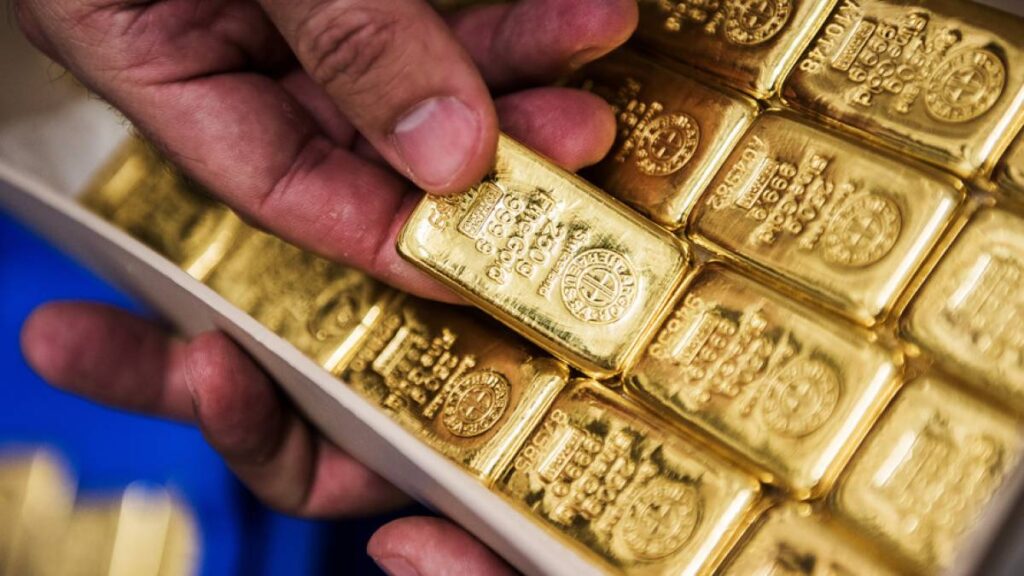
Get a Live, Transparent Quote Before You Act
Whether the right move for you is holding, selling, or buying more physical gold, the decision deserves current numbers, not a forecast from months ago.
Reach out to our team for a live, spot-benchmarked quote — on the buy side or the sell side — before you make your next move.
Contact us today through our Contact page, or Book a Call on WhatsApp, to speak with our team directly about today’s market and your options.
Related Pages
- Gold Bar
- Gold Nugget
- Raw Gold
- Gold Bullion Online
- Exporting Gold Bullion
- How to Buy Gold Online Safely
- Buy Gold in Uganda
- Buy Gold in Congo
- Buy Gold Bullion in the USA
- Buy Gold Online in Canada
- Buy Gold Online in Switzerland
- Buy Gold in Dubai
- Buy Gold in Singapore
- Services
- About Africa Gold Suppliers
- Contact Us