
Tanzania Gold Export Process: Complete Legal Guide
Tanzania Gold Export Process: Exporting gold legally from Tanzania requires sourcing from a licensed miner or dealer, independent assay testing at a licensed laboratory, an export permit from the Tanzania Mining Commission (TMC), payment of applicable royalties and taxes, and full customs clearance through Tanzania’s Customs and Excise Department — all governed by Tanzania’s Mining Act, 2010 and its Mineral Trading Regulations.
This guide walks through the complete Tanzania gold export process step by step, current pricing, the real royalty structure, and the compliance pitfalls that catch buyers who try to skip the paperwork.
Understanding Tanzania’s Gold Export Industry
Gold remains one of Tanzania’s top exports and a genuinely significant contributor to the national economy, with major operations including the Geita Gold Mine (operated by AngloGold Ashanti), the Bulyanhulu and North Mara mines (operated under the Barrick–Government Twiga Minerals joint venture), and Shanta Gold’s New Luika mine, alongside a large and active artisanal and small-scale mining sector.
Tanzanian gold has built a genuine reputation for purity and consistent quality, and the government has put a stringent regulatory framework in place — designed both to capture government revenue and to protect international buyers from fraud.
Step-by-Step: The Tanzania Gold Export Process
Step 1 — Source the gold. Buy from large-scale mines, licensed small-scale miners, or verified dealers, and confirm the gold comes with proper documentation — an assay report and proof of origin — before any money changes hands.
Step 2 — Assay and purity testing. The Tanzania Mining Commission requires every export-bound consignment to be tested at a licensed assay laboratory, which issues a certificate detailing karat value, weight, and overall quality.
Step 3 — Apply for an export permit. Submit your application to the TMC with the assay report, Mineral Dealer’s Licence, proof of royalty and tax payment, and any relevant sales agreements.
Step 4 — Customs clearance. Once the export permit is granted, clear the shipment through Tanzania’s Customs and Excise Department, presenting the export permit, assay report, and payment receipts for all applicable royalties and taxes. Customs officials verify weight and quality before approving shipment.
Step 5 — Packaging and shipment. Gold must be securely packaged to international shipping standards, ideally routed through bonded warehouses and handled by logistics providers experienced specifically in precious-metals transport.
Step 6 — Transport to destination. Most exports move by air freight to minimize risk and transit time. International buyers should confirm their own country’s import requirements — duties, taxes, and certifications — are in order before the shipment departs.
What Are the Legal Requirements for the Tanzania Gold Export Process?
Compliance runs through Tanzania’s Mining Act, 2010 and the country’s Mineral Trading Regulations, covering several distinct requirements.
A Mineral Dealer’s Licence (MDL) is mandatory for anyone trading or exporting gold, issued through the Ministry of Minerals and the Tanzania Mining Commission.
An Export Permit, issued by the TMC per individual consignment, requires an accompanying Certificate of Origin and assay report.
Royalties and taxes follow a structure that’s genuinely shifted under recent Finance Act changes: the standard royalty on gold’s gross value sits at 6%, reduced to 4% for gold sold to the Bank of Tanzania under its domestic purchase programme, and reduced further to 2% for gold sold to a licensed local refinery — a genuine incentive designed to keep more processing onshore. A separate 1% inspection and clearance fee applies (waived for Bank of Tanzania sales), alongside roughly 2% withholding tax and a smaller 0.1% HIV Response Levy on gross mineral value.
Anti-money laundering compliance requires transactions to be transparent and traceable, conducted through bank transfers or escrow rather than cash.
Conflict-free sourcing verification matters directly — gold exported from Tanzania should carry a verifiable Certificate of Origin and, particularly for gold moving through or near the Great Lakes region, documentation consistent with international due-diligence frameworks such as the OECD’s mineral supply chain guidance. It’s worth being precise here since the two get conflated often in gold-market content: this is a genuinely different framework from the Kimberley Process, which applies specifically to rough diamonds, not gold at all.
Foreign exchange compliance requires international payments to comply with Bank of Tanzania regulations governing cross-border transactions.
Penalties for non-compliance are genuinely serious, not nominal — unauthorized gold export can result in fines, confiscation of the shipment, or imprisonment under the Mining Act. This isn’t a risk worth testing to save a few days on paperwork.
What Challenges Come Up in Tanzania’s Gold Export Process?
Regulatory delays are a real friction point — permit and certification processes can move slowly, and working with an experienced, licensed partner materially speeds this up.
Fraud and scams remain a genuine concern for buyers; the antidote is working only with reputable, verifiable dealers and independently confirming every document before paying.
Compliance gaps — missing royalty payments, incomplete paperwork — are the single most common cause of fines or confiscation, more so than any issue with the gold itself.
Transportation risk is inherent to high-value cargo, mitigated specifically through secure packaging, bonded warehouses, and logistics partners built for precious metals rather than general freight.
Current Gold Prices in Tanzania
Gold prices in Tanzania track international spot pricing, converted to Tanzanian Shillings at the prevailing exchange rate of roughly TZS 2,600 to the US Dollar. At today’s global spot price of approximately $143.16 per gram ($4,453 per troy ounce), here’s the current reference by purity:
| Gold Product | Weight | Purity | Approx. Price (TZS) | Approx. Price (USD) |
|---|---|---|---|---|
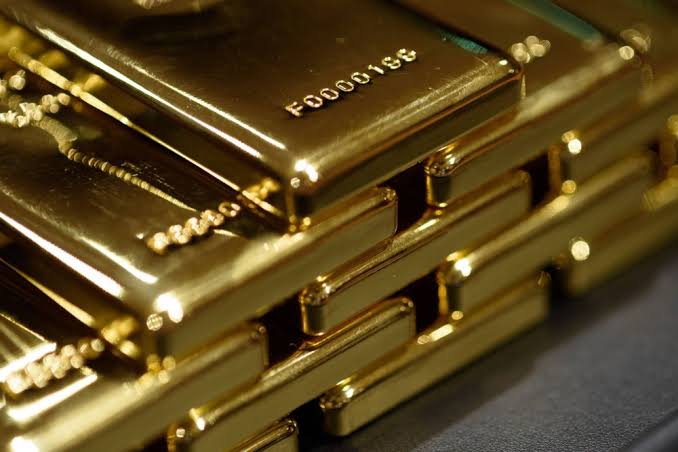
| 24K Gold Bar | 1 Gram | 99.9% | ~372,200 | ~$143.16 |
| 24K Gold Bar | 1 Ounce | 99.9% | ~11,577,800 | ~$4,453 |
| 24K Gold Bar | 1 Kilogram | 99.9% | ~372,216,000 | ~$143,160 |
| 22K Gold Bar | 1 Gram | 91.6% | ~341,070 | ~$131.18 |
| 18K Gold Bar | 1 Gram | 75% | ~279,160 | ~$107.37 |
| Gold Dust / Nuggets | 1 Gram | 90–98% | Varies | Requires independent assay |
These figures move throughout each trading day — always request a live quote benchmarked to that day’s rate before any transaction. Refining before export genuinely pays off: converting raw gold dust or nuggets into certified 24K bars typically improves realized value meaningfully, since refined, standardized bullion commands pricing closer to international spot than unrefined material ever will.
Where Is Gold Sourced and Refined in Tanzania?
Tanzania’s major gold-producing regions — Geita, Mwanza, and Shinyanga — host both large-scale operations and a substantial artisanal mining sector, together making Tanzania one of Africa’s significant gold producers.
On the refining side, it’s worth being precise and accurate here rather than repeating an inflated claim: Tanzania has built genuinely substantial refining capacity, with the country’s combined facilities reportedly capable of processing close to 450 tonnes annually — nearly half of Africa’s total refining capacity.
The Mwanza Precious Metals Refinery, opened in 2021, processes roughly 960 kg per day at 99.99% purity, and the Geita Gold Refinery has received Responsible Minerals Initiative certification as part of a genuine, ongoing push toward full LBMA accreditation, realistically still three to five years away based on the rigorous requirements LBMA applies (a minimum five years operational history, at least three years specifically refining gold, minimum 10 tonnes of annual refined output, and a net worth threshold in the tens of millions of dollars).
Rand Refinery in South Africa remains, as of today, the only refinery in Africa holding full LBMA Good Delivery accreditation — a genuinely important distinction for institutional buyers specifically, since Tanzania’s own central bank has explored using Rand Refinery to certify Bank of Tanzania gold reserves to international standards precisely because that specific capability doesn’t yet exist domestically.
This doesn’t diminish Tanzania’s real refining capacity or the 99.9%+ purity its facilities genuinely achieve — it’s simply a distinct, higher bar tied specifically to trading directly on the London wholesale market, and Tanzania is making real, tracked progress toward it.
Why Source Your Tanzanian Gold Through a Licensed Partner
Navigating the Tanzania gold export process alone — permits, assay coordination, royalty payments, customs clearance — is genuinely complex, and the margin for error is unforgiving.
We work within exactly this framework as a matter of course, sourcing certified 24K, 22K, and 18K gold in bar, nugget, and raw form across East Africa, with assay certification, export permits, and secure logistics handled as standard rather than left for the buyer to assemble.
FAQs – Tanzania Gold Export Process
What license do I need to export gold from Tanzania? A Mineral Dealer’s Licence, issued through the Ministry of Minerals and Tanzania Mining Commission, plus a separate Export Permit for each individual consignment.
How much tax applies to gold exported from Tanzania? A royalty of 6% on gross value is standard, dropping to 4% for gold sold to the Bank of Tanzania and 2% for gold sold to a licensed local refinery, alongside smaller inspection, withholding, and levy charges.
Does the Kimberley Process apply to Tanzanian gold? No — the Kimberley Process Certification Scheme applies specifically to rough diamonds. Gold sourcing due diligence instead follows frameworks like the OECD’s mineral supply chain guidance, alongside Tanzania’s own Certificate of Origin requirements.
Is Tanzania home to an LBMA-accredited gold refinery? Not yet — Tanzania’s Geita Gold Refinery and Mwanza Precious Metals Refinery both operate at genuinely high purity (99.9%+) and Geita holds Responsible Minerals Initiative certification while pursuing LBMA accreditation, but Rand Refinery in South Africa remains the only refinery in Africa currently holding full LBMA Good Delivery status.
What’s the current gold price in Tanzania? Approximately TZS 372,200 (~$143.16) per gram for 24K gold at today’s rate — always confirm the live rate before any transaction, since both spot price and the exchange rate move continuously.
Is it safe to buy gold directly from Tanzanian mining regions? Yes, provided you verify the seller’s Mineral Dealer’s Licence, insist on an independent assay before payment, and use traceable payment methods. Street-level or unlicensed deals carry real fraud and legal risk regardless of how good the price looks.
Export Tanzanian Gold With Confidence
The Tanzania gold export process is thorough by design — built to protect legitimate buyers as much as to generate government revenue — and it rewards buyers who follow it properly rather than looking for shortcuts.
Browse our guides to Uganda, where and how to buy gold in Uganda, Uganda’s gold export laws, the Congo, Kenya, South Africa, and Zimbabwe, or our gold producing countries in Africa and gold refineries in Africa guides for how Tanzania’s refining capacity compares continentally. Our top African countries to buy gold guide and 22K gold price page round out the pricing picture.
For international buyers, our delivery guides cover Dubai, Switzerland, Canada, Singapore, and the USA, alongside our broader gold bars from Africa and African gold bars for sale collections. Our guides to gold bar, gold nugget, and raw gold cover the different product forms available, and our gold vs. silver comparison is worth a look if you’re diversifying.
Before buying, our FAQs about buying gold in Africa, how to buy gold online safely, and exporting gold bullion guides cover full due diligence, and our buy gold from local miners page rounds out the sourcing side.
We handle sourcing, assay certification, export permits, and secure logistics for buyers across Tanzania and the wider East African region.
Contact us today to discuss current pricing and the weight and purity you need, or explore our full range of services and learn more about us.
Related Pages
- Buy Gold in Uganda
- Where and How to Buy Gold in Uganda
- Uganda Gold Export Laws
- What Is the Price of 22K Gold?
- Top African Countries to Buy Gold
- Buy Gold in Congo
- Buy Gold in Nairobi
- Buy Gold and Silver in South Africa
- Gold Bar Price in South Africa
- Buy Gold in Zimbabwe
- Buy Gold Bullion from Mwanza
- Buy Gold from Local Miners
- Buy Gold Online in Switzerland
- Buy Gold Online in Canada
- Buy Gold in Dubai
- Buy Gold Bars from Africa
- Buy Gold in Singapore
- African Gold Bars for Sale
- Buy Gold in Uganda from the USA
- Gold Bar
- Gold Nugget
- Raw Gold
- Gold Producing Countries in Africa
- Gold Refineries in Africa
- FAQs About Buying Gold in Africa
- How to Buy Gold Online Safely
- Exporting Gold Bullion
- About Us
- Contact Us