
Gold Deposits in Africa 2026 — The 8 Major Deposits, Top Producing Countries & Investment Guide
Gold Deposits in Africa: Explore Africa’s major gold deposits in 2026, the top gold-producing countries, key mining regions, and investment opportunities in one of the world’s richest gold continents.
Africa is the world’s most gold-rich continent. It holds an estimated 40% of the world’s untapped gold reserves, produces approximately 1,010 tonnes of gold per year — more than any other region globally — and sits at the centre of a precious metals investment story that is accelerating in 2026.
From the 2.9-billion-year-old sedimentary reefs of the Witwatersrand Basin in South Africa to the ancient alluvial washes of Ghana’s Birimian Supergroup and the deep greenstone belts of the DRC’s Ituri Province, the geological diversity of gold deposits in Africa is extraordinary.
This guide from Africa Gold Suppliers Limited covers the eight major gold-producing regions in Africa, the top producing countries and their 2025/2026 output figures, the geological types of deposit that make Africa’s gold wealth so exceptional, the largest active gold mines on the continent, and the investment landscape for buyers who want to buy gold directly from African sources.
Whether you are researching where to buy gold from Africa, studying the economics of Africa’s mining sector, or evaluating gold investment opportunities in Africa in 2026, this is the most complete overview available.
Africa’s Gold Production in 2026 — Updated Figures
The headline number is striking: Africa produced 1,010 tonnes of gold in 2024, making it the world’s leading gold-producing region ahead of Asia-Pacific and the Americas. In 2025, total African output is estimated to have exceeded 900–1,010 tonnes, with Ghana, the DRC, South Africa, Mali, and Sudan driving the majority of production.
This output occurs against a backdrop of extraordinary gold price performance. Gold peaked at an all-time high of $5,602 per troy ounce on January 28, 2026, before consolidating to approximately $4,079–$4,224 per troy ounce in June 2026 — still representing one of the strongest sustained gold price environments in history.
At current prices, Africa’s annual gold production is worth well in excess of $130 billion — a figure that underlines why the gold price in Africa is followed so closely by investors, central banks, and industrial buyers worldwide.
The five largest African gold producers in 2025 by estimated output are:
| Country | 2025 Estimated Output | Key Region |
| Ghana | 158–159 tonnes | Ashanti Belt, Birimian Supergroup |
| DRC | 100+ tonnes | Ituri, South Kivu, Kibali Belt |
| South Africa | ~100 tonnes | Witwatersrand Basin |
| Mali | ~70 tonnes | Kayes, Sikasso, Birimian Paleoplacers |
| Sudan | ~80 tonnes | Nubian Shield, Nile Tributaries |
| Tanzania | ~55 tonnes | Lake Victoria Goldfields |
| Burkina Faso | ~60 tonnes | Houndé Greenstone Belt |
| Guinea | ~45 tonnes | Siguiri Basin |
Together these nations produce the overwhelming majority of Africa’s gold, positioning the continent as the world’s largest gold-producing region by total regional output.
Africa Gold Suppliers Limited maintains verified supply relationships across Uganda, DRC, Tanzania, Ghana, and Mali — giving international buyers direct access to mine-origin gold from some of the continent’s most productive deposits. Our gold producing countries in Africa page provides a deeper country-by-country breakdown of these figures.
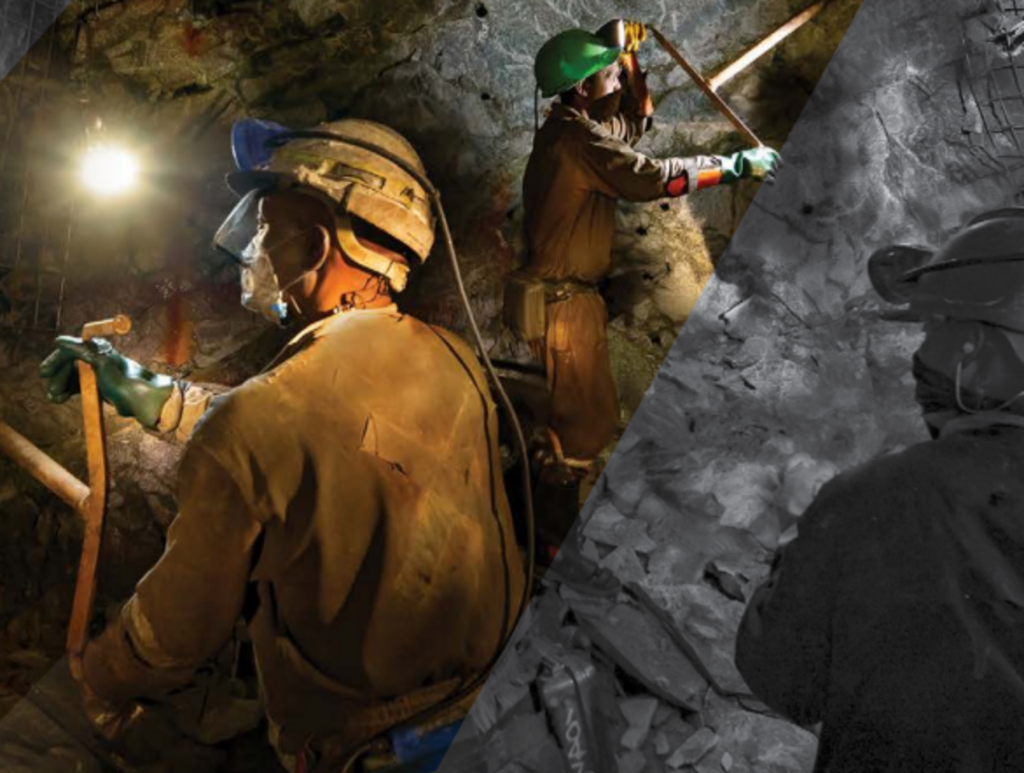
The Historical Roots of African Gold — From Ancient Empires to Modern Markets
The story of gold in Africa begins not in the colonial era but in the ancient kingdoms of the continent’s interior, where gold was already the primary medium of trade, tribute, and cultural identity thousands of years before European contact.
The Ghana Empire (approximately 300–1100 CE), known across the ancient world as the “Land of Gold,” controlled vast alluvial deposits along the upper Niger River. Gold dust and nuggets from these deposits travelled north via camel caravan across the Sahara, funding the trans-Saharan trade routes that connected sub-Saharan Africa to the Mediterranean and Islamic worlds for centuries.
The most famous demonstration of African gold wealth remains Mansa Musa’s hajj of 1324–1325. The Mali Emperor’s procession — reportedly carrying 60,000 porters, each bearing 2.7 kg of gold — distributed so much gold in Cairo and along his route that the metal’s value reportedly did not recover in North Africa for over a decade. The Bambuk and Bure mines that funded this wealth were among the most productive alluvial operations of the medieval world.
The Songhai Empire, which succeeded Mali in the 15th century, extended this golden legacy, with Timbuktu evolving into both a centre of Islamic scholarship and a commercial hub funded by gold revenues.
When Portuguese navigators first established trade forts along what they named the Gold Coast — modern Ghana — in the 1470s, they were entering a gold-trading ecosystem that had been operational for over a millennium.
Colonial exploitation dramatically altered the relationship between Africa and its gold. From the 16th to 20th centuries, European powers extracted African gold wealth with minimal benefit returned to producing communities.
The 1886 discovery of gold in the Witwatersrand Basin in South Africa sparked a gold rush that reshaped the southern part of the continent, leading directly to the Anglo-Boer Wars of 1899–1902 and eventually contributing to the political architecture of apartheid.
In the Belgian Congo, forced extraction of alluvial gold created wealth for European shareholders while leaving communities impoverished.
Post-independence, many African nations inherited the legacy of these structures — but the gold was still in the ground. Today, rising prices, foreign investment, regulatory modernisation, and the growth of artisanal mining formalisation programmes mean that Africa gold mining in 2026 is a genuinely different sector from what it was even twenty years ago. Our gold mining overview explores the evolution of Africa’s mining landscape in more detail.
The 8 Major Gold Deposits in Africa — Geology, Output, and Investment Significance
1. The Witwatersrand Basin, South Africa
The Witwatersrand Basin — extending beneath Johannesburg and across Gauteng Province — is the single most productive gold deposit in the history of human civilisation. Estimated to have yielded over 50,000 tonnes of gold since the first discovery in 1886, the Witwatersrand holds the world’s largest known gold reserves, with an estimated 5,000 tonnes still recoverable at current technology and economics.
Geologically, the Witwatersrand is a paleoplacer deposit — a 2.9-billion-year-old sedimentary formation in which ancient rivers concentrated gold-bearing pebbles in conglomerate reefs. These reefs are now buried at depths of 2–4 kilometres, which is why South African gold mining features the world’s deepest mines.
Mponeng Mine, operated by Harmony Gold, is currently the world’s deepest gold mine at over 4 kilometres below surface, producing approximately 200,000 ounces per year from 46 million-ounce reserves at an average grade of 8.5 g/t.
South Africa produced approximately 100 tonnes in 2025, down from historic peaks of over 600 tonnes in the early 1990s but still significant. Gold contributes roughly 2% to South African GDP and remains the foundation on which the Rand Refinery — Africa’s largest and most internationally recognised refining facility — operates. Our gold deposits in South Africa and Mponeng Gold Mine pages cover this deposit in greater depth.
2. The Birimian Supergroup — Ghana and West Africa’s Ashanti Gold Belt
The Birimian Supergroup is the geological foundation of West Africa’s gold wealth, a 2.1-billion-year-old Proterozoic volcanic and sedimentary sequence that extends across Ghana, Burkina Faso, Mali, Guinea, Côte d’Ivoire, and Senegal. Within Ghana, the Ashanti Gold Belt — the most productive zone of the Birimian — has been continuously mined since the late 19th century and remains the single most important gold-producing region in West Africa.
Ghana produced an estimated 158–159 tonnes in 2025, making it Africa’s largest gold producer and one of the world’s top ten. Gold accounts for roughly 40% of Ghana’s total export earnings, and the sector employs over one million people directly and indirectly.
The Obuasi Mine, operational since 1897 and operated by AngloGold Ashanti, produced over 497,000 ounces in 2024 following a $1 billion redevelopment — tapping reserves of 10.6 million ounces at 4–6 g/t in orogenic quartz veins.
Newmont’s Ahafo and Akyem mines add further significant production, while artisanal mining contributes 30–40% of total national output.
For buyers interested in sourcing gold from Ghana specifically, our how much gold does Ghana produce in a year and gold price in Ghana pages provide current pricing and production context.
3. The Kibali Belt and Ituri Province — Democratic Republic of Congo
The eastern DRC — specifically the Kibali Belt in Ituri Province and the South Kivu goldfields — holds some of the most mineralised terrain in the world. The DRC produced over 100 tonnes of gold in 2025 through a combination of large-scale industrial mining and extensive artisanal and small-scale mining (ASGM) activity that accounts for approximately 70% of total output.
Kibali Mine — operated by a Barrick Gold and AngloGold Ashanti joint venture — is one of the largest gold mines in Africa, producing approximately 750,000 ounces per year from a combination of hard rock underground and open-pit mining, supplemented by alluvial operations.
The mine generates its own hydroelectric power from the Kibali River, significantly reducing operational costs and carbon footprint.
Africa Gold Suppliers Limited maintains direct supply relationships with licensed DRC mining operations in South Kivu, providing gold doré bars at 95%+ purity with full AML/OECD compliance documentation.
The DRC’s gold wealth and supply chain complexity make it essential to work exclusively with licensed, documented suppliers — our buy gold in Congo, gold from Congo, and gold mining in Congo pages cover the regulatory and sourcing landscape in full.
4. The Loulo-Gounkoto Complex — Mali’s Birimian Paleoplacers
Mali is Africa’s third-largest gold producer, with estimated output of approximately 70 tonnes in 2025. Gold accounts for roughly 70% of Mali’s total export revenues, making the sector critical to national economic stability.
The country’s gold wealth is concentrated in the Kayes and Sikasso regions, where Birimian paleoplacer and orogenic lode deposits are mined by both large international companies and artisanal miners.
The Loulo-Gounkoto Complex, operated by Barrick Gold in the Kayes region near the Senegalese border, is West Africa’s single largest gold mining operation. It produced approximately 684,000 ounces in 2024 from a combination of open-pit and underground methods, with reserves supporting over 20 years of continued production.
Despite political instability following Mali’s military government transitions, the gold sector has demonstrated remarkable resilience — gold does not stop being gold because of governance challenges.
For buyers interested in Mali-origin gold supply, our gold in Africa page covers the broader regional picture.
5. The Lake Victoria Goldfields — Tanzania
Tanzania’s Lake Victoria Goldfields form the most productive gold-producing zone in East Africa, hosted within Archaean greenstone belts that extend around the southern and western shores of Lake Victoria.
Tanzania produced approximately 55 tonnes in 2025, with gold contributing around 4% to national GDP and attracting sustained foreign investment from Barrick Gold, AngloGold Ashanti, and other major mining companies.
Geita Gold Mine, operated by AngloGold Ashanti in the Geita region, is Tanzania’s flagship gold operation — producing over 500,000 ounces per year from open-pit extraction of 6 million-ounce reserves at 2–3 g/t. The mine employs approximately 5,000 people and funds significant community development programmes in the Lake Victoria region.
Our gold price in Tanzania, gold mines in Tanzania, and Tanzania gold market pages provide buyers with current pricing and market context for Tanzania-origin gold supply.
6. The Nubian Shield — Sudan and the Nile Tributaries
Sudan is one of Africa’s most significant but least formally documented gold producers, with estimates placing national output at approximately 80 tonnes in 2025 — much of it from artisanal alluvial operations concentrated along Nile tributaries and in the ancient Nubian Shield geological formation.
The Hassai Mine in Sudan’s Red Sea State leads formal production, but the majority of Sudanese gold enters the market through informal channels that make precise quantification difficult.
The Nubian Shield — a Proterozoic basement complex extending from Sudan into Egypt and Ethiopia — hosts orogenic gold deposits in greenstone sequences that are geologically analogous to the Birimian belts of West Africa.
As formalisation and regulatory frameworks improve, Sudan’s potential as a documented gold-producing nation is significant. Buyers researching the gold price in Sudan will find our dedicated regional page useful for current market data.
7. The Houndé Greenstone Belt — Burkina Faso
Burkina Faso has emerged as one of Africa’s fastest-growing gold producers over the past decade, with output rising to approximately 60 tonnes in 2025 from a combination of industrial mines and a substantial artisanal sector.
The Houndé Greenstone Belt in the southwest of the country is the primary geological host, containing orogenic lode deposits in Birimian volcanic sequences similar to those that make Ghana and Mali so productive.
The Houndé Mine and Essakane Mine are the two flagship industrial operations. Despite significant security challenges in the Sahel region that have disrupted operations and supply chains periodically, Burkina Faso’s gold sector has demonstrated strong production resilience, with the country ranking as one of West Africa’s most important emerging gold producers.
8. The Siguiri Basin — Guinea’s Alluvial and Lode Gold
Guinea produces approximately 45 tonnes of gold annually, concentrated in the Siguiri Basin in the northeast of the country — a geological zone that hosts both alluvial gold in ancient river systems and orogenic lode deposits in Birimian basement rocks. AngloGold Ashanti’s Siguiri Mine is Guinea’s dominant gold operation and one of the most significant in West Africa, producing several hundred thousand ounces annually from large open-pit operations.
Guinea’s gold sector is attracting increasing international investment despite governance challenges, with its geological endowment placing it firmly among West Africa’s top-tier gold territories. Our broader gold in Africa overview covers Guinea’s contribution to continental supply in context.
Types of Gold Deposits Found Across Africa
Africa’s gold deposits span the full geological spectrum, and understanding the differences between deposit types is essential for buyers who want to understand why certain origins command price premiums or produce gold with specific characteristics.
Orogenic lode deposits are the most economically significant deposit type across Africa, accounting for the majority of industrial mine production in Ghana, Mali, Tanzania, Burkina Faso, and Guinea.
These deposits form when hydrothermal fluids carry dissolved gold through shear zones and fault systems during mountain-building events, depositing gold in quartz veins when pressure and temperature conditions change.
Orogenic deposits typically yield 2–6 g/t in the hard rock context of large underground or open-pit mines. The Obuasi Mine in Ghana, Geita in Tanzania, and Loulo-Gounkoto in Mali are all orogenic systems.
Paleoplacer deposits — represented most dramatically by South Africa’s Witwatersrand — are ancient sedimentary formations in which gold was concentrated by river systems billions of years ago, then buried under younger rock sequences. These deposits yield lower grades (typically 5–10 g/t) but in enormous volumes across vast lateral extents, making them suitable for mechanised large-scale mining. No other paleoplacer system on Earth approaches the Witwatersrand in scale or economic significance.
Alluvial (placer) deposits form when erosion liberates gold from primary lode sources and concentrates it in riverbeds, floodplains, and ancient river terraces. These deposits are the foundation of artisanal mining across West and Central Africa — Ghana’s Pra River system, Sudan’s Nile tributaries, and DRC’s river networks all host active alluvial gold recovery.
Artisanal miners extract alluvial gold through panning, sluicing, and small-scale dredging, typically achieving 92–95% purity in the recovered material before refinement. Our raw gold page covers alluvial and artisanal-origin gold supply in detail.
Greenstone belt deposits in the Archaean cratons of Tanzania, Zimbabwe, and the DRC host a combination of orogenic lode and alluvial mineralisation in ancient volcanic sequences. The Lake Victoria Goldfields are the continent’s most productive greenstone belt system.
At the refined product end, all these deposit types ultimately produce the same end material: 24K gold bars at 99.99% purity processed through accredited refineries like South Africa’s Rand Refinery, Ghana’s greenfield plant, or Tanzania’s refining facilities. Our gold bar and gold bullion for sale pages cover what that refined product looks like from a buyer’s perspective.
The Largest Gold Mines in Africa — Production, Reserves, and Operators
The five largest active gold mines in Africa collectively produce over 2.5 million ounces per year and represent billions of dollars of capital investment by the world’s leading mining companies.
Mponeng Mine (South Africa, Harmony Gold) is the world’s deepest active gold mine at over 4 kilometres below surface. It extracted approximately 200,000 ounces in 2024 from 46 million-ounce reserves at 8.5 g/t — exceptional grade for a mature mining operation. Sequential grid mining methods allow extraction at depths that would be operationally impossible for most mining companies. Costs run at approximately $1,500 per ounce, with the mine expected to operate beyond 2040.
Kibali Mine (DRC, Barrick-AngloGold JV) is Africa’s single highest-output mine in recent years, producing approximately 750,000 ounces in 2024 from 4 million-ounce reserves in the Moto Greenstone Belt. The mine blends hard rock and alluvial production, powered by its own hydroelectric facility — a model of sustainable large-scale African mining.
Obuasi Mine (Ghana, AngloGold Ashanti) produced over 497,000 ounces in 2024 following its $1 billion redevelopment, tapping 10.6 million-ounce reserves at grades of 4–6 g/t. At 127 years of continuous operation, Obuasi is one of the longest-lived gold mines in the world and contributes approximately $200 million annually to Ghana’s economy.
Loulo-Gounkoto Complex (Mali, Barrick Gold) produced approximately 684,000 ounces in 2024 from combined open-pit and underground operations in the Kayes region. With reserves supporting over 20 years of future production, it is West Africa’s largest single gold mining complex.
Geita Gold Mine (Tanzania, AngloGold Ashanti) produced over 500,000 ounces in 2024 from 6 million-ounce reserves at 2–3 g/t in the Lake Victoria Goldfields. Geita employs 5,000 people and is one of East Africa’s most significant economic assets.
The Economic Importance of Gold Mining in Africa
Gold is arguably Africa’s most important mined commodity — not just by value, but by the breadth of economic activities it underpins across the continent.
At approximately $130+ billion in annual export value at 2026 prices, African gold production funds national foreign exchange reserves, government revenues through royalties and taxes, and local employment at a scale that no other mined commodity matches on the continent.
In Ghana, gold drives approximately 40% of total export earnings and contributes 8–10% to GDP. In Mali, gold represents 70% of total export revenues, making it the economic foundation of the entire nation.
Tanzania’s gold sector drives around 4% of GDP and attracts sustained foreign direct investment that builds infrastructure far beyond the mining zones themselves.
Employment across Africa’s formal and artisanal gold sectors is estimated at over 10 million people — 200,000 in formal large-scale mining and over 9 million in the artisanal and small-scale mining (ASGM) sector, which provides critical rural livelihoods particularly in Burkina Faso, Guinea, and the DRC.
In artisanal mining communities, gold income frequently funds children’s education, healthcare costs, and household food security at a level that no alternative rural income source currently replicates.
Foreign exchange reserves built on gold export revenues help stabilise currencies in producer nations and provide the policy space for central bank intervention during external shocks. Ghana’s foreign exchange reserves have repeatedly been supported by gold export surges during periods of currency weakness — demonstrating gold’s role as a macroeconomic stabiliser at the national level, not just the individual portfolio level.
Challenges Facing Africa’s Gold Mining Sector
Despite its extraordinary wealth, Africa’s gold sector operates under significant constraints that buyers, investors, and policymakers need to understand.
Illegal and unregulated artisanal mining — known as “galamsey” in Ghana and “zama zamas” in South Africa — involves millions of informal miners operating outside legal frameworks. While artisanal mining provides genuine livelihoods for tens of millions of people across Africa, unregulated operations produce gold with no traceable provenance, use mercury and other chemicals that contaminate water systems, and generate revenues that do not pass through formal royalty or tax channels.
The financial cost to African governments in lost royalties and the environmental cost in degraded river systems represent serious long-term liabilities.
Environmental degradation associated with both artisanal and large-scale mining includes deforestation, mercury pollution of water systems such as Ghana’s Pra River affecting over 2 million people downstream, and acid mine drainage in South Africa’s depleted reef zones that renders agricultural land sterile for decades.
Political instability and security risks in Mali, Burkina Faso, Sudan, and eastern DRC create significant operational disruptions for mining companies and supply chain risks for international buyers. Conflict-area gold carries the additional burden of compliance documentation requirements — specifically the OECD Due Diligence Guidance for Responsible Supply Chains — that add cost and complexity to sourcing from these jurisdictions.
These challenges reinforce why working with licensed, documented suppliers who maintain verifiable chain-of-custody records is not merely a regulatory box-ticking exercise but a genuine commercial and ethical necessity. Our gold smuggling in Africa article explains how illicit flows from conflict zones create downstream liability for buyers who do not perform rigorous due diligence.
Sustainable Gold Mining in Africa — Progress in 2026
The narrative around African gold mining in 2026 is not simply one of challenges — it is also one of genuine progress in sustainability, technology, and responsible sourcing frameworks.
Ghana’s 2025 Mining Act mandates 30% local content requirements in mining contracts, ensuring that a greater share of economic value from gold extraction stays within Ghana rather than flowing entirely to international shareholders. The Minamata Convention, signed by most African gold-producing nations, provides a regulatory framework for phasing out mercury use in artisanal mining.
Technology innovation is reducing environmental impact and cost simultaneously. Pan African Resources’ solar installations at South African operations cut carbon emissions while reducing energy costs. Kibali’s hydroelectric power generation eliminates diesel fuel dependence for one of Africa’s largest mines.
DRDGOLD’s tailings reprocessing operations in South Africa recover gold from legacy mine waste while remediating land that would otherwise remain a permanent liability.
Corporate Social Responsibility programmes are generating measurable community outcomes. Barrick Gold’s $50 million community investment fund in Mali funds healthcare facilities and infrastructure in communities near Loulo-Gounkoto. AngloGold Ashanti’s land restoration programme in Ghana has rehabilitated over 500 hectares of mining-affected land.
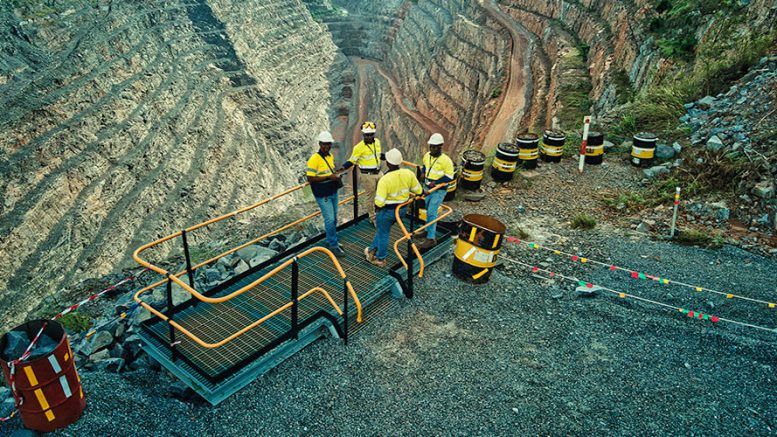
Gold Investment Opportunities in Africa — What Buyers Need to Know in 2026
Africa’s 50+ million-ounce remaining accessible gold reserves, combined with the current extraordinary price environment, make this continent the most compelling destination in the world for buyers seeking to buy gold directly from African sources.
The investment case is straightforward. With gold at approximately $4,079–$4,224 per troy ounce in June 2026 — consolidating after a January 2026 peak of $5,602 per ounce — buyers who understand the structure of African gold markets can acquire certified 22K and 24K gold bars, natural gold nuggets, and gold dore bars at mine-direct prices that are meaningfully below what retail dealers in London, New York, or Zurich charge for the same underlying metal.
Africa Gold Suppliers Limited sources 24K gold bars, gold nuggets, and gold dore bars directly from licensed mines across Uganda, DRC, Tanzania, Ghana, and Mali — at premiums of just 1–3% above live LBMA spot rates, with full assay documentation, Certificate of Origin, export licensing, and insured international delivery.
Regulations governing gold purchase and export from Africa vary by country but follow consistent principles: export permits from the national mineral authority are required; assay certificates must be provided by accredited independent laboratories; AML/KYC documentation is mandatory for all transactions; and investment-grade gold (99.5%+ purity) is typically VAT-exempt at the point of sale in South Africa and several other producing nations. Our exporting gold from Uganda, gold export tax in Tanzania, who can export gold from Zimbabwe, and gold export regulations in Kenya pages cover the jurisdiction-specific requirements in detail.
For buyers who want broader context on the investment case before committing capital, our advantages and disadvantages of investing in gold article provides a balanced assessment, and our African gold jewelry market page explores the cultural and commercial demand drivers that underpin gold consumption across the continent.
Buy Certified Gold from Africa’s Richest Deposits
Africa Gold Suppliers Limited is your trusted, licensed, mine-direct partner for buying certified gold bars, nuggets, raw gold, and dore bars from Africa’s most productive gold deposits.
With supply relationships covering Uganda, DRC, Tanzania, Ghana, and Mali, we provide international buyers with direct access to African gold at competitive prices, with full documentation and insured delivery worldwide.
Contact us today to discuss your gold requirements, receive a real-time quote at current LBMA spot rates, and begin the process of securing African gold with the documentation and compliance infrastructure that serious buyers require.
Related Pages You May Find Useful
- Gold in Africa — Complete Continental Overview
- Gold Producing Countries in Africa — Ranked by Output
- Gold Deposits in Africa — Regional Breakdown
- Gold Deposits in South Africa — Witwatersrand and Beyond
- Gold Mining in Africa — How It Works
- Gold Mining in Congo — DRC Production Guide
- Gold Mines in Tanzania — Lake Victoria Goldfields
- Mponeng Gold Mine — World’s Deepest Mine
- Gold from Congo — DRC Origin Gold Supply
- Buy Gold in Congo — Licensed DRC Sourcing
- How Much Gold Does Ghana Produce in a Year?
- Gold Price in Ghana — Current Market Rates
- Gold Price in Tanzania — Current Reference Rates
- Gold Price in Sudan
- Tanzania Gold Market — Export and Trade Guide
- Tanzania Gold Export Process — Step by Step
- Gold Export Tax in Tanzania
- Exporting Gold from Uganda — Complete Guide
- Gold Export Regulations in Kenya
- Who Can Export Gold from Zimbabwe?
- Gold Price in Africa — Regional Pricing Overview
- 24 Carat Gold Price in Congo
- Gold Bar for Sale — Investment Bars from Africa
- Gold Bars for Sale — All Products
- Gold Nuggets from Africa — Natural Alluvial Gold
- Raw Gold from African Mines
- Gold Dore Bars for Sale from Africa
- Buy Gold Bars from Africa — International Delivery
- Gold Bullion for Sale
- African Gold Bars for Sale
- Gold Investment Opportunities in Africa
- African Gold Jewelry Market
- Gold Smuggling in Africa — Risks for Buyers
- Advantages and Disadvantages of Investing in Gold
- FAQs About Buying Gold in Africa
- Buying Genuine Gold — Verification Guide
- Contact Africa Gold Suppliers Limited