
Gold Mining in Congo: Mines, Rules, Risks & Opportunities
Gold mining in Congo (DRC) runs on two tracks: one large industrial mine, Kibali in the northeast, and a huge artisanal sector in the east that is far harder to trace. Kibali, operated by Barrick with AngloGold Ashanti and the state miner SOKIMO, produced about 673,300 ounces in 2025 (100% basis) and accounts for roughly 90% of national gold production.
Its output fell 2% in 2025 and missed its 688,000 oz target, and first-half 2026 production was 3% lower. Meanwhile, the Congolese government says it loses about 60 tonnes of gold a year to smuggling, which is why it opened its first state-backed gold refinery in March 2026.
For buyers and investors, the artisanal side is where the legal and reputational risk sits, so OECD-aligned due diligence and documented origin are essential.
This guide covers the mines, how the sector is structured, the 2026 policy push, the legal framework, conflict-mineral compliance, the main challenges, and the opportunities.
History of Gold Mining in Congo
Colonial Era: The Kilo-Moto Goldfields
Gold extraction in the Congo basin predates European contact by centuries. During the Belgian Congo period (1908–1960), the colonial government established (Société des Mines d’Or de Kilo-Moto) in 1926 to manage the Kilo-Moto goldfields. Total production between 1906 and 2009 is estimated at 11 million ounces, with peak output in the 1950s before political instability drove sharp decline.
The colonial era prioritized rubber and copper over gold, leaving the country’s extraordinary gold reserves comparatively underdeveloped through independence.
Post-Independence Decline and the Artisanal Era (1960–2012)
Independence in 1960 was followed by political instability, nationalization under Mobutu, and the devastating First and Second Congo Wars of the 1990s. Formal mining collapsed; artisanal mining expanded to fill the vacuum — creating the informal supply chains that still dominate today.
Modern exploration restarted when Barrick and AngloGold Ashanti discovered the KCD deposit at what would become Kibali Mine in 1998, laying the foundation for Africa’s most significant new gold mine in decades.
The Kibali Era (2013–Present): Formal Mining Transformed
The commissioning of Kibali Gold Mine in 2013 (after $1.7 billion in development investment) transformed DRC’s formal gold export profile. By 2024, Kibali represented 99.6% of all DRC formal gold exports — simultaneously demonstrating the mine’s extraordinary scale and the continued dominance of informal channels for the broader artisanal sector.
2026: New Minister, New Direction
DRC’s new mines minister Louis Watum — who previously developed Kibali himself — has explicitly prioritized gold sector expansion, formalization, and new mine development. “There’s a lot of talks in the pipeline and a few deals might be announced in the near future. We are talking with not only existing big mining houses like Barrick. We open again space for newcomers as well,” Watum stated. He is also in advanced discussions with the US on a minerals, infrastructure, and security deal.
Gold Reserves and Distribution in the DRC
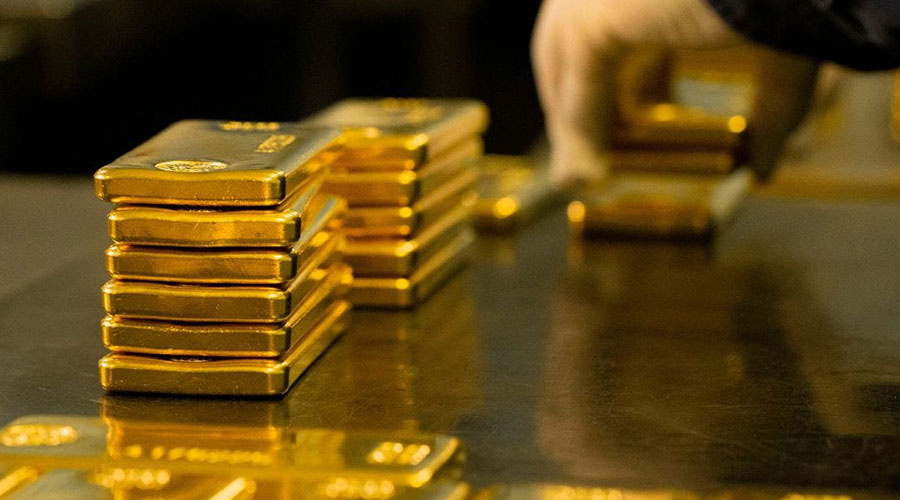
The DRC holds significant gold reserves, with more than two-thirds concentrated in the eastern provinces. Total gold resources are estimated at 600+ tonnes, making DRC one of Africa’s most gold-rich nations on an in-situ basis.
Province-by-Province Gold Assessment (2026)
| Province | Gold Potential | Compliance Risk | Key Operations |
|---|---|---|---|
| Haut-Uélé | Very High | Low | Kibali Mine (673,000 oz/yr) — OECD certified |
| Ituri | High | Medium | Growing exploration; moderate security |
| Maniema | Medium-High | Low-Medium | Growing formal investment; artisanal dominant |
| North Kivu | High | Very High | Active M23 conflict zone — avoid without full OECD audit |
| South Kivu | High | High | FDLR/militia presence; Twangiza mine operates under controls |
| Bas-Uélé | Medium | Low-Medium | Emerging artisanal production |
For international buyers: Focus sourcing on Haut-Uélé (Kibali formal channel) or Maniema (lower-risk artisanal). Avoid North Kivu and South Kivu gold without comprehensive, independently verified OECD-aligned chain-of-custody.
Kibali Gold Mine: Congo’s Anchor Operation
Kibali sits in Haut-Uélé Province in the northeast of the DRC, close to the borders with Uganda and Sudan and about 1,800 km northeast of Kinshasa. Its ten exploitation permits cover 1,836 km², and Kibali Goldmines holds them in good standing. The mine combines underground workings with open pits, and its plant, designed for 7.2 million tonnes a year, produces gold doré bars.
2025 performance. The mill received 8.322 million tonnes at 2.79 g/t, producing 673,000 oz at 90.31% recovery. That fell short of the partners’ expected 688,000 oz or more. Attributable output slipped 2% after a 10% drop in 2024, mainly on lower throughput and slightly lower grades.
Higher gold prices lifted revenue anyway: on a 100% basis Kibali earned $2.31 billion, of which $231.1 million accrued to the Congolese state through SOKIMO. On Barrick’s attributable share, revenue rose 40% to $1.04 billion.
2026 outlook. Barrick guides to 270,000 to 310,000 attributable oz (roughly 600,000 to 688,900 oz on a 100% basis). AngloGold Ashanti reported that attributable output fell 3% in the first half of 2026 on lower plant throughput and grade, as fewer underground ore tonnes reached the plant.
Power and remoteness. Because Kibali is so remote, it generates its own electricity from three hydropower stations, a solar plant, and battery storage systems.
Kibali 2025–2026 Key Data Table
| Metric | Verified Data |
|---|---|
| Ownership | Barrick 45% / AngloGold Ashanti 45% / SOKIMO 10% |
| 2025 production (100% consolidated) | 673,000 oz (8.322 Mt at 2.79 g/t Au) |
| 2025 consolidated revenue | $2.31 billion (+40% YoY) |
| DRC state revenue through SOKIMO | $231.1 million |
| 2026 production guidance (100%) | 600,000–688,900 oz |
| Renewable energy share | 85%+ (3 hydropower stations + solar) |
| Total investment since 2013 | $6.3+ billion |
| Reserve base | 8.3+ million oz proven and probable |
| DRC export share (2024) | 99.6% of DRC’s formal gold exports |
| Mine life | Through at least 2037 |
Is Congo Gold Conflict-Free and Ethically Sourced?
This is the most searched question about Congo gold — and the most important for international buyers.
Short answer: Not all Congo gold is conflict-free. But certified conflict-free Congo gold is accessible through verified channels with proper documentation.
The 2026 Conflict Reality
Despite a US-brokered DRC-Rwanda peace deal in late 2025 and a Qatar-mediated agreement with M23, fighting continues in eastern DRC in 2026. M23 seized Uvira (North Kivu) in December 2025 before withdrawing. The UN reports mineral smuggling from Congo at “unprecedented levels.” DRC’s new mines minister explicitly confirms the country loses 60 tonnes of gold per year to smuggling — most transiting through Uganda and Rwanda to the UAE.
Two Pathways to Conflict-Free Congo Gold
Path 1 — Kibali Formal Gold (Safest and Most Documented)
- ITSCI-tagged at the mine gate; OECD Due Diligence compliant
- Quarterly production data published by Barrick (NYSE/TSX listed)
- Located in Haut-Uélé Province — geographically removed from conflict zones
- Represents 99.6% of DRC’s formal gold exports — the definitive compliance benchmark
Path 2 — OECD-Audited Artisanal Gold (Complex but Feasible)
- Gold from FARDC-controlled areas in Haut-Uélé or Maniema provinces
- Requires third-party supply chain audit by an accredited firm
- ICGLR Regional Certification Mechanism documentation
- Higher compliance investment but genuine conflict-free potential
Compliance Framework Reference
| Standard | Who It Applies To |
|---|---|
| OECD Due Diligence Guidance | EU importers (mandatory since Jan 2021); all institutional buyers |
| Dodd-Frank Section 1502 | US-listed companies using gold in manufactured products |
| ITSCI Tagging | Formal DRC gold exporters; mine-gate conflict minerals tracking |
| OFAC SDN Check | All USD transactions involving DRC entities |
| ICGLR Certification | Great Lakes regional conflict-free mineral certification |
| EU Conflict Minerals Regulation | Mandatory OECD due diligence for EU gold importers from DRC |
Red Flags — Avoid These Channels Absolutely
- Gold from North Kivu or South Kivu without independently verified chain-of-custody
- Any counterparty on the US Treasury OFAC SDN list (check ofac.treas.gov)
- Pricing more than 15% below LBMA spot with no provenance documentation
- Sellers unable to provide province-level mine-of-origin documentation
Purity Levels of Congolese Gold (2026 Guide)
| Form | Natural Purity | Post-Refining | Source |
|---|---|---|---|
| Alluvial gold nuggets | 80–95% | Up to 99.99% | Artisanal riverbeds |
| Lode gold (Kibali) | 85–96% | 99.99% | Industrial underground/open-pit |
| Dore bars | 85–93% | 99.99% at partner refinery | Mine-site pre-processing |
| Refined 24K bars | 99.99% | — | LBMA-standard refineries |
Kibali processes gold to 99.9%+ purity before export, meeting international investment-grade standards. Artisanal gold requires independent XRF or fire assay testing before pricing — always request the formal certificate.
Challenges Facing Gold Mining in Congo (2026)
1. Conflict and Armed Group Control
The most significant structural challenge. In eastern DRC, armed groups — M23, FDLR, ADF, and multiple militia — control artisanal mining zones, extracting taxation from miners and traders. Despite 2025 peace deals, conflict continues in 2026. Congo loses an estimated 60 tonnes of gold per year to smuggling at current prices — approximately $9 billion in annual economic losses.
2. Illegal Mining and Smuggling
Over 80% of DRC’s gold miners operate in the informal sector outside regulation. Artisanal miners lacking formal channels sell through informal networks — gold that travels through Uganda and Rwanda to the UAE without government oversight or taxes. The 2018 Mining Code established penalties for illegal mining, but enforcement capacity remains limited.
3. Inadequate Infrastructure
- Only ~10% of DRC households have electricity
- Poor road networks — Kibali is 1,800 km from Mombasa port
- Internet penetration below 10%
- Limited banking access in remote mining regions
These constraints dramatically increase the cost and complexity of legitimate mining, creating competitive disadvantages versus informal channels.
4. Governance and Corruption
Corruption remains pervasive across DRC’s mining regulatory chain. The UN Group of Experts has documented military involvement in mineral smuggling.
Transparency International consistently ranks DRC among the world’s most corruption-affected countries. Addressing this requires sustained institutional reform and international accountability mechanisms.
5. Environmental Degradation
ASM mining causes deforestation of over 20,000 hectares annually in the DRC. Mercury use for gold amalgamation contaminates water sources and soil across mining communities. The Congo Basin rainforest — the world’s second-largest tropical forest — faces ongoing degradation from unregulated mining.
6. Human Rights and Child Labor
Human rights abuses, including child labor, exploitation, and unsafe working conditions, remain widespread in informal DRC gold mining. More than 80% of artisanal miners lack protective equipment or formal labor protections. Children work in ASM communities due to poverty and lack of alternatives.
Opportunities in Congo’s Gold Mining Sector (2026)
1. Record Gold Prices Creating the Best Investment Case in History
At $4,720+/oz, gold generates margins above $3,200/oz for efficient producers — the largest in modern mining history. DRC projects that were marginal at $2,000/oz become genuinely compelling at current prices. New investment is actively entering the sector.
2. New Mine Development Under Louis Watum
DRC’s new mines minister is explicitly opening the sector to new entrants. Barrick’s Congo country manager confirmed the company “is ready to invest in future growth in both northeastern DRC and the copper belt.” The ARK-KCD exploration corridor at Kibali is ongoing, with life-extension potential beyond 2037.
3. US-DRC Minerals Partnership (2026)
The US is actively negotiating a minerals, infrastructure, and security deal with DRC. Secretary Rubio’s February 2026 Critical Minerals Ministerial included DRC as a key partner. A formalized US-DRC framework could unlock significant investment capital, improve security conditions, and accelerate formalization of gold trade.
4. Ethical Gold Premium Markets
Certified conflict-free gold from DRC commands 5–15% price premiums over standard market rates in European and North American premium markets. This creates a genuine financial incentive for OECD-compliant sourcing — buyers pay more, and that premium funds better compliance frameworks.
5. ASGM Formalization
The DRC government is scaling up efforts to register artisanal miners under formal cooperatives, expand OECD monitoring, and connect ASGM output to official export channels. Successfully formalized ASGM offers development impact for communities and supply chain benefits for buyers requiring documented provenance.
6. Foreign Direct Investment Growth
The extractive industry grew 12.8% in 2024, driven by copper and cobalt. DRC’s GDP expanded 6.5% in 2024. Membership in SADC, COMESA, and AfCFTA provides preferential trade access. High commodity prices and new project pipelines continue to attract FDI despite governance challenges.
Legal and Regulatory Framework for Gold Mining in Congo
DRC Mining Code 2018 — Primary Legislation
The 2018 Mining Code governs all gold mining and trading. Key provisions:
- Raised royalties and taxes on large-scale mining
- Introduced 10% state participation rights in new projects
- Strengthened local content requirements
- Increased environmental compliance requirements
- Maintained Ministry of Mines oversight of all export permits
Documentation Required to Buy Gold Legally from Congo
For any legal gold purchase in DRC, obtain and verify:
- Export permit — from Ministry of Mines / SMRC authorization
- Certificate of Origin — confirms province and mine of source
- Assay certificate — purity confirmation from certified laboratory
- ITSCI tagging certificate — conflict minerals tracking (Kibali-area gold)
- OECD Due Diligence documentation — full chain-of-custody audit
- Commercial invoice — declared USD value
- OFAC SDN verification — confirmed clear for all counterparties
Always verify documents independently with the issuing authority. Never rely solely on documents provided by the seller.
Export Taxes and Fees
| Levy | Rate | Authority |
|---|---|---|
| Mining royalty | 3.5% of gold value | Ministry of Mines |
| Export tax | ~10% of declared value | DRC Revenue Authority |
| SMRC authorization fee | Per-transaction | SMRC |
How to Avoid Gold Scams in Congo (2026 Warning Guide)
The Congo gold market attracts sophisticated fraud at every level. These rules are non-negotiable:
The Conflict Gold Discount Trap: Gold offered at 20–40% below LBMA spot from “artisanal sources.” This is either conflict-sourced (legal liability for buyer) or outright fraud. Genuine discounts of 10–15% for dore/raw material are possible — nothing more.
The Advance Fee Scam: A “seller” requests payment of customs, insurance, or release fees before delivering gold that does not exist. No legitimate gold sale requires advance fees of any kind.
Fake OECD/ITSCI Certificates: Professional forgeries of compliance documents exist. Always verify certificates directly with the issuing organization — not from documents the seller provides.
Essential safety rules:
- Never pay any advance fees before physically verified delivery
- Check all counterparties against OFAC SDN list: ofac.treas.gov
- Use escrow for all first-time DRC supplier transactions
- Require independent XRF testing in your presence before payment
- Only transact at the seller’s registered, verifiable commercial premises
- Work exclusively with SMRC-licensed dealers with verifiable transaction histories
How to Buy Gold Safely from Congo in 2026: Step-by-Step
Step 1: Know today’s LBMA spot price (kitco.com or goldpricez.com). At ~$151.55/gram for 24K, any offer more than 15% below this for “certified” gold is a red flag.
Step 2: Choose your compliance pathway — Kibali formal (safest) or OECD-audited artisanal (more complex).
Step 3: Verify SMRC/Ministry of Mines licensing for the seller. For large transactions, verify directly in Kinshasa. Check all counterparties against the OFAC SDN list.
Step 4: Independent assay (XRF or fire assay) at a certified laboratory in your presence. Match serial numbers to certificates.
Step 5: Pay via SWIFT bank wire or escrow only. Never advance fees, never Western Union.
Step 6: Insured air freight via Brinks or DHL from N’djili Airport (Kinshasa) or Entebbe (Uganda). Full value insurance mandatory.
Social and Environmental Impact of Gold Mining in Congo
Positive Contributions
- Kibali’s $6.3B+ investment built roads, hospitals, schools, and 3 hydropower stations
- $231.1 million in SOKIMO state revenue in 2025 funded Congolese public services
- ASGM supports livelihoods for millions across eastern DRC’s rural economy
- Mining provides the primary cash income in communities with few alternatives
Environmental Challenges
- ASM deforestation exceeds 20,000 hectares annually
- Mercury use in artisanal gold amalgamation contaminates water and soil
- Biodiversity loss in the Congo Basin rainforest — the world’s second-largest tropical forest
The Path Forward in 2026
DRC government and international partners are scaling up: satellite-based illegal mining monitoring, ASGM formalization through cooperatives, mercury-free mining programs, and OECD compliance frameworks. Successful implementation could transform DRC’s gold sector from a conflict-financing mechanism to a genuine development driver.
FAQs: Gold Mining in Congo DRC (2026)
Q: What is the current gold price per gram in Congo? A: Today, 24K gold in the DRC is approximately $148–$155 USD per gram (~CDF 344,000–361,000). This is 37–43% higher than the old article’s September 2025 figure of $107–$108/gram, reflecting the global gold bull market that reached $5,602.22/oz on January 28, 2026.
Q: How much gold does Congo produce? A: Formal declared production is dominated by Kibali Mine at 673,000 oz in 2025 (100% consolidated basis), representing 99.6% of DRC’s formal exports. Total artisanal production adds several hundred additional tonnes annually — most flowing through informal channels.
Q: Is gold from Congo conflict-free? A: Kibali-origin gold (Haut-Uélé Province) is ITSCI-tagged and OECD-compliant — the most documented conflict-free gold in Africa.
Artisanal gold from North Kivu or South Kivu without full verified chain-of-custody carries high conflict minerals risk. Always verify province of origin and request full OECD documentation.
Q: What documentation do I need to buy gold from Congo legally? A: Export permit (SMRC/Ministry of Mines), Certificate of Origin confirming province, assay certificate, ITSCI conflict-free certificate, OECD Due Diligence documentation, commercial invoice, and OFAC SDN clearance for all counterparties.
Q: How much gold does Congo lose to smuggling? A: DRC’s new mines minister confirms approximately 60 tonnes per year — gold that transits through Uganda and Rwanda to the UAE without government oversight. At $4,720/oz, this represents approximately $9 billion in annual losses to the Congolese economy.
Q: Who owns Kibali Gold Mine? A: Barrick Mining (45%), AngloGold Ashanti (45%), and SOKIMO (10%) — the DRC state mining company. Barrick is the mine operator. In 2025, the DRC state received $231.1 million through SOKIMO’s stake.
Q: What are the export taxes on Congo gold? A: Approximately 3.5% mining royalty + ~10% export tax = roughly 13.5% total on formal exports. OECD audit, ITSCI, and logistics compliance add further costs.
Q: Is it safe to buy gold in Congo? A: Buying Kibali-origin formal gold through SMRC-licensed exporters is safe and well-documented.
Buying artisanal gold from conflict-affected eastern provinces carries legal, financial, and reputational risk. Always use licensed exporters, escrow for first transactions, and OFAC verification for all counterparties.
Conclusion: The Future of Gold Mining in Congo
Gold mining in Congo in 2026 presents the global market with a profound duality: Kibali’s $2.31 billion in OECD-compliant revenues exists alongside an estimated $9 billion in annual smuggling losses. The geology is extraordinary. The gold is real. The prices have never been higher. The compliance requirements have never been more important to get right.
For buyers, the path is clear: source exclusively through OECD-compliant formal channels — primarily Kibali-origin gold through licensed SMRC exporters — and apply rigorous compliance frameworks that match the extraordinary financial stakes at current gold price levels.
Buy Gold Bars Africa Limited facilitates legal, documented, conflict-free Congo gold purchases for international buyers — with complete OECD compliance documentation, SMRC export authorization, insured worldwide delivery, and transparent LBMA-referenced pricing.