
Complete List Major Gold Mines in Tanzania & their Map
Gold Mines in Tanzania: Discover the top gold mines in Tanzania, including Geita, Bulyanhulu, North Mara, and Buzwagi. Learn about Tanzania’s gold mining industry, major mining companies, production, and investment opportunities in one of Africa’s leading gold-producing nations.
Tanzania is one of Africa’s most important gold-producing nations, ranking among the continent’s top four producers with a mining sector that generated a record $5.27 billion in gold export earnings in the year ending April 2026 — making gold Tanzania’s single largest foreign exchange earner, accounting for nearly half of all goods export revenue.
The country’s gold sector spans world-class industrial mines operated by AngloGold Ashanti and Barrick Gold, a rapidly formalising artisanal and small-scale mining sector, and a pipeline of emerging development projects that will add significant capacity through 2028 and beyond.
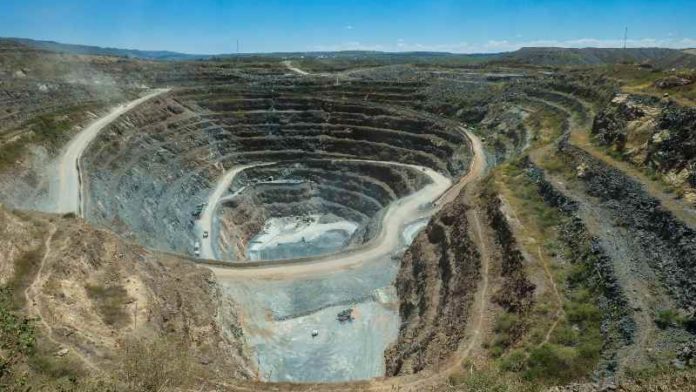
The Major Gold Mines in Tanzania — Detailed Mine-by-Mine Guide
1. Geita Gold Mine — Tanzania’s Largest, Africa’s Most Important
Location: Geita Region, Northwestern Tanzania (near Lake Victoria) Operator: AngloGold Ashanti Annual production: Approximately 500,000–600,000 ounces Mining method: Open-pit, expanding underground operations
The Geita Gold Mine is Tanzania’s largest gold mine and one of the most significant gold operations in Africa. Operated by AngloGold Ashanti — one of the world’s three largest gold mining companies — Geita has been in continuous production since 2000 and sits on a Archaean greenstone belt within the Lake Victoria Goldfields, one of Africa’s most prolific gold-bearing geological formations.
Geita produces approximately half a million ounces of gold per year, making it the dominant contributor to Tanzania’s national gold output and the foundation of AngloGold Ashanti’s African production base. The mine’s proven and probable reserve base of approximately 6 million ounces at average grades of 2–3 g/t provides a long mine life that continues to attract capital investment in exploration and processing infrastructure.
The mine employs approximately 5,000 people directly and supports tens of thousands more in the surrounding communities through supply chain and service relationships. Community development investments — in schools, healthcare facilities, and road infrastructure in the Geita region — make the mine one of Tanzania’s most significant contributors to local development alongside its national revenue contribution.
For buyers interested in Tanzania-origin gold supply, Geita’s output feeds the formal export channels through which certified gold bars from Tanzania reach international markets. Africa Gold Suppliers Limited maintains verified supply relationships with licensed traders in the Geita region operating in the formal gold market.
2. Bulyanhulu Gold Mine — Tanzania’s Deepest High-Grade Underground Operation
Location: Shinyanga Region, Northwestern Tanzania Operator: Barrick Gold Corporation (through subsidiary Twiga Minerals) Annual production: Approximately 300,000–330,000 ounces Mining method: Underground (cut-and-fill and longhole stoping)
The Bulyanhulu Gold Mine is Tanzania’s oldest continually operating major mine and one of its most geologically exceptional — a high-grade underground operation where ore grades averaging well above 5 g/t significantly exceed the global underground mining average of approximately 1.5 g/t.
Opened in 2001 by Barrick Gold (through its former subsidiary Acacia Mining), Bulyanhulu sits in the Shinyanga Region’s greenstone belt and accesses reef-hosted gold deposits at depths below 1,000 metres through a comprehensive network of underground drives and raises.
Bulyanhulu is uniquely a multi-metal operation — producing significant silver and copper alongside its primary gold output, a characteristic of the deposit’s sulphide mineralogy that adds economic value beyond the gold revenue alone.
The mine’s underground infrastructure represents one of the most capital-intensive mining investments in East Africa and demonstrates Barrick’s long-term commitment to Tanzania’s gold sector despite the complex regulatory environment that characterised the 2017–2021 period of government-Barrick negotiations.
Following the resolution of Tanzania’s tax disputes with Barrick Gold in 2020 — which resulted in a settlement framework including government equity participation — Bulyanhulu has operated under the Twiga Minerals joint venture structure that gives the Tanzanian government a direct ownership stake in one of the country’s most productive mines.
3. North Mara Gold Mine — Open Pit and Underground Production Near the Kenyan Border
Location: Mara Region, Northern Tanzania (near Kenya border) Operator: Barrick Gold Corporation (Twiga Minerals JV) Annual production: Approximately 270,000–300,000 ounces Mining method: Open-pit and underground combined
North Mara Gold Mine in Tanzania’s Mara Region is Barrick Gold’s second Tanzanian operation and one of the country’s highest-grade producing mines. Located near the Tanzanian-Kenyan border in an area of Archaean greenstone belt that is geologically continuous with Kenya’s emerging gold exploration zones, North Mara operates both an open-pit and underground mining configuration that allows it to access ore at multiple depth levels simultaneously.
The mine has undergone significant environmental and operational reform since Barrick assumed full operational control — investments in water management, tailings storage facility improvements, and community relations programmes that had faced criticism in earlier operational periods. North Mara’s approximately 270,000–300,000 ounces of annual production make it Tanzania’s third-largest producing operation and a critical asset in Barrick’s East African portfolio.
The mine contributes significantly to the Mara Region’s economy — one of Tanzania’s less developed regions — through direct employment, local procurement, and community investment programmes. Our Tanzania gold export process page covers how gold produced at North Mara and other major Tanzanian mines enters the formal international export market.
4. Buzwagi Gold Mine — End-of-Life Open Pit with Remaining Value
Location: Kahama District, Shinyanga Region Operator: Barrick Gold Corporation (Twiga Minerals JV) Annual production: Approximately 100,000–175,000 ounces (declining) Mining method: Open-pit, transitioning to tailings retreatment
The Buzwagi Gold Mine in Kahama District is a large open-pit operation that has been progressively mining toward the end of its primary ore resource since the mid-2010s. Originally developed by Acacia Mining (subsequently acquired by Barrick), Buzwagi was one of Tanzania’s larger producers at its peak but has experienced the natural production decline that characterises open-pit mines approaching exhaustion of their primary pit resource.
Barrick has extended Buzwagi’s operational life through a combination of deeper pit extensions that access ore at the pit floor, processing of lower-grade stockpiled material, and initial work on tailings retreatment — recovering gold from the historically deposited processing tailings using modern leaching technology that was not available during the original processing campaigns.
These techniques extend the mine’s value beyond what a simple resource depletion model would suggest and reflect Barrick’s broader strategic approach of maximising value from existing assets before decommissioning.
5. New Luika Gold Mine — Shanta Gold’s High-Grade Southwestern Operation
Location: Lupa Goldfields, Mbeya Region, Southwestern Tanzania Operator: Shanta Gold (UK-listed mid-tier miner) Annual production: Approximately 80,000–100,000 ounces Mining method: Underground, with open-pit supplementary operations
The New Luika Gold Mine represents a different scale of operation from the Barrick and AngloGold Ashanti giants — a high-grade, relatively low-capital underground mine that has established Shanta Gold as Tanzania’s most successful mid-tier mining company. Located in the Lupa Goldfields of southwestern Tanzania’s Mbeya Region, New Luika began production in 2012 and has consistently delivered strong margins through its above-average ore grades and disciplined cost management.
The mine’s competitive advantage is its ore grade profile — consistently above the global underground average — which translates into lower processing costs per ounce and higher EBITDA margins than lower-grade operations of comparable production volume.
Shanta Gold’s ongoing exploration programmes at New Luika and adjacent licence areas continue to add new ore resources, extending what has already been a longer-than-originally-modelled mine life.
6. Buckreef Gold Mine — Tanzania’s Fastest-Growing Operation
Location: Geita Region, Northwestern Tanzania Operator: TRX Gold Corporation (55%) and STAMICO (45%) Annual production: 25,000–30,000 ounces (fiscal 2026 guidance), scaling rapidly Mining method: Open-pit oxide mining, expanding to sulphide underground
The Buckreef Gold Mine is Tanzania’s most dynamic growth story in the current mining cycle. Operated by Canadian-listed TRX Gold Corporation in joint venture with Tanzania’s state mining company STAMICO, Buckreef has been in an aggressive production expansion phase that is transforming it from a small-scale operation into a mid-tier producer.
Fiscal 2026 production guidance of 25,000–30,000 ounces represents a significant step up from prior years, with a major processing plant expansion underway that will increase throughput from 2,000 to over 3,000 tonnes per day of sulphide material, adding a tailings retreatment capability and upgrading multiple plant components including pre-leach thickener, agitators, oxygen plant, and ADR plant.
The Buckreef measured and indicated mineral resource of approximately 2 million ounces at 1.77 g/t provides a long reserve life to underpin this expansion investment.
7. Nyanzaga Gold Project — OreCorp’s 213,000 oz Development
Location: Mwanza Region, Northwestern Tanzania Operator: OreCorp Limited (Australian listed) Planned annual production: Approximately 213,000 ounces Status: Advanced development stage
The Nyanzaga Gold Project in Tanzania’s Mwanza Region is one of Africa’s most significant gold development projects — an advanced-stage project targeting initial production of approximately 213,000 ounces per year from a large, well-defined deposit in the Lake Victoria Greenstone Belt.
Nyanzaga’s size, grade profile, and location in an established gold mining district make it a compelling development asset, and it is expected to become Tanzania’s third or fourth-largest producing mine once operational.
8. Singida Gold Project — Shanta Gold’s Central Tanzania Expansion
Location: Singida Region, Central Tanzania Operator: Shanta Gold Annual production: Approximately 32,000 ounces Status: Operating (commenced 2023)
The Singida Gold Project is Shanta Gold’s successful diversification into central Tanzania beyond its Mbeya Region base. The project began production in 2023 with initial annual output of approximately 32,000 ounces, contributing a meaningful increment to Shanta’s overall Tanzanian production portfolio and demonstrating the company’s ability to develop new operations on time and within budget — an increasingly rare achievement in the African mining sector.
9. Golden Pride Gold Mine — A Historical Milestone
Location: Nzega District, Tabora Region Operator: Resolute Mining (now closed) Total production during operation: Over 2.2 million ounces (1998–2013)
The Golden Pride Gold Mine — Tanzania’s first large-scale modern gold operation, built by Resolute Mining and brought into production in 1998 — ceased operations in 2013 after producing over 2.2 million ounces of gold across its 15-year operating life.
Golden Pride set the template for subsequent large-scale Tanzanian gold mine development and demonstrated to the international mining investment community that Tanzania could operate world-class mines under regulatory conditions acceptable to international capital.
Tanzania gold mines map
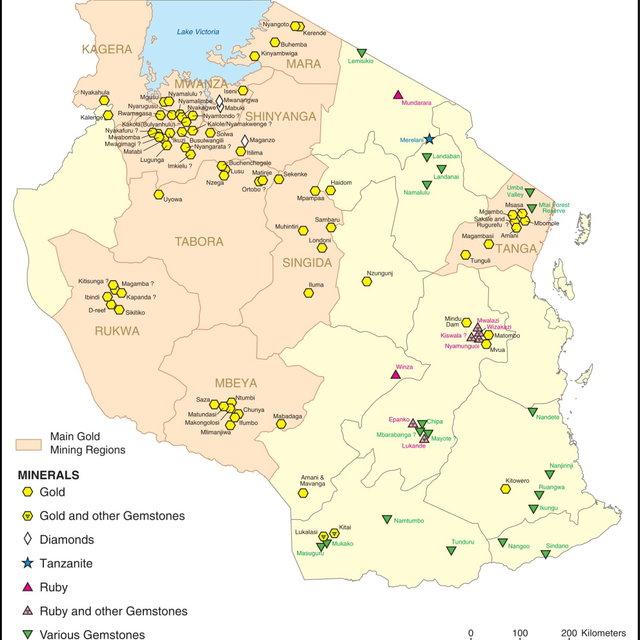
Tanzania’s Gold Mining Regions — Geographic Overview
Lake Victoria Gold Belt — Africa’s Most Productive Greenstone System
Tanzania’s most prolific gold-producing zone is the Lake Victoria Goldfields — an Archaean greenstone belt system extending around the southern and western shores of Lake Victoria across the Geita, Mwanza, Shinyanga, and Mara regions.
This geological formation hosts the Geita, Bulyanhulu, North Mara, and Buckreef mines and is geologically continuous with the gold-bearing greenstone belts of Uganda, Rwanda, and Kenya — one of Africa’s most richly mineralised crustal domains.
Geita Region hosts Tanzania’s largest mine (Geita Gold Mine) and the growing Buckreef project, making it the country’s most important single gold mining district by production volume. The region attracts both large-scale and artisanal gold mining, with licensed artisanal operations contributing a meaningful share of the region’s total output.
Mwanza Region serves as the logistical and commercial hub for the Lake Victoria mining circuit — a city of over a million people with banking infrastructure, logistics services, and a growing mineral processing sector serving mines across the broader Lake Victoria Goldfields. The Nyanzaga development project is located within the Mwanza Region’s administrative boundaries.
Shinyanga Region hosts Bulyanhulu and Buzwagi, Tanzania’s two oldest major operating mines, in a geological zone where Archaean greenstone belt gold mineralisation is associated with elevated grades at depth — making underground mining the primary method for accessing the region’s highest-value ore.
Mara Region in northern Tanzania hosts North Mara Gold Mine near the Kenyan border, in a greenstone belt setting geologically similar to Kenya’s emerging Migori gold belt. The Mara Region’s gold mining activity is concentrated in a relatively small geographic area but generates economic benefits distributed across a large, relatively underserved regional population.
Artisanal Gold Mining in Tanzania — A Formalising Sector
Artisanal and small-scale gold mining (ASGM) contributes an estimated 30–40% of Tanzania’s total gold production and provides direct livelihoods for several hundred thousand people across Geita, Mwanza, Shinyanga, Mara, and emerging zones in Tabora and Singida.
The sector is undergoing active government-supported formalisation — a programme that includes registration of artisanal miners with recognised cooperatives, provision of government-backed credit facilities, technical training in safer mining methods, and integration of artisanal production into formal assay and export channels.
The Tanzania Mining Commission’s CRDB Bank financing agreement — announced in 2025 — specifically targets artisanal miner access to formal credit, replacing the informal money-lending arrangements that previously trapped many small miners in debt bondage to equipment suppliers and gold buyers.
Current Gold Price in Tanzania
With the international gold spot price at approximately $4,088.97 per troy ounce as of June 24, 2026, current gold prices in Tanzania in Tanzanian shillings (at approximately 1 USD = 2,610 TZS) translate to:
| Weight | 24K Price (TZS) | 24K Price (USD) |
| 1 gram | TZS 421,000 – TZS 435,000 | $131 – $136 |
| 10 grams | TZS 4,210,000 – TZS 4,350,000 | $1,310 – $1,360 |
| 100 grams | TZS 42,100,000 – TZS 43,500,000 | $13,100 – $13,600 |
| 1 kilogram | TZS 421,000,000 – TZS 435,000,000 | $131,000 – $136,000 |
Note: The original article’s pricing ($107.60/gram using July 2025 rates at $2,610/oz) is significantly outdated. At June 2026 spot prices of approximately $4,089/oz, the per-gram price is approximately $131–$136 USD. For live daily price updates, our gold price in Tanzania page is regularly refreshed.
Gold Export Laws and Regulations in Tanzania
Tanzania’s gold export framework is regulated by the Mining Act, Cap 123 and enforced by the Ministry of Minerals and Tanzania Mining Commission. All gold produced in Tanzania must be refined and assayed before export and must pass through authorised export channels. Key requirements for gold export include:
An export permit issued by the Tanzania Mining Commission for each consignment. Payment of all applicable royalties and taxes in advance. Use of authorised licensed clearing agents registered with the mining authority. Routing through government-designated mineral houses, Bank of Tanzania-approved refineries, or licensed gold auction centres.
Current Tanzania gold export tax structure:
| Levy | Rate | Basis |
| Mining royalty | 4% | Gold value (reduced from 6% in government reform) |
| Inspection fee | 0% | Previously 1%; now waived under 2024 reform |
| Withholding tax | Variable | On payments to miners and traders |
| Corporate income tax | 30% | On mining company profits |
Tanzania’s export tax burden of approximately 4–6% is moderate by African standards — below the DRC’s combined 7–9% but above Uganda’s 0–2% — and the recent policy reforms reducing the royalty rate and eliminating the inspection fee represent genuine government commitment to making Tanzania a more competitive gold export destination. Our gold export tax in Tanzania and Tanzania gold export process pages cover the regulatory framework in full operational detail.
Gold Mining Licences in Tanzania — What Investors Need to Know
Tanzania’s Mining Act (Cap 123), as amended in 2017, establishes four categories of mining licence covering operations from small-scale artisanal to large-scale industrial investment.
Prospecting Licence (PL) — permits mineral exploration over a specified area for 4 years, renewable twice (maximum 9 years). Required documentation includes a prospecting programme, environmental plan, maps, and proof of financial capacity.
Primary Mining Licence (PML) — designed for small-scale gold mining and restricted to Tanzanian citizens or locally controlled companies. Valid for 7 years, renewable. Investment threshold below USD $100,000.
Mining Licence (ML) — the standard medium-to-large-scale mining licence for projects with investment between USD $100,000 and $100 million. Grants exclusive mining rights over a defined area for 10 years, renewable once.
Special Mining Licence (SML) — required for projects with investment above USD $100 million. The Geita, Bulyanhulu, North Mara, and Buzwagi mines all operate under SMLs. Long-term with defined renewal conditions.
Dealer Licence — authorises the purchase and export of gold. Typically granted only to Tanzanian nationals or companies with at least 25% Tanzanian ownership under local content requirements. Required for all formal gold trading and export operations.
The mandatory local content requirements — including the 16% minimum free-carried government interest in all large mining companies established by the 2017 Mining Act amendments — reflect Tanzania’s commitment to ensuring that mineral wealth generates demonstrable domestic benefit rather than flowing entirely to foreign shareholders.
Environmental clearance from the National Environment Management Council (NEMC) is mandatory before any mining licence is issued, and operations are subject to ongoing NEMC compliance monitoring.
Gold Mines for Sale in Tanzania — Investment Opportunities
Tanzania’s active mining investment landscape includes several operating mines and development-stage projects available for acquisition or investment partnership in 2026:
A fully operational gold mining company in Mara Region (Kiabakari) is available for acquisition with a valid Mining Licence ML 578/2018 (valid to April 2028). Annual production approximately 24,500 ounces with deposit potential of approximately 1 million ounces. Asking price: USD $22 million.
A large-scale mining operation in Mara Region (Kiabakari–Butiama) covering approximately 2,026 acres with all machinery, licences, and infrastructure in place for immediate production continuity. Asking price: USD $265 million.
A gold mining concession in Butiama, Mara Region covering 25 acres with geological surveys and measured gold samples, priced at approximately USD $7 million (negotiable).
A geologically surveyed gold mine near Geita (Nyamatagata village) with a Primary Mining Licence covering 120.44 hectares. Asking price: USD $1.5 million, negotiable.
An early-stage gold project in Chunya District with a Prospecting Licence over 2.28 km² and capacity potential of 45 kg per month. Partial stake (~20%) available for USD $3–$3.6 million.
For buyers considering gold investment at the metal level rather than equity level, Africa Gold Suppliers Limited provides direct access to certified Tanzanian gold at competitive mine-direct prices — without the management and operational risks associated with direct mine ownership. Our gold investment opportunities in Africa page covers both physical gold investment and broader sector participation options.
Buy Certified Gold From Tanzania’s Licensed Mining Regions
We source certified 24K gold bars, doré bars, raw gold, and gold nuggets from licensed operations across Tanzania’s major producing regions — Geita, Mwanza, Shinyanga, and Mara — supplying international buyers with complete assay documentation, certificate of origin, export licensing, and insured international delivery on every order.
Browse our guides to sourcing gold across Uganda, the Congo, Kenya, South Africa, and Mwanza, Tanzania specifically, or our dedicated gold bar pricing in South Africa page for direct comparison. Our gold producing countries in Africa guide puts Tanzania’s production in fuller continental context, and our gold mining overview covers our own Uganda and Congo operations in more depth.
For international buyers, our delivery guides cover Dubai, Switzerland, Canada, Singapore, and the USA, alongside our broader gold bars from Africa and African gold bars for sale collections. Our guides to gold bar, gold nugget, and raw gold cover the different product forms available, and our gold vs. silver comparison is worth a look if you’re diversifying.
Before buying, our FAQs about buying gold in Africa, how to buy gold online safely, and exporting gold bullion guides cover due diligence and documentation in full, and our buy gold from local miners page rounds out the sourcing side.
Get a Live Quote for Certified Tanzania Gold
Whether you’re sourcing from Geita’s industrial-scale output or Tanzania’s growing formal artisanal channels, working with a licensed exporter who provides genuine, full documentation matters as much as the price itself.
Explore our full range of services or contact us today for a live quote on certified gold sourced directly from Tanzania’s major mining regions.
Related Pages You May Find Useful
- Gold Price in Tanzania — Current Live Rates
- Tanzania Gold Market — Export and Trade Overview
- Tanzania Gold Export Process — Step by Step
- Gold Export Tax in Tanzania — Full Regulatory Guide
- Gold Deposits in Africa — Country-by-Country Geology
- Gold Producing Countries in Africa — 2026 Rankings
- Gold in Africa — Complete Continental Overview
- Gold Mining in Congo — DRC Production Guide
- Gold Deposits in South Africa — Witwatersrand and Beyond
- Exporting Gold from Uganda — Legal Framework
- Gold Export Regulations in Kenya
- Gold Bar for Sale — Certified 24K Investment Bars
- Gold Bars for Sale — All Sizes and Weights
- Gold Nuggets from Africa — Alluvial Gold
- Gold Dore Bars for Sale from Africa
- Raw Gold from African Mines
- Buy Gold Bars from Africa — International Delivery
- African Gold Bars for Sale
- Gold Bullion for Sale
- 1 oz 24K Gold Price Today
- 24K Gold — Purity, Price and Investment Guide
- Gold Price in Africa — Regional Pricing Overview
- Gold Investment Opportunities in Africa
- Gold vs. Silver — Which Is the Better Investment?
- Advantages and Disadvantages of Investing in Gold
- Buying Genuine Gold — Fraud Prevention Guide
- How to Buy Gold Online Safely
- Gold Smuggling in Africa — Risks for Buyers
- FAQs About Buying Gold in Africa
- Gold and Silver Dealers in Uganda and Africa
- About Africa Gold Suppliers Limited
- Contact Africa Gold Suppliers Limited