

Gold Investment Opportunities in Africa 2026: Complete Expert Guide
Discover the best gold investment opportunities in Africa in 2026 — from mining stocks and ETFs to physical gold bars, ASGM, refineries, and digital gold. Live prices, country guides, risks, returns, and expert strategies. Updated May 2026.
Why Africa Is the World’s Most Compelling Gold Investment Destination in 2026
Africa is not simply a gold producer — it is the geological heart of the global gold market, holding an estimated 30%+ of the world’s total mineral wealth and producing approximately 25% of annual global gold supply.
With gold trading at approximately $4,720–$4,739 USD per troy ounce as of May 2026 — 41% higher year-on-year and close to the January 2026 all-time record of $5,602/oz — the economic case for African gold investment has never been more compelling.
The timing could hardly be more significant. Gold miners are projected to achieve AISC (All-In Sustaining Cost) margins above $3,200 per ounce in 2026, and global gold production is estimated to grow 7% year-over-year to 72.8 million ounces, with producers well-positioned to capitalize on record-high margins of approximately $2,800/oz.
Africa sits at the intersection of three major forces shaping gold investment in 2026:
- Record gold prices generating extraordinary cash flows for producers
- Massive M&A activity as cash-flush miners consolidate and expand reserves
- Regulatory modernization across Ghana, Tanzania, and South Africa improving investment frameworks and investor protections
Whether you are a first-time buyer considering physical gold bars, a portfolio investor evaluating African mining stocks, or an institutional buyer exploring refinery or ASGM partnerships — this guide covers every avenue, with fully updated 2026 data, pricing, and strategies.

Gold Prices in Africa — Live Reference Rates
All gold investment decisions must begin with an accurate understanding of current prices. As of May 8, 2026:
- Gold spot price: ~$4,720–$4,739 USD per troy ounce
- 24K gold per gram: ~$152.36 USD
- 1-year price increase: +41.28%
- All-time high (Jan 28, 2026): $5,602.22 per troy ounce
- 2026 year-to-date: Gold has moderated from its January peak but remains strongly above its 2025 averages
Current Gold Prices Across African Countries (USD per gram)
| Country | 24K/gram (USD) | 22K/gram (USD) | 18K/gram (USD) | Notes |
|---|---|---|---|---|
| Ghana | $152 – $158 | $139 – $145 | $114 – $119 | GoldBod regulated |
| South Africa | $153 – $161 | $140 – $148 | $115 – $121 | Rand Refinery certified |
| Uganda | $150 – $156 | $137 – $143 | $112 – $117 | Mine-direct competitive |
| Tanzania | $151 – $157 | $138 – $144 | $113 – $118 | TMAA regulated |
| Mali | $150 – $156 | $137 – $142 | $112 – $117 | Loulo-Gounkoto supply |
| Kenya | $150 – $156 | $138 – $143 | $112 – $117 | Growing formal market |
| DRC | $148 – $155 | $136 – $142 | $111 – $116 | Formal channels only |
The old article’s gold prices of $103.50–$108/gram (July 2025) are now significantly outdated. May 2026 prices are approximately 40% higher, reflecting the continued global gold bull market.
Gold Investment Opportunities in Africa: 8 Proven Avenues (2026)
1. African Gold Mining Stocks — The Cash-Flow Machine of 2026
Investing in publicly listed African gold mining companies is the most accessible entry point for international investors seeking African gold exposure without physical storage requirements.
Major gold producers are now exceptionally cash-flush, creating conditions ripe for strategic consolidation and expansion. The market has seen significant gold mega-mergers and acquisitions in recent years, with Gold Fields’ acquisition of Osisko Mining among notable recent deals.
Top African gold mining companies for investment in 2026:
| Company | Exchange | Primary African Assets | 2025 Dividend Yield (est.) |
|---|---|---|---|
| Barrick Mining | NYSE: GOLD / TSX: ABX | Kibali (DRC), Loulo-Gounkoto (Mali) | ~2.5% |
| Newmont Corporation | NYSE: NEM | Ahafo (Ghana), Akyem (Ghana) | ~3.0% |
| Gold Fields | NYSE: GFI / JSE: GFI | Tarkwa (Ghana), South Deep (SA) | ~3.5% |
| AngloGold Ashanti | NYSE: AU / JSE: ANG | Obuasi (Ghana), Geita (Tanzania), Kibali | ~2.0% |
| Harmony Gold | NYSE: HMY / JSE: HAR | Mponeng (SA), Eva Copper | ~1.5% |
| Endeavour Mining | TSX: EDV | Houndé (Burkina Faso), Ity (Côte d’Ivoire) | ~3.0% |
| Pan African Resources | JSE: PAN / AIM: PAF | Barberton (SA), Evander | ~4.0% |
Why mining stocks outperform in 2026: With gold at $4,720+/oz and average all-in sustaining costs (AISC) at approximately $1,521/oz for major producers, margins above $3,200/oz are being reported — the largest profit per ounce in the history of the gold mining industry. This translates into exceptional earnings, dividend growth, and share price appreciation for major listed miners.
Gold ETFs for African exposure:
- VanEck Gold Miners ETF (GDX): Includes Barrick, Newmont, AngloGold — broad exposure to African producers
- VanEck Junior Gold Miners ETF (GDXJ): Smaller producers with higher growth potential and African exposure
- Sprott Gold Equity Fund: Active management with significant African miner allocation
2. Physical Gold — Bars, Coins, and Bullion from African Sources
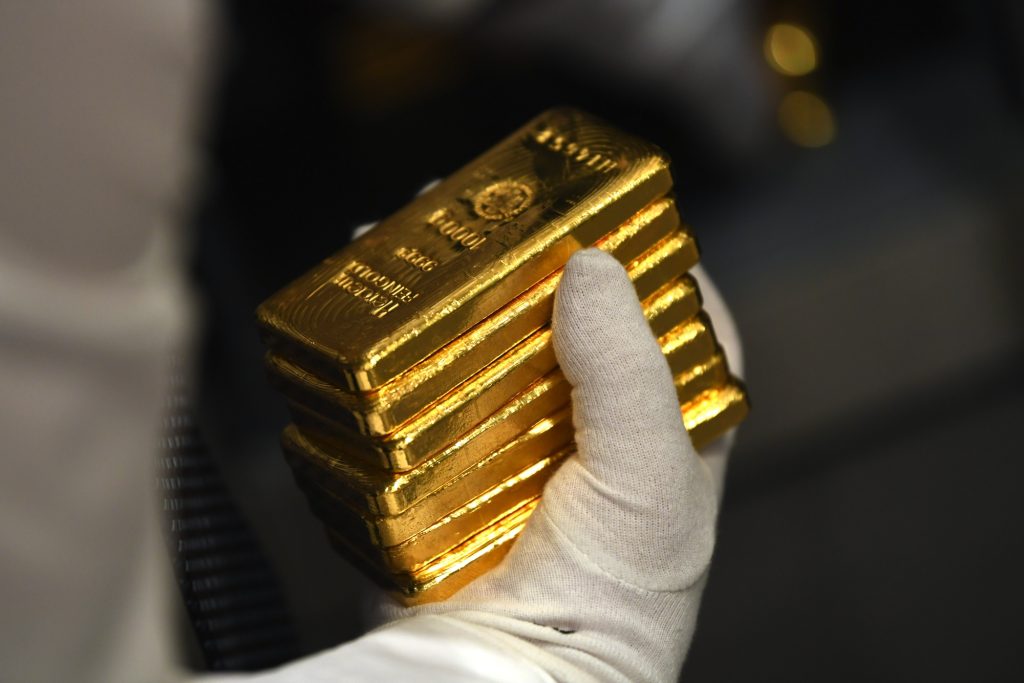
Buying physical gold from African producers remains one of the most cost-effective ways to own investment-grade gold anywhere in the world. Mine-direct sourcing from licensed exporters in Ghana, Uganda, and Tanzania delivers genuine gold at 7–15% below European and Asian retail market prices.
Physical gold options from Africa (2026):
| Product | Purity | Weight Options | Price (May 2026) | Best Source |
|---|---|---|---|---|
| LBMA 24K Bars | 99.99% | 1g – 1kg | $152 – $152,365 | Rand Refinery (SA), African Gold Refinery (Uganda) |
| Cast Gold Bars | 99.5%+ | 50g – 1kg | $150 – $151,000 | Ghana GoldBod exporters |
| Dore Bars | 85–93% | 100g – 12kg | Below spot | Licensed artisanal processors |
| Gold Nuggets | 80–95% | 1g – 500g | Below spot | Uganda, Tanzania, DRC |
| Krugerrand Coins | 91.67% (22K) | 1 oz | ~$4,800–$4,950 | Rand Refinery, SA dealers |
Key advantages of buying physical gold from Africa:
- Mine-direct eliminates distributor/wholesaler markup (saves 5–15%)
- Full documentation: export license, assay certificate, Certificate of Origin
- Multiple refineries provide LBMA-standard certification
- Secure delivery via Brinks, Malca-Amit, or G4S from major African airports
3. African Gold Mining Stocks: Junior and Exploration Companies
Beyond the major producers, Africa hosts a rich ecosystem of junior mining companies at earlier stages of development. These offer higher potential returns — and higher risk — than established producers.
Notable junior and mid-tier African gold companies (2026):
- Perseus Mining (ASX: PRU): Focused on West Africa (Ghana, Côte d’Ivoire, Senegal). Perseus Mining made a notable transaction: a USD $180 million acquisition of the Nyanzaga Gold Project in Tanzania, with a USD $523 million development commitment.
- Shanta Gold (AIM: SHG): Tanzania-focused producer (West Kenya Project, New Luika Mine)
- Cardinal Resources (ASX: CDV): Ghana’s Namdini Project — one of West Africa’s largest undeveloped deposits
- Caledonia Mining (NYSE: CMCL): Zimbabwe operations with dividend payment history
Risk framework for junior miners: Higher reward potential must be balanced against development risk, regulatory uncertainty in host countries, and financing risk.
Junior miners typically trade at 50–70% discounts to their larger peers on a per-ounce-of-resource basis — pricing in execution risk that, if successfully managed, can deliver 3–10× returns.
4. Artisanal and Small-Scale Gold Mining (ASGM) Investment
Artisanal and small-scale mining (ASGM) accounts for approximately 20–30% of Africa’s total gold production and provides livelihoods for an estimated 5–10 million people across the continent. For impact investors and high-risk/high-return seekers, ASGM investment offers unique opportunities.
Investment structures in ASGM:
- Equipment financing: Provide processing equipment (ball mills, sluice boxes, metal detectors) in exchange for gold offtake agreements at discounted prices
- Formalization partnerships: Support miners in obtaining licenses, assay services, and formal market access in exchange for production royalties
- Cooperative investment: Fund formal miner cooperatives under Ghana’s GoldBod or Uganda’s BGMA framework with structured production-sharing arrangements
ASGM investment hotspots in 2026:
- Migori Greenstone Belt (Kenya/Tanzania border): Accessible East African belt with active artisanal communities
- Ghana’s Ashanti Belt: GoldBod framework enables formal investment partnerships with ASM operators
- Uganda’s Busia District: Active community mining with BGMA licensing framework
- DRC’s Ituri Province (SAF-controlled areas only): High production potential; strict compliance required
Risk warning: ASGM investment carries significantly higher risk than listed company investment. Regulatory, environmental, and operational risks require experienced local partners and thorough due diligence.
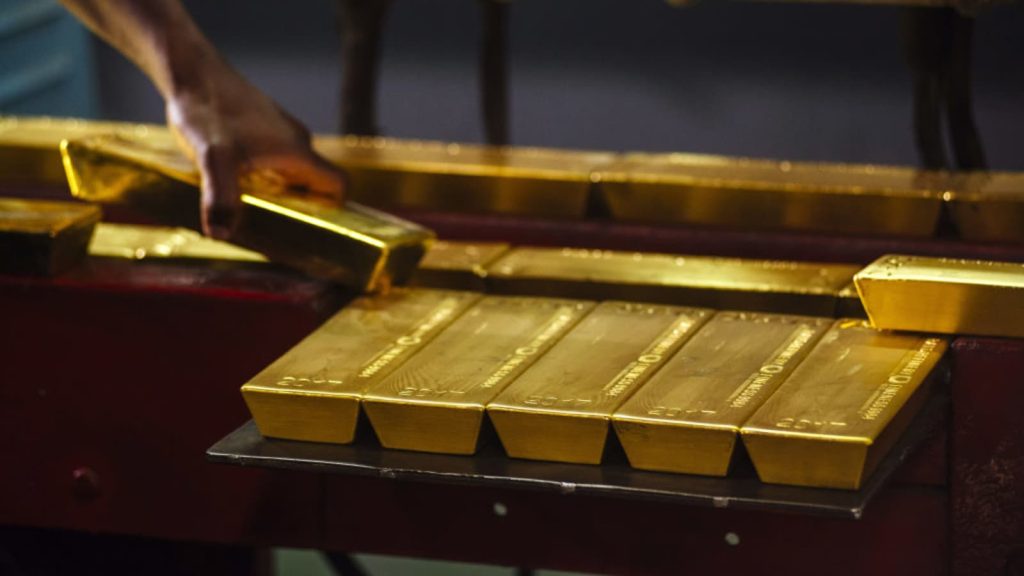
5. Gold Refineries and Processing Plants — Africa’s Value-Addition Play
Africa has historically exported raw or semi-refined gold, losing substantial economic value to foreign refineries. A major shift is underway in 2026 as governments across the continent push aggressively for in-country gold processing and beneficiation.
Investment opportunities in African gold refining:
- Ghana: The Ghana Gold Board (GoldBod) is actively courting investment in domestic refinery capacity to reduce raw gold exports. The country’s Precious Minerals Marketing Company (PMMC) operates assay facilities with expansion plans.
- Tanzania: The government has created incentives for refinery development under its value-addition mandate. Perseus Mining’s $523M Nyanzaga commitment includes processing infrastructure.
- Uganda: The African Gold Refinery in Kampala (backed by Dubai-based Gold Credit Capital) processes gold from Uganda and DRC, producing LBMA-quality bars.
- Rwanda: Small but growing refinery sector; RwandaMines partnership with international investors produces conflict-free certified gold.
- Qatar-Sudan Refinery (announced 2025): The Port Sudan authorities and Qatari investors announced a joint investment entity to establish a gold refinery in Doha for Sudanese gold exports.
Return model for refinery investment: Revenue from processing fees (typically $3–$8/oz processed) plus participation in refined gold sales margin. At current production volumes and gold prices, well-structured African refineries generate strong and consistent cash flows.
6. Gold-Backed Digital Tokens and Blockchain Projects
Africa is at the frontier of applying blockchain technology to gold investment, combining the security of physical gold with the flexibility of digital assets.
Key platforms and initiatives (2026):
- AfroDex / GoldBod Digital (Ghana): GoldBod-linked digital gold tokens backed by PMMC-certified physical gold
- Gold-backed stablecoins: Several platforms in Nigeria, South Africa, and Kenya offer gold-pegged digital currencies redeemable for physical gold
- Zimbabwe’s ZiG (Zimbabwe Gold): Zimbabwe’s Reserve Bank introduced ZiG — a gold-backed digital currency — as part of its monetary stabilization strategy, backed by physical gold reserves held by the central bank
Why digital gold from Africa makes sense in 2026:
- Eliminates storage and logistics costs for small investors
- Provides fractional gold ownership from as little as $10
- Blockchain-verified provenance aligns with growing ESG and conflict-minerals compliance requirements
- Accessible via smartphone — critical for Africa’s mobile-first consumer base
Caution: Verify that digital gold platforms hold fully allocated physical gold in certified, audited vaults. Unregulated platforms may be fraudulent. Invest only through platforms with published audit reports and regulatory oversight.
7. Gold Trading and Export Businesses
Establishing a gold trading and export operation in Africa — sourcing certified gold from licensed miners and exporting to international buyers — is one of the most direct ways to profit from African gold’s price advantages.
How the business model works:
- Source gold from licensed artisanal miners, cooperatives, or small-scale processors
- Arrange assay certification (PMMC, TMAA, or equivalent)
- Obtain export authorization from the relevant mineral authority
- Sell to international buyers (refineries, dealers, institutional investors) at or near international spot price
- Profit margin: the spread between local sourcing cost and international spot price (typically 5–12%)
Countries with the most accessible export frameworks:
- Ghana: GoldBod Licensed Gold Exporter (LGE) system provides a clear, transparent pathway
- Uganda: BGMA licensing; African Gold Refinery provides value-added processing and documentation
- Tanzania: TMAA export authorization; official indicative price system provides benchmark transparency
Capital requirements: Starting a compliant gold export business typically requires $200,000–$500,000 in working capital (for gold inventory), $50,000–$100,000 for licensing and compliance setup, and experienced local management.
8. Joint Ventures with Local African Mining Companies
Strategic partnerships mitigate risk and accelerate development, particularly in regions with infrastructure constraints or complex political landscapes.
Key trends include cross-border and public-private joint venture structures, indigenous engagement and community partnership frameworks, and infrastructure co-investment to reduce capital intensity.
Effective JV structures for African gold investment:
- Capital + Equipment for Production Share: Investor provides upfront capital and/or equipment; local miner provides land access, labor, and operational knowledge; both share production output
- Technical Partnership: Investor provides metallurgical or geological expertise; local partner provides concession and workforce
- Offtake Agreement: Investor pre-purchases gold production at a discount to future spot price, providing working capital to the mine in exchange for guaranteed supply
Active JV markets in 2026:
- Ethiopia: Government actively promoting gold sector FDI under new mining code
- Burkina Faso: Despite security challenges, significant undeveloped gold reserves attract JV interest from experienced operators
- DRC (formal areas): Kibali’s success has demonstrated the JV model’s effectiveness in the country’s most challenging environment
Top Countries for Gold Investment in Africa (2026 Updated Guide)
Ghana — Africa’s #1 Gold Investment Destination
Ghana remains Africa’s most investor-friendly gold market, with a combination of the continent’s largest formal gold production, the newly established GoldBod regulatory framework providing unprecedented market transparency, and a stable democratic political environment.
2026 Investment highlights:
- GoldBod (Ghana Gold Board Act, 2025) transformed the regulatory landscape
- Ghana produced an estimated 130–159 tonnes in 2025 — Africa’s largest national output
- Major active mines: Ahafo (Newmont), Tarkwa (Gold Fields), Obuasi (AngloGold Ashanti), Akyem (Newmont)
- PMMC provides independent assay certification
- Namdini mine (Cardinal Resources) expected to add ~358,000 oz/year
24K gold price: ~$152–$158/gram
South Africa — Home to the World’s Largest Gold Reserves
South Africa’s gold investment story in 2026 is one of renewal. South Africa’s removal from the Financial Action Task Force (FATF) grey list in late 2025 boosted market confidence, and regulatory reforms have provided improved confidence. Deal flow is expected to increase in 2026, thanks in part to an improved risk profile for the country.
South Deep Mine (Gold Fields) holds the world’s largest proven gold reserve at 32.8 million ounces — a long-life asset at 45km southwest of Johannesburg. Mponeng (Harmony Gold), the world’s deepest mine, continues producing despite its extraordinary engineering challenges.
24K gold price: ~$153–$161/gram (Rand Refinery premium)
Tanzania — East Africa’s Fastest-Growing Mining Investment Hub
Tanzania recently implemented a One-Stop Facilitation Centre and consolidated different investment authorities into the Tanzania Investment and Special Economic Zones Authority to assist in streamlining investment.
Perseus Mining’s $523M Nyanzaga development commitment is one of Africa’s largest current mine development projects. Combined with established operations at Geita (AngloGold Ashanti), North Mara (Barrick), and Bulyanhulu (Barrick), Tanzania’s gold investment ecosystem is among East Africa’s most developed.
24K gold price: ~$151–$157/gram
Uganda — East Africa’s Emerging Gold Hub
Uganda is quietly establishing itself as one of East Africa’s most significant gold investment markets. The African Gold Refinery (Kampala) now produces LBMA-quality bars, and the Ministry of Energy and Mineral Development has been streamlining the licensing framework for both traders and producers.
Key investment advantages: proximity to DRC production, growing artisanal mining formalization, and a government actively encouraging formal gold market development.
24K gold price: ~$150–$156/gram
Mali — West Africa’s Gold Giant (Navigating Political Complexity)
Mali consistently ranks among Africa’s top three gold producers, with Barrick’s Loulo-Gounkoto complex alone producing ~600,000 oz/year. Despite the junta government’s push for higher mining royalties and renegotiated contracts — resolved in 2024 with Barrick following a prolonged standoff — Mali’s gold sector continues operating and attracting investment.
Key risk: Mali’s political environment requires careful monitoring. Work exclusively with experienced legal advisors familiar with the current regulatory framework.
24K gold price: ~$150–$156/gram
Current Gold Investment Returns from Africa: The 2024–2026 Performance
| Investment Type | 2-Year Return (May 2024 – May 2026) | Notes |
|---|---|---|
| Physical gold (24K bars) | +95%+ | Doubled over two years |
| Barrick Mining stock | +85–120% (est.) | Leveraged to gold price |
| Gold Fields stock | +90–130% (est.) | Strong dividend + appreciation |
| Gold ETF (GDX) | +80–100% (est.) | Diversified miner exposure |
| 10K gold jewellery (retail) | +112% | Less liquid but appreciating |
| ASGM equity stake | +50–200% | Wide range based on execution |
Gold’s all-time record of $5,602/oz (January 28, 2026) — and its 41% year-on-year gain — has delivered exceptional returns to investors across every African gold investment category.
Risk Management for African Gold Investment (2026)
Political and Security Risks
Regions with infrastructure constraints or complex political landscapes require strategic partnerships that mitigate risk through local knowledge and community engagement.
Key risk hotspots in 2026:
- Mali: Military government renegotiating contracts; resolved in most cases but monitoring required
- Burkina Faso: Security challenges from extremist groups affecting mine operations
- DRC (eastern regions): Active armed conflict; RSF/militia control of some mining areas; OFAC sanctions exposure
- Sudan: Civil war has split mining territories between SAF and RSF
Lower-risk jurisdictions: Ghana, Tanzania, Uganda, South Africa, Kenya
Regulatory Compliance
Each African country has distinct gold export regulations. The most significant 2026 change is Ghana’s GoldBod framework, which strengthened foreign buyer compliance requirements while simultaneously creating a more transparent and secure trading environment.
Tanzania’s TMAA indicative price system provides clear benchmark pricing. Always engage licensed local legal counsel before significant gold transactions.
Scam Prevention
Gold investment scams remain prevalent across Africa’s informal online channels:
- Never pay advance fees to receive gold that has not been independently verified
- Verify all licenses directly with the issuing authority (PMMC, BGMA, TMAA)
- Use escrow for first-time transactions above $10,000
- Work through licensed dealers with verifiable transaction histories
Price Volatility
Gold entered 2026 following two years of steady gains, but momentum reversed sharply. Gold reached intraday highs above $5,405/oz on January 29, 2026, before entering a multi-week sell-off. Despite the correction, prices have not fallen below ~$4,400/oz, suggesting an emerging price floor.
Strategy: Dollar-cost average into physical gold positions rather than attempting to time market peaks. For mining stocks, diversify across multiple operators and jurisdictions.
Key 2026 Investment Trends Reshaping African Gold
Record Miner Profitability
Precious metals are heading for record profits in 2026, with prices expected to climb faster than costs. Gold miners are projected to achieve AISC margins above $3,200/oz — the largest margin in the history of large-scale gold mining.
ESG Premium for Ethical Gold
Sustainability is moving beyond compliance to become a competitive differentiator. Renewable-powered operations, carbon monitoring, and low-impact beneficiation now command premium valuations. Kibali (85%+ renewable energy) and Geita’s community programs are leading examples.
Mining Indaba and Deal Flow
The Mining Indaba conference (Cape Town, annually in February) remains Africa’s premier mining investment event. In 2026, significant deals discussed include Perseus Mining’s Tanzania commitment, Barrick’s DRC ARK-KCD exploration results, and multiple junior miner capital raisings.
AfCFTA and Intra-African Gold Trade
The African Continental Free Trade Area (AfCFTA) is progressively reducing barriers to intra-African gold trade, enabling more efficient supply chains between producing nations (Ghana, DRC, Tanzania) and processing/trading hubs (South Africa, Kenya, Rwanda).
AI and Satellite Technology in Exploration
AI, automation, and blockchain are reshaping exploration, operations, and supply-chain management. Predictive analytics enhance exploration efficiency, while blockchain enables transparency in ESG-conscious sourcing. Companies deploying these technologies are discovering deposits faster and at lower cost — expanding Africa’s reserve pipeline.
Step-by-Step: How to Start Investing in African Gold
For Individual Investors (Physical Gold Route)
- Decide on gold form: bars (best for investment), coins, or jewellery
- Choose your source country: Ghana (best documentation) or Uganda (competitive East Africa pricing)
- Contact a licensed dealer or Buy Gold Bars Africa Limited for a live price quote
- Verify dealer license with the relevant authority (GoldBod, BGMA, TMAA)
- Arrange payment via bank wire or escrow
- Receive assay certificate, Certificate of Origin, and export documentation
- Arrange insured delivery via Brinks, Malca-Amit, or DHL
For Portfolio Investors (Mining Stock Route)
- Open a brokerage account with NYSE, TSX, JSE, or LSE access
- Research key African gold miners (Barrick, Newmont, Gold Fields, AngloGold, Harmony)
- Consider a gold mining ETF (GDX, GDXJ) for diversified exposure
- Monitor quarterly production reports and gold price movements
- Reinvest dividends to build compounding exposure
For Institutional Buyers
- Engage specialist advisors familiar with African gold export regulations
- Establish formal relationships with GoldBod-licensed exporters (Ghana) or BGMA dealers (Uganda)
- Set up OECD conflict minerals due diligence framework for DRC/Sudan-origin gold
- Arrange allocated vault storage in Switzerland, Singapore, or Dubai
- Consider stream and royalty financing of junior African gold projects for enhanced returns
2026–2030 Outlook: The Future of Gold Investment in Africa
Gold Price Forecast
Global gold production is anticipated to grow 7% year-over-year in 2026 to 72.8 million ounces. While supply is rising, structural demand from central banks, ETF inflows, and safe-haven buying provides a price floor above recent correction lows. Gold is expected to remain volatile but structurally supported.
Africa’s Growing Share of Global Production
New mine developments coming online in 2026–2028 will increase Africa’s share of global gold output:
- Ghana’s Namdini (Cardinal Resources): ~358,000 oz/year
- Guinea’s Kiniero Mine: New production
- Tanzania’s Nyanzaga (Perseus): $523M development
- Guinea’s Siguiri expansion (AngloGold)
Beneficiation and Value Retention
The biggest structural shift in African gold’s economic story through 2030 will be the growth of in-country refining and value-added processing. As more African nations build LBMA-capable refineries, the wealth captured domestically from gold will increase substantially, improving investment economics for in-country operators.
Sustainable and Ethical Gold Premium
Demand for Fairtrade-certified, conflict-free, and low-carbon gold is growing rapidly among European and North American institutional buyers. African producers investing in ESG certification now are positioning to command premium pricing in the world’s most demanding markets.
FAQs: Gold Investment in Africa (2026)
Q: What is the best way to invest in gold in Africa in 2026? A: For most international investors, a combination of listed mining stocks (Barrick, Newmont, Gold Fields) for liquid market exposure and physical gold bars from licensed African exporters for direct wealth preservation represents the optimal strategy. Physical gold from Ghana or Uganda can be sourced at 7–15% below European retail prices.
Q: How much has African gold investment returned over the past year? A: Physical gold has returned approximately +41% in USD terms over the 12 months to May 2026. Mining stocks have generally returned more (due to operational leverage), while ASGM investments vary widely by specific project. The gold spot price reached an all-time high of $5,602/oz in January 2026.
Q: Is it safe to invest in gold in Africa? A: Safety depends entirely on the country and channel chosen. Ghana, Tanzania, Uganda, and South Africa offer well-regulated investment environments with strong legal protections. DRC and Sudan require significantly more due diligence and have specific sanctions and conflict minerals risks. Always work with licensed, verified dealers.
Q: What is the minimum investment amount for African gold? A: Physical gold can be purchased from as little as 1 gram (~$152 USD). Mining stocks are accessible from any brokerage account with no minimum. ASGM partnerships typically require $50,000–$500,000. Refinery investments generally require $1M+.
Q: What are the main risks in African gold investment? A: Political instability in select markets (Mali, Burkina Faso, DRC, Sudan), regulatory changes, gold price volatility, fraud/scam risk in informal markets, currency fluctuations, and environmental/ESG concerns in ASGM operations. Mitigate through diversification, licensed partners, and proper legal/compliance frameworks.
Q: Which African country is best for gold investment in 2026? A: Ghana leads for regulatory transparency and formal market access. South Africa for world-class refining infrastructure and listed company investment. Tanzania for emerging high-growth mine development projects. Uganda for competitive East African mine-direct physical gold pricing.
Conclusion: Africa’s Gold Investment Opportunity in 2026
Africa stands at a once-in-a-generation moment in its gold investment story. Record gold prices generating record miner margins, an unprecedented wave of mine development and M&A activity, a continent-wide push for in-country gold beneficiation, and improving regulatory frameworks in key markets are converging to create extraordinary conditions for investors across every category.
The continent’s gold wealth is unmatched — and in 2026, the channels to access it have never been more diverse, more transparent, or more accessible.
From buying a 1-gram gold bar directly from a licensed Ugandan exporter to holding shares in Barrick Mining’s globally listed equity, African gold investment is available to buyers at every level.
Work with licensed partners, conduct proper due diligence, diversify across investment types and geographies, and invest for the long term — and Africa’s gold sector will continue to be one of the world’s most rewarding investment categories.
Start your African gold investment today: 📱 WhatsApp: +256 707 585144 🌐 buygoldbarsafrica.com
Data sources: Barrick Mining 2025 Annual Report, S&P Global Market Intelligence (April 2026), World Gold Council, Mining Indaba 2026, African Mining Market (February 2026). Gold spot price ~$4,720–$4,739 USD/oz (May 8, 2026).
Useful Resources: