
Gold Doré Bars Price per Kilogram in Africa: Buy Certified Doré at a Fair Price
Gold doré bars price per kilogram is one of the most important figures for investors, refiners, and traders looking to tap into Africa’s mineral wealth at the semi-refined stage — before a bar reaches full 99.9% investment purity.
In Africa, countries including Uganda, the Democratic Republic of Congo (DRC), Tanzania, Kenya, and Mali rely heavily on gold mining as a core economic driver, and both doré bars and fully refined gold from these regions are in strong demand internationally. Understanding exactly how doré pricing works — and how it differs from both raw ore and refined bullion — is essential before buying gold in Africa or trading it internationally.
What Is Gold Doré, and How Is It Different From Ore or Refined Gold?
It’s worth being precise about terminology here, since the three terms get conflated constantly and priced very differently as a result. Raw gold ore is unprocessed rock as it comes out of the ground, with gold content typically measured in grams per tonne — even a genuinely high-grade deposit might contain only a few grams of gold per tonne of rock, meaning ore itself has almost no per-kilogram cash value until it’s crushed, milled, and processed at scale.
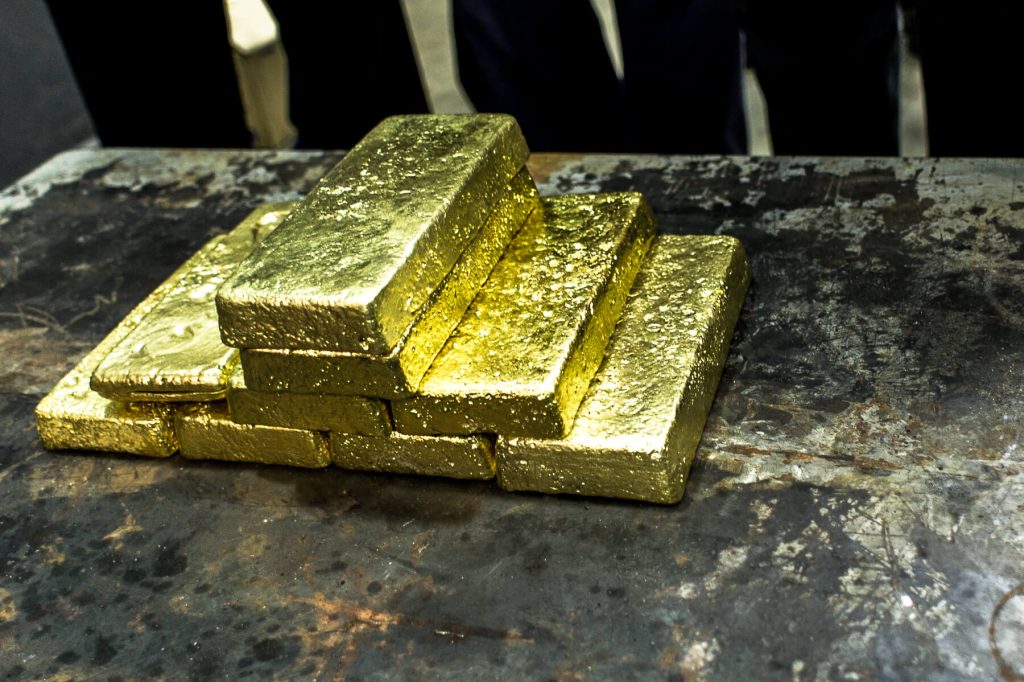
Gold doré, by contrast, is what raw ore becomes after initial on-site smelting: a semi-refined bar typically 60–90% pure gold, with the remainder made up of silver and other trace metals, poured directly at or near the mine site before being sent to a specialist refinery for final processing to 99.9% purity.
Doré is a genuine, actively traded commodity in international gold markets — refineries buy it specifically because it saves them the earliest, most capital-intensive stage of processing.
Refined 24K gold, finally, is the finished product: 99.9% pure bullion, ready for investment, jewelry, or industrial use.
Because doré still requires refining — plus assay costs, transport, and a buyer’s margin — it trades at a genuine discount to fully refined gold, priced off its contained gold value rather than treated as equivalent to bullion.
How Gold Doré Pricing Actually Works
The correct way to price a doré bar is straightforward once you know the formula: contained gold value = purity % × weight × current gold spot price, and doré typically trades at roughly 90–95% of that contained value, with the remaining 5–10% reflecting the refiner’s margin, assay risk, and processing cost.
With gold spot trading around $4,430 per troy ounce ($142.45 per gram) through mid-2026, a 1kg doré bar at 75% purity carries a contained gold value of roughly $106,838 — with the actual market price landing somewhere around $96,000–$99,000/kg once the standard discount is applied.
This is meaningfully below refined 24K pricing (roughly $142,450/kg before dealer premium) but nowhere near the near-parity numbers sometimes quoted by less careful sources.
Gold Doré Bar Prices per Kilogram in Africa (2026)
Using this contained-value methodology, here’s current indicative doré pricing across Africa’s major gold-producing nations, reflecting typical purity ranges by region:
Uganda
Doré price per kg: approximately $92,700 – $112,600, for material typically running 70–85% purity. Uganda is emerging as a genuine gold trading hub in East Africa, with significant deposits in the Karamoja region and around Busia, much of it processed into doré at artisanal sites before reaching licensed exporters.
The 2022 discovery of an estimated 31 million tonnes of gold-bearing ore in Uganda — potentially yielding a substantial volume of pure gold over the deposit’s life — has drawn real international investor attention to the country’s broader gold sector.
Refined 24K gold in Uganda trades around $142,450/kg at current spot, underlining just how much value doré’s semi-refined state still leaves on the table compared to finished bullion.
Uganda’s Directorate of Geological Survey and Mines regulates exports, and buyers should work exclusively with licensed dealers to ensure transparency. See our gold mining in Uganda guide for more on this sourcing region.
Democratic Republic of Congo (DRC)
Doré price per kg: approximately $86,100 – $106,000, for 65–80% purity material. The DRC remains one of Africa’s richest gold sources, particularly around Ituri, South Kivu, and Orientale province, where artisanal mining dominates and keeps processing costs — and therefore doré prices — comparatively low.
Political instability and informal mining practices can complicate transactions in parts of the country, making licensed exporters and full documentation genuinely essential rather than optional. Our gold mining in Congo guide covers this market in more depth.
Tanzania
Doré price per kg: approximately $92,700 – $119,200, for 70–90% purity material. Tanzania hosts large-scale mining operations around Geita and Shinyanga, with stable mining regulations and consistent government support for increased production.
Multinational mining companies operating in Tanzania help ensure consistent doré quality, though buyers should still confirm that any exporter holds proper government-certified licensing before transacting.
Kenya
Doré price per kg: approximately $92,700 – $112,600, for 70–85% purity material. Kenya’s gold sector, centered on artisanal mining in the country’s western regions, continues to grow alongside government efforts to formalize small-scale mining and improve supply chain transparency — a genuinely positive trend for buyers wanting confidence in provenance and purity.
Mali
Doré price per kg: approximately $86,100 – $106,000, for 65–80% purity material. As West Africa’s third-largest gold producer, Mali’s key mining operations around Sadiola, Loulo, and Morila continue producing significant doré volumes despite periods of regional political instability, which so far haven’t meaningfully disrupted export demand.
Summary Table
| Country | Doré Price per kg (USD) | Typical Purity | Refined 24K Price per kg (USD) |
|---|---|---|---|
| Uganda | $92,700 – $112,600 | 70–85% | ~$142,450 |
| DRC | $86,100 – $106,000 | 65–80% | ~$142,450 |
| Tanzania | $92,700 – $119,200 | 70–90% | ~$142,450 |
| Kenya | $92,700 – $112,600 | 70–85% | ~$142,450 |
| Mali | $86,100 – $106,000 | 65–80% | ~$142,450 |
Prices reflect contained gold value at current spot (~$142.45/g) less a standard 5–10% refining and margin discount. All figures move daily with the global gold price — confirm current rates before any transaction. See our 24K gold price per gram guide for live refined-gold benchmarking.
Factors That Influence Gold Doré Prices in Africa
Global spot price sets the baseline for every doré valuation, since contained gold value is calculated directly off the live LBMA rate. Purity level matters enormously — a 90%-pure doré bar is worth proportionally more than a 65%-pure bar of the same weight, which is exactly why buyers should always insist on an independent assay before agreeing a price rather than trusting a seller’s stated purity.
Local production costs — Africa’s comparatively low labor and operational costs, particularly in artisanal mining — keep doré genuinely competitive versus material sourced elsewhere. Currency exchange rates play a role too: weaker local currencies against the dollar can make doré more attractively priced for USD-based international buyers.
Export regulations and taxes vary meaningfully by country, with Tanzania’s stricter export tax regime pushing prices slightly higher than the DRC’s comparatively lighter tax burden. Artisanal versus industrial mining also shapes both cost and consistency — artisanal doré from the DRC, Uganda, and Mali tends to be cheaper but carries more purity variance, while industrial operations in Tanzania offer more consistent quality at a modest premium. Finally, political and economic stability genuinely affects pricing — instability in parts of the DRC and Mali can introduce real volatility, while Tanzania and Kenya offer comparatively steadier markets.
Legal and Ethical Considerations When Buying Gold Doré in Africa
Buying gold doré in Africa requires real attention to legal and ethical compliance. Licensing and documentation are non-negotiable: buyers must source only from dealers or mines registered with the relevant national mineral authority — Uganda’s Directorate of Geological Survey and Mines or Tanzania’s Ministry of Minerals, for example — with an independent assay certificate and valid export license accompanying every international shipment.
Avoiding illicit trade matters just as much. The DRC and Uganda in particular face genuine challenges with gold smuggling from artisanal sources, and working exclusively with reputable, properly licensed exporters is what actually prevents inadvertent involvement in illicit supply chains. Our guide on gold smuggling in Africa covers this risk, and how proper documentation protects legitimate buyers, in more detail.
Environmental and social impact deserves real consideration too — artisanal mining often involves hazardous practices, mercury use chief among them, that harm both the environment and miners’ health directly.
Prioritizing suppliers committed to genuinely sustainable practices, including those supported by programs like the World Bank’s planetGOLD initiative operating in Mali, the DRC, and Uganda, is a meaningful way to buy responsibly rather than just legally.
Secure logistics round out the compliance picture: doré must move via internationally recognized security firms — Brinks or Malca-Amit, specifically — with full insurance and proper customs clearance, typically routed through established export gateways like Entebbe International Airport (Uganda), Nairobi (Kenya), or Julius Nyerere International Airport (Tanzania).
Buying Gold Doré from Africa as a European Buyer
European refiners, bullion dealers, and institutional buyers represent a genuinely significant market for African gold doré, since EU-based refineries — including several of Switzerland’s world-leading operations — process substantial volumes of African doré into finished LBMA-standard bars each year. If you’re a European buyer, a few things are worth understanding before you commit to an order.
Because doré is, by definition, not yet refined to investment-grade purity, it generally does not qualify for the EU’s investment gold VAT exemption, which under Directive 98/80/EC applies specifically to bars and wafers at 995+ fineness. Doré imports into the EU are typically handled as raw material for industrial refining rather than as investment gold, which changes both the tax treatment and the customs classification compared to a finished bullion bar — worth clarifying with a customs broker or tax advisor before a significant order, particularly if you’re a private buyer rather than an established refinery.
Full export documentation — assay certificate, export licence, and certificate of origin — travels with every shipment specifically to support smooth EU customs clearance regardless of final classification.
Our guide on gold investment opportunities in Africa covers how doré fits alongside refined bars and nuggets in a broader African sourcing strategy for European buyers.
Why Buy Gold Doré in Africa?
Africa offers genuine, structural advantages for doré buyers. Competitive pricing driven by direct sourcing and lower production costs means African doré consistently undercuts equivalent material available through Western intermediaries.
Abundant supply underpins this: Africa produces well over 1,000 metric tonnes of refined-equivalent gold annually, with Uganda, the DRC, Tanzania, and Mali among the continent’s leading contributors, ensuring steady doré availability for buyers at scale.
Genuine investment potential comes from gold’s enduring role as a safe-haven asset, hedging effectively against inflation and broader economic uncertainty — and Africa’s growing gold sector, Uganda and Tanzania especially, offers real long-term upside for investors willing to engage at the doré stage rather than waiting for fully refined product.
Direct sourcing — buying from licensed miners or exporters rather than through multiple intermediary layers — eliminates unnecessary markup and maximizes value for the buyer.
How to Buy Gold Doré Safely in Africa
Follow these steps to purchase gold doré safely in Uganda, the DRC, Tanzania, Kenya, or Mali. Choose a reputable, licensed supplier with verifiable registration and a track record across the region you’re sourcing from.
Verify purity independently by requesting an assay certificate from an accredited laboratory — PMMC in Ghana or comparable accredited labs elsewhere — rather than accepting a seller’s stated purity at face value.
Secure full export documentation, including export licences and tax clearance paperwork, before any funds change hands. Use secure logistics — Brinks or Malca-Amit, specifically — for tamper-proof packaging, full insurance, and proper customs clearance.
And compare prices against the live global spot rate rather than a static quote, since doré value should always track the current gold price minus the standard refining discount, not a fixed number that doesn’t move with the market.
FAQ: Gold Doré Bars in Africa
What’s the difference between gold ore, doré, and refined gold? Ore is unprocessed rock with gold content measured in grams per tonne. Doré is semi-refined, typically 60–90% pure, poured at the mine site. Refined gold is 99.9% pure, investment-ready bullion.
Why is doré cheaper than refined 24K gold? Because it still requires further refining, assay verification, and transport before reaching investment purity — the price reflects contained gold value minus that remaining processing cost and margin.
Is gold doré legal to buy and export from Africa? Yes, provided the transaction complies with local mining and export regulations, including proper licensing, assay certification, and export permits.
Does gold doré qualify for VAT-free import into the EU? Generally no — doré is typically classified as raw material for industrial refining rather than investment gold, so it doesn’t automatically receive the same VAT treatment as finished 995+ bars.
How is a fair doré price calculated? Purity percentage multiplied by weight multiplied by the current gold spot price gives contained gold value; a fair doré price sits roughly 5–10% below that figure to account for refining costs and margin.
Related Gold Buying Guides
- Gold Producing Countries in Africa
- Gold Deposits in Africa
- Gold Mining in Uganda and Congo
- Gold Mining in Congo
- 24K Gold Price Per Gram
- Gold Investment Opportunities in Africa
- Gold Smuggling in Africa: What Buyers Should Know
- Trusted Gold and Silver Dealers
- Buy Gold Bars from Africa
- African Gold Bars for Sale
- FAQs About Buying Gold in Africa
- Contact Us