
South Africa Gold Export Procedure: Top Legal Guide 2026
South Africa Gold Export Procedure: Exporting gold from South Africa is one of the most structured, most credentialed, and most legally demanding precious metals export processes in Africa — and understanding it correctly in 2026 is essential whether you are a Johannesburg-based gold trader, a Rand Refinery partner, an artisanal miner formalizing through South Africa’s new ASM policy, or an international buyer sourcing South African gold for markets in Dubai, London, or Hong Kong.
South Africa produced gold worth billions of rands in 2025, with the gold price per gram in South Africa reaching ZAR 2,476.64 (~$150.92 USD) on May 6, 2026 — up approximately 30–35% from 2025 levels following the global all-time record of $5,602.22/oz on January 28, 2026.
The combination of record-high gold prices and South Africa’s extraordinarily credentialed export infrastructure — anchored by Rand Refinery’s LBMA Good Delivery accreditation — makes understanding South Africa’s gold export procedure more financially significant than at any previous point.
This comprehensive 2026 guide covers everything you need to know about the South Africa gold export procedure: the regulatory bodies that govern it, the licences required at each stage, the complete documentation package, how SARB foreign exchange controls work, how SARS customs clearance operates, what an SAD500 is, how to transport gold securely from South Africa, international compliance obligations, the costs involved, common pitfalls, and why Africa Gold Suppliers Limited is your trusted partner for legally sourced, export-ready African gold.
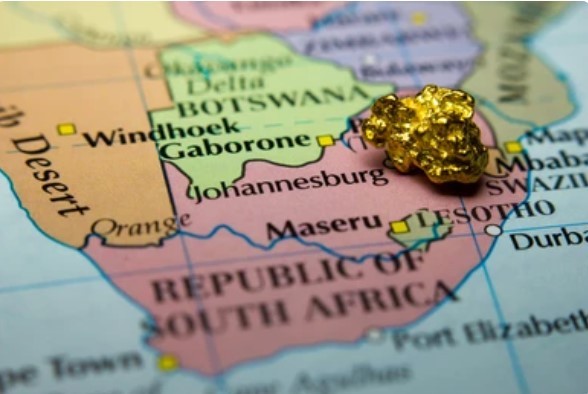
The South Africa Gold Export Procedure: Step by Step
Exporting gold legally from South Africa follows a precise sequence of steps that cannot be reordered. Here is the complete process:
Step 1: Register Your Business in South Africa
Before any gold export is possible, you must have a legally registered South African company — typically a Pty Ltd (private company) registered with the Companies and Intellectual Property Commission (CIPC).
Foreign entities cannot export gold from South Africa directly — a locally registered company is mandatory for compliance with SADPMR’s Beneficiation Licence requirements and SARS’s exporter registration requirements.
Step 2: Obtain SADPMR Precious Metals Beneficiation Licence
Apply to the SADPMR with the complete supporting documentation: Certificate of Incorporation, proof of registered business premises (lease or ownership documents), financial statements demonstrating capacity, Environmental Management System certification, compliance with NEMA (National Environmental Management Act 1998), and supplier/buyer contracts or letters of intent.
The application fee of R20,000 is payable upon acceptance. SADPMR may conduct site visits or audits as part of the due diligence process, adding ZAR 9,000–37,000 (~USD 500–2,000) in potential incidental costs.
Step 3: Apply for the Consignment-Specific Export Permit
Once the Beneficiation Licence is in hand, apply to SADPMR for an export permit for each specific shipment. The application must specify the gold’s origin (verified against DMRE mining records), quantity, assay-confirmed purity, international buyer’s identity, payment method, and destination country.
The SADPMR will verify the legal sourcing of the gold before issuing the export permit — ensuring no conflict gold or illegally mined material enters the export pipeline.
Step 4: Obtain SARB Foreign Exchange Approval
Since gold exports involve international transactions, foreign exchange approval from the South African Reserve Bank is required for every export payment.
This is obtained through an authorized South African commercial bank — Standard Bank, ABSA, FNB, Investec, or Nedbank are all authorized SARB dealers — by providing transaction details including buyer information, payment method, and the amount in foreign currency being received.
SARB’s foreign exchange controls mandate that all gold export proceeds be repatriated to South Africa in foreign currency or Rand from a Non-resident Rand account.
This requirement prevents capital flight and is one of the most fundamental financial compliance obligations in South Africa’s entire export regulatory framework. SARB administrative fees for foreign exchange approvals typically range from USD 50–200 per transaction.
Step 5: Register with SARS as an Exporter and Submit the SAD 500
Every South African gold exporter must be registered with SARS as an exporter. Customs clearance through SARS must be completed before shipping. All documents (SAD500, assay report, export permit) must be presented at the port or airport for physical inspection by SARS and SADPMR officials.
The Single Administrative Document (SAD 500) is the customs declaration form that summarizes the entire shipment for SARS customs purposes: gold description, weight, purity, declared value, exporter details, destination country, and the export permit number.
Any discrepancy between the SAD 500 and supporting documents triggers a customs hold. All SARS customs administrative fees range from approximately ZAR 500–2,000 (USD 27.5–110) per shipment.
Gold bullion is generally exempt from South African export duties — one of the country’s most investor-friendly policy decisions that makes South African gold the most economically efficient to export of any major African producer (compared to Uganda’s 5–10% export levy or DRC’s 13.5% combined charge).
This zero-duty policy is a deliberate government decision to maintain South Africa’s competitive position in global gold trade.
Step 6: Commission an Accredited Assay Certificate
Before export, the gold must be assayed by an accredited institution. Rand Refinery is South Africa’s most credentialed assayer — its assay certificates are recognized by LBMA members worldwide and accepted without question at every major destination country.
The assay cost ranges from approximately ZAR 1,000–3,000 (USD 55–165) per sample. The assay certificate must specify the exact purity percentage, weight to four decimal places, and unique serial number matching the physical gold bar.
Step 7: Arrange Secure Logistics from South Africa
Once the Customs Export Release Order is issued by SARS — confirming all documents have been verified and all taxes and fees paid — the gold can physically depart South Africa through approved logistics channels.
OR Tambo International Airport (JNB) in Johannesburg is the primary international departure point for precious metals cargo from South Africa. Licensed precious metals carriers operating from OR Tambo include Brinks Global Services, Malca-Amit, and G4S Secure Solutions — all of which provide real-time GPS tracking, sealed tamper-evident packaging, and full declared-value insurance from departure to delivery at the destination country.
Alternative departure options include Cape Town International Airport (CPT) and the Port of Durban for sea freight of very large gold volumes, though air freight remains the standard for investment-grade gold bars and coins.
The Regulatory Framework: Who Governs Gold Exports from South Africa?
South Africa’s gold export regulations are administered by four distinct government bodies, each controlling a separate aspect of the process. A failure to comply with any one of them blocks the entire export.
The South African Diamond and Precious Metals Regulator (SADPMR) is the primary licensing authority for all gold export activities. All applications for permission to export gold must be referred to the South African Diamond and Precious Metals Regulator (SADPMR). This includes the export of gold jewelry, gold in any other form, and Krugerrand coins
. The SADPMR operates under the Precious Metals Act (Act 37 of 2005), which mandates that anyone dealing in gold — including exporting it — must hold a valid SADPMR licence.
The SADPMR’s offices are located at Corner 38 Bonaero Drive and Cote D’Azur Avenue, OR Tambo SEZ, Kempton Park, 1622, South Africa, with contact at sadpmr.co.za and phone 011 334-9001.
The South African Reserve Bank (SARB) regulates all foreign exchange transactions related to gold exports. Under the Currency and Exchanges Manual for Authorized Dealers (CEMAD), Section B.20(c), all gold export proceeds must be repatriated to South Africa in foreign currency or Rand from a non-resident account.
The SARB’s foreign exchange controls are not bureaucratic formality — they are the mechanism by which South Africa prevents capital flight and maintains its foreign exchange reserve position. Every international gold sale by a South African exporter requires SARB compliance before the shipment departs.
The South African Revenue Service (SARS) administers customs procedures under the Customs and Excise Act (Act 91 of 1964), requiring registration of all exporters and the submission of the Single Administrative Document (SAD 500) — the customs declaration form — for every gold shipment.
SARS is also the authority that issues the Customs Export Release Order authorizing physical departure of the gold from South Africa’s borders.
The Department of Mineral Resources and Energy (DMRE) enforces the Mineral and Petroleum Resources Development Act (MPRDA), which governs mining operations and ensures the legal sourcing of all gold that enters the export pipeline. Without DMRE compliance at the mine level, no downstream export authorization is possible.
Licences Required to Export Gold from South Africa
Getting a gold export licence in South Africa is a multi-stage process that involves obtaining the correct SADPMR authorization before any export permit application can proceed.
Most international buyers are surprised to discover that there are multiple distinct licences involved — not just a single “export permit.”
The Precious Metals Beneficiation Licence — The Foundational Authorization
The Precious Metals Beneficiation Licence from SADPMR is the primary licence that authorizes any entity to trade in or deal with gold within South Africa — and it is the mandatory prerequisite for applying for an export permit. Without the Beneficiation Licence, an export permit application cannot even be submitted.
Obtaining this licence requires proof of business registration as a South African company (a Pty Ltd structure is standard for compliance purposes), demonstration of financial and technical capacity to handle gold trade, compliance with environmental and social regulations under the MPRDA, and an Environmental Management System (EMS) certification, updated annually under the Environmental Conservation Act.
The licence application fee at SADPMR is R20,000 (~$1,220 USD), payable within 24 hours of the application being accepted — failure to pay within that window requires resubmission of the entire application.
The Gold Export Permit — Per-Shipment Authorization
Every individual gold export shipment requires a separate, consignment-specific gold export permit from SADPMR. This is not a standing authorization — it must be applied for each time gold is being exported, providing details of the specific gold’s origin, quantity, purity, and the international buyer’s identity.
The export permit application requires submission of the Precious Metals Beneficiation Licence, an assay certificate verifying purity from an accredited institution (Rand Refinery is the most credentialed South African assay provider), details of gold quantity and declared value, Certificate of Origin, buyer information and payment details, and evidence of SARB foreign exchange compliance.
Permit application fees range from approximately ZAR 2,000–5,000 (USD 110–275) per application depending on the quantity and value being exported.
Processing time for SADPMR export permits can be several weeks due to the stringent verification checks — exporters should initiate permit applications well before anticipated shipment dates. Rushed applications without complete documentation are typically rejected, adding further delay.
The SADPMR Certificate to Buy or Sell Precious Metals
For entities engaged in buying gold from South African miners or refineries for the purpose of export, the SADPMR’s Certificate to buy or sell precious metals is an additional authorization layer.
This certificate is distinct from the Beneficiation Licence and addresses the domestic trading component of the supply chain before export begins.
Documents Required for Gold Export from South Africa
Documents for gold export from South Africa must be complete, internally consistent, and presented in the correct sequence. Missing or inconsistent documentation results in shipment detention that can last weeks while SADPMR or SARS investigates.
The complete South Africa gold export documentation package includes the SADPMR export permit for the specific consignment, the Precious Metals Beneficiation Licence of the exporting company, the assay certificate from Rand Refinery or another SADPMR-accredited institution confirming purity and weight, the Certificate of Origin confirming legal South African gold sourcing, the Commercial Invoice with declared USD value consistent with the assay certificate’s weight and LBMA-derived pricing, the SAD 500 customs declaration form stamped by SARS, the SARB foreign exchange approval from an authorized South African bank, the Customs Export Release Order issued by SARS after all verification is complete, and the packing list itemizing the contents of the shipment for security and customs inspection.
For gold being exported to EU buyers, additional OECD Due Diligence Guidance documentation demonstrating responsible sourcing is required under the EU Conflict Minerals Regulation (mandatory since January 2021 for EU importers of gold from certain regions).
For Krugerrand coin exports, non-resident tourists may export up to 15 Krugerrand coins without a full SADPMR permit, provided they can demonstrate the coins were purchased with foreign currency proceeds — a practical exception that simplifies tourist purchases.
SARB Foreign Exchange Controls for Gold Exporters
South Africa’s foreign exchange controls on gold exports are among the most rigorous in Africa and require careful financial planning by any serious exporter.
The Currency and Exchanges Manual for Authorized Dealers (CEMAD), Section B.20(c), governs these controls in detail.
Repatriation of export proceeds is mandatory. Every rand of foreign currency received for South African gold exports must be repatriated — brought back into the South African banking system — within the timeframe specified by SARB regulations. Failure to repatriate export proceeds is a foreign exchange offence under South African law.
All gold transactions must be supported by prescribed SARS customs declarations. SARB uses these declarations to cross-reference gold export values against actual payments received, ensuring no under-invoicing (which would constitute a foreign exchange offence by reducing apparent repatriation obligations).
Payment methods are restricted to authorized channels. Gold export payments must be received in foreign currency or Rand from a non-resident account at an authorized South African bank. SWIFT bank wire transfers from internationally recognized financial institutions are the standard method.
Cryptocurrency payments without clear anti-money laundering compliance frameworks, Western Union, and informal hawala transfers do not comply with SARB’s requirements.
For international buyers of South African gold, the SARB framework means that payment must be made via SWIFT wire transfer to the exporter’s South African bank account, with the payment amount matching the Commercial Invoice exactly.
Partial payments, staged payments without documented justification, or payments from third-party accounts not named in the SARB foreign exchange application trigger compliance investigations.
Gold Export Taxes and Costs in South Africa
South Africa’s gold export tax and cost structure is genuinely one of the most attractive of any major African gold producer — making South African gold the most economically efficient source for large-volume international buyers once all costs are accounted for.
Zero export duty on gold bullion is the headline advantage. Unlike Uganda (5–10% export levy), Ghana (approximately 1.5% plus royalty), or DRC (13.5% combined), South Africa charges zero export duty on investment-grade gold bars and Krugerrand coins.
This zero-duty policy has been maintained consistently and is a deliberate government strategy to position South Africa as the most competitive gold export origin in Africa.
Mineral royalty tax applies at the mining level — South Africa charges a royalty of 0.5–5% based on gold production levels assessed against the mining company’s earnings.
This royalty is paid by the mining company, not the exporter, and is factored into the price at which gold is sold from miners to refineries and dealers. Export buyers are not directly subject to this royalty — it has already been paid by the time gold reaches the export stage.
VAT considerations: Gold bullion exported directly from South Africa is zero-rated for VAT purposes — the exporter does not charge VAT on international gold sales.
Input VAT on South African domestic costs (assay fees, logistics, professional services) can be recovered through the standard VAT refund mechanism.
The complete cost structure for a South African gold export therefore consists of the SADPMR Beneficiation Licence application (R20,000, one-time per licensing cycle), SADPMR export permit fees (ZAR 2,000–5,000 per shipment), assay certificate costs (ZAR 1,000–3,000), SARS customs administrative fees (ZAR 500–2,000), SARB administrative fees (USD 50–200), and logistics insurance (typically 0.5–1.5% of declared gold value).
For a 1 kilogram shipment worth approximately ZAR 2,476,640 (~$150,922 USD), total export costs outside the gold price itself are approximately ZAR 50,000–80,000 (~$3,050–$4,880 USD) — approximately 2–3% of gold value. This compares extraordinarily favorably with Uganda’s 5–10% or DRC’s 13.5%.
Anti-Money Laundering and KYC Requirements for South African Gold Exporters
AML compliance for South African gold exporters is enforced at multiple levels — by SADPMR, SARB, and South Africa’s Financial Intelligence Centre (FIC), which is South Africa’s equivalent of Kenya’s FRC.
South Africa adheres to Financial Action Task Force (FATF) standards — the global AML framework — and SADPMR’s licensing process specifically requires exporters to implement Know Your Customer (KYC) procedures that verify the identity and legitimacy of both domestic gold suppliers and international buyers.
For international buyers, KYC documentation requirements include certified copies of identity documents (passport for individuals; Certificate of Incorporation, directors’ IDs, and proof of registered address for companies), bank reference letters, source of funds declarations, and — for buyers in high-risk jurisdictions — enhanced due diligence documentation.
OECD Due Diligence Guidance applies to South African exporters supplying gold to EU buyers, who are themselves subject to mandatory OECD due diligence under the EU Conflict Minerals Regulation.
Even though South Africa is not itself a conflict-affected country, gold that originates in DRC and transits through South African refineries for processing carries conflict minerals documentation requirements.
Violations of South Africa’s AML framework carry criminal penalties including fines and imprisonment under the Prevention of Organised Crime Act and Financial Intelligence Centre Act.
Exporting Krugerrands from South Africa: Special Rules
Exporting Krugerrands from South Africa follows specific rules that differ from investment bar exports in important respects.
The Krugerrand — produced exclusively by Rand Refinery in Germiston since 1967 — is the world’s first and most widely traded gold bullion coin. At 22K (91.67% gold, 8.33% copper), it is legal tender in South Africa, which creates a specific export treatment distinct from ordinary gold bars.
Non-resident tourists may export up to 15 Krugerrand coins (or the equivalent in fractional Krugerrands) without full SADPMR export permit requirements, provided they can demonstrate the coins were acquired with foreign currency proceeds.
This exception makes Krugerrands the most practically accessible South African gold product for international visitors making personal purchases.
For commercial exports of Krugerrands above the 15-coin threshold, the full SADPMR export permit procedure applies — identical to investment bar export procedures. All applications for the export of Krugerrand coins must be referred to SADPMR regardless of quantity above the tourist exception threshold.
International Compliance for South African Gold Exports
International compliance obligations for South African gold depend on the destination country’s import regulations. Understanding these before initiating an export prevents rejection at the destination customs.
For UAE/Dubai — South Africa’s largest gold export partner — zero import duty applies on gold bullion and Krugerrands, with no VAT on investment gold. Standard documentation (SADPMR permit, assay certificate, Certificate of Origin, SAD 500, commercial invoice) plus full insurance certificate is sufficient for Dubai Customs clearance.
For EU buyers — all EU importers of gold from South Africa are required to conduct OECD-aligned due diligence since January 2021 under the EU Conflict Minerals Regulation, even though South Africa itself is not a conflict-affected country.
This requirement applies because the regulation covers “gold from conflict-affected and high-risk areas” — and because some South African refineries process gold from such areas, EU buyers must verify the specific provenance of what they receive.
For UK buyers — zero customs duty on gold bullion, VAT-exempt for investment gold, standard customs declaration required. The UK’s post-Brexit precious metals framework mirrors EU standards in most practical respects.
For US buyers — zero customs duty on gold bullion. FinCEN reporting for significant cash transactions. US-listed companies using DRC-origin gold processed through South African refineries must comply with Dodd-Frank Section 1502.
For India — the world’s largest physical gold consumer — standard customs declaration with Certificate of Origin and assay certificate required. Import duties on gold apply in India (currently 15% including import duty and agriculture cess), making South African gold’s zero-export-duty advantage partly offset by Indian import costs.
Common Mistakes When Exporting Gold from South Africa
Mistakes in South Africa’s gold export process carry severe consequences — from shipment confiscation to criminal prosecution. These are the most frequent failure points.
Applying for an export permit before obtaining the Beneficiation Licence is the most common procedural error among new entrants. The SADPMR will not process an export permit application without a current Beneficiation Licence — the two-stage process is sequential, not parallel.
Failing to obtain SARB foreign exchange approval before shipment results in financial compliance violations that are independent of the physical gold’s export status. A shipment can physically depart South Africa and still generate SARB enforcement action if the foreign exchange approval was not obtained and proceeds properly repatriated.
Discrepancies between the SAD 500 and supporting documents — particularly between the declared value on the commercial invoice and the assay certificate’s weight-derived value at current LBMA rates — trigger SARS investigations. Prepare all documents from the same verified source data.
Using non-specialist logistics providers creates security and legal liability exposure. Only licensed precious metals carriers with SADPMR-compliant handling procedures should be used for South African gold shipments.
Not verifying the sourcing legality of gold before export creates SADPMR compliance failures and potential OECD due diligence violations. Every gram of gold entering the export pipeline must be traceable to a licensed South African mining operation through documented chain of custody.

FAQs: South Africa Gold Export Procedure
Who can export gold from South Africa? Only companies holding a current SADPMR Precious Metals Beneficiation Licence and a consignment-specific SADPMR export permit can legally export gold from South Africa. Foreign entities must register a South African company first. Individuals without business registration cannot export gold commercially.
What is the SADPMR and why does it matter for gold exports? The South African Diamond and Precious Metals Regulator (SADPMR) is the primary licensing authority for all gold trade and export in South Africa, operating under the Precious Metals Act 2005. Every gold export requires SADPMR approval — it is the gatekeeper of South Africa’s entire gold export system.
Does South Africa charge export duty on gold? No — gold bullion exports from South Africa are exempt from export duties. This zero-duty policy is one of South Africa’s most significant competitive advantages over other African gold-producing countries. A 5% royalty applies at the mining level but not at the export stage for buyers.
How long does it take to get a gold export permit in South Africa? SADPMR export permit processing can take several weeks due to stringent verification. Exporters should initiate permit applications well in advance of anticipated shipment dates.
Incomplete applications are rejected and must be resubmitted, adding further delay. Experienced exporters maintain standing Beneficiation Licences and submit permit applications with complete documentation to minimize processing time.
What is the SAD 500 in South Africa gold export? The Single Administrative Document (SAD 500) is the SARS customs declaration form required for every South African gold export.
It summarizes the shipment for customs purposes and must be consistent with all other export documents. SARS reviews the SAD 500 alongside the export permit and assay certificate before issuing the Customs Export Release Order.
Can foreign nationals export Krugerrands from South Africa? Non-resident tourists may export up to 15 Krugerrand coins without a full SADPMR export permit, provided the coins were acquired with foreign currency. Commercial exports of Krugerrands above this threshold require the full SADPMR export permit procedure.
Why Africa Gold Suppliers Limited Is Your Best Alternative to Navigating South Africa’s Export Process Alone
You now have the complete 2026 guide to South Africa’s gold export procedure — the regulatory bodies, the licences, the step-by-step process, the documents, SARB foreign exchange controls, SARS customs procedures, export costs, AML compliance, Krugerrand rules, and international destination requirements.
The knowledge is valuable. But the honest truth is this: building a standalone South Africa gold export operation from scratch — registering a Pty Ltd, applying for SADPMR Beneficiation Licence (R20,000, several weeks), obtaining per-shipment permits (ZAR 2,000–5,000 each), navigating SARB foreign exchange approvals through an authorized dealer bank, submitting SAD 500 customs declarations to SARS, commissioning Rand Refinery assays, and booking Brinks or G4S logistics from OR Tambo — requires significant time, capital, and South African regulatory expertise before a single gram can be exported.
Africa Gold Suppliers Limited is the established, licensed alternative that bypasses all of that complexity for international buyers.
We hold current licensing from the relevant regulatory authorities across our African supply network, maintain standing relationships with accredited assay laboratories, have established SARB-compliant foreign exchange frameworks through authorized South African banking partners, and operate insured logistics through Brinks and DHL from OR Tambo to global destinations.
International buyers who work with Africa Gold Suppliers Limited receive SADPMR-compliant, Rand Refinery-certified gold with the complete documentation package — without needing to establish their own South African corporate entity, apply for SADPMR licences, or navigate SARB foreign exchange procedures independently.
But here is the broader perspective that serious gold investors need: South Africa’s extraordinary gold export framework — zero export duty, LBMA accreditation, Rand Refinery certification — is the gold standard for documentation quality and international credibility.
If what you want is the most credentialed, most universally accepted, most internationally liquid gold available from any African source, South African Rand Refinery bars are the answer.
And if what you want is the most cost-competitive certified gold from East Africa — Uganda’s Karamoja high-purity nuggets, Kenya’s Migori Belt artisanal bars, Tanzania’s TMAA-certified production — at 1–3% above LBMA spot with complete documentation and insured worldwide delivery, Africa Gold Suppliers Limited delivers that too.
Whether your requirement is South African prestige or East African price competitiveness — or a combination of both — Africa Gold Suppliers Limited connects you to Africa’s finest certified gold at the most competitive prices available from any licensed, documented source on the continent.
South Africa’s export process is rigorous. Our compliance is complete. Your gold is ready.
Contact us today for certified African gold today.
South Africa gold prices updated May 2026: 24K = ZAR 2,476.64/gram (~$150.92 USD); 1kg = ZAR 2,476,640 (~$150,922 USD); USD/ZAR = 16.41. All-time gold record: $5,602.22/oz (January 28, 2026). SADPMR application fee: R20,000. Export permit: ZAR 2,000–5,000/shipment. Assay: ZAR 1,000–3,000. Zero export duty on investment gold. Sources: SADPMR (sadpmr.co.za), SARB CEMAD B.20(c), Precious Metals Act 2005, SARS Customs and Excise Act. All prices are reference rates — verify before transacting.