How Trump’s Tariffs Could Send Gold to $4,000: Geopolitical Gold Rush Explained
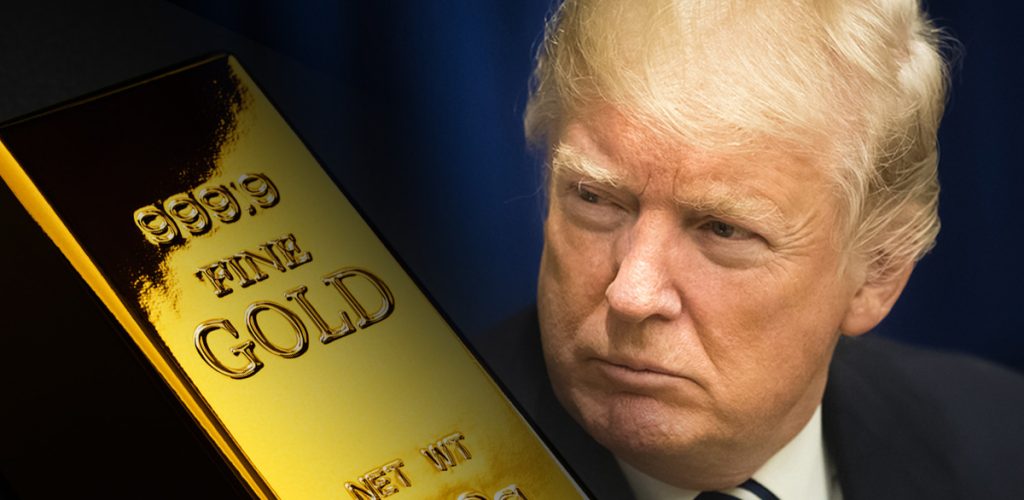
How Trump’s Tariffs Could Send Gold to $4,000: In the turbulent markets of 2025, gold has emerged as the ultimate safe-haven asset, surging over 40% year-to-date amid a cocktail of economic uncertainty and global tensions. Spot prices recently touched $3,751 per ounce, a mere whisper away from uncharted territory.
But what if the real catalyst isn’t just inflation or wars, but President Donald Trump’s aggressive tariff regime? Analysts at J.P. Morgan and Goldman Sachs are now openly debating a $4,000 per ounce milestone—potentially by mid-2026—fueled by trade war fears that could ignite a “geopolitical gold rush.”
As tariffs escalate from 10% blanket hikes to 100% on key sectors like pharmaceuticals and autos, investors are flocking to gold as a hedge against inflation, dollar volatility, and supply chain chaos.
Trump’s Tariff Arsenal: A Recipe for Global Turmoil
Since reclaiming the White House, Trump has wasted no time reviving his “America First” trade doctrine. In early 2025, he unveiled sweeping tariffs: 25% on steel and aluminum imports, 50% on electronics from China, and up to 100% on pharmaceuticals and critical minerals from Europe and Asia.
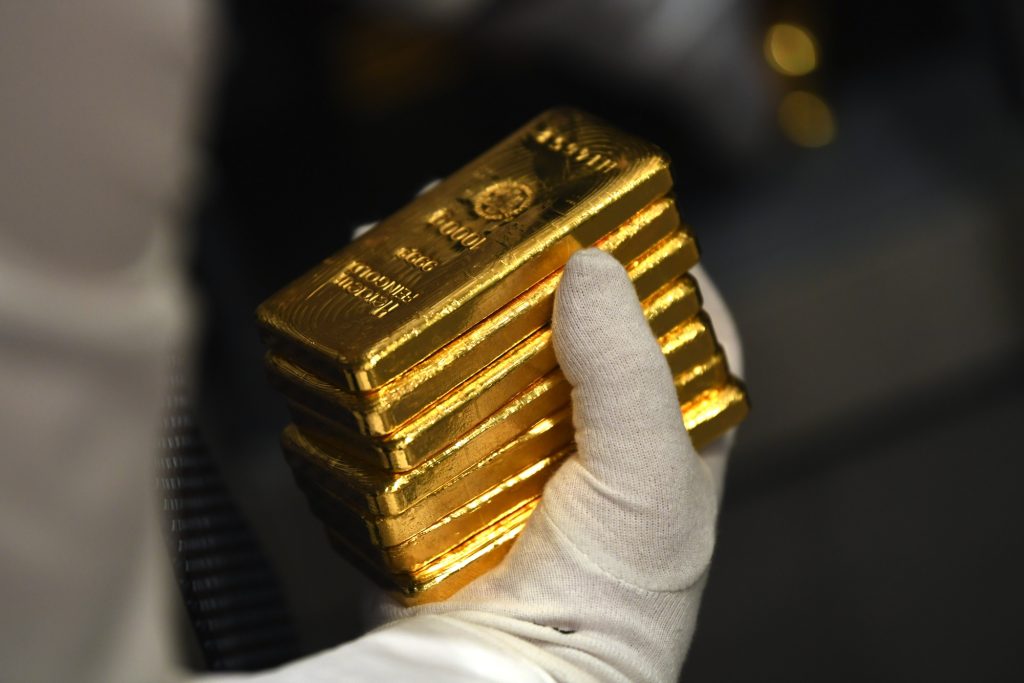
A controversial August ruling even slapped duties on Swiss gold bars—prompting a White House denial and a temporary 5% price spike—before exemptions were clarified.
These aren’t mere tweaks; they’re a full-throated assault on global trade, echoing the 2018-2019 trade war that shaved 0.5% off U.S. GDP but boosted gold by 25%.
The mechanics are straightforward: Tariffs raise import costs, fueling domestic inflation. Economists at Goldman Sachs estimate a 1-2% CPI uptick from current policies, as companies pass on expenses to consumers.
Retaliation is inevitable—China’s already eyeing soybean and Boeing countermeasures—creating a feedback loop of uncertainty. Enter gold: In times of trade friction, it shines as a non-correlated store of value, uncorrelated to stocks or bonds.
During the 2018 spat, gold rose 15% while the S&P 500 dipped 6%. Today’s stakes? Higher, with tariffs projected to add $300 billion to U.S. import bills annually.
The Inflation-Dollar Nexus: Tariffs’ Direct Path to Gold Glory
Tariffs don’t just hike prices—they erode trust in fiat currencies. A stronger dollar from initial trade surpluses gives way to debasement as the Fed counters inflation with rate cuts or quantitative easing.
Markets now see an 85% chance of a September 2025 cut, down from 100% pre-tariff announcements, but prolonged hikes could force deeper easing.
Lower real yields make gold’s zero-yield allure irresistible; historically, every 1% drop in 10-year Treasury yields correlates to a 10% gold pop.
J.P. Morgan’s Natasha Kaneva puts it bluntly: “With recession probabilities rising to 35% amid tariff risks, $4,000/oz is in the cards.” Their Q4 2025 average forecast? $3,675, but upside scenarios hit $4,000 if tariffs trigger stagflation—a toxic mix of 3%+ growth and 4% inflation.
Goldman Sachs concurs, lifting their 2025 target to $3,700 and eyeing $4,000 by 2026, citing central bank diversification: 900 tonnes bought in 2025 alone, up 20% from 2024. Emerging markets, hit hardest by tariffs, are leading the charge—India and China added 200 tonnes in Q3.
Geopolitical Amplifiers: From Trade Wars to Global Flashpoints
Tariffs aren’t isolated—they’re geopolitical dynamite. Trump’s 39% levy on Swiss imports (a gold refining hub) briefly roiled Comex futures, as 70% of U.S. bullion flows through Zurich.
Broader threats—50% on Russian allies like India unless they curb oil buys—tie tariffs to Ukraine peace talks, spiking risk premiums. Middle East flares add fuel: Iran’s proxy strikes have oil at $90/barrel, indirectly boosting gold via inflation.
This “geopolitical gold rush” mirrors 1970s oil shocks, when gold quadrupled amid embargo-driven inflation. Today, Reuters reports gold up $500 YTD, hitting $3,148 in April post-tariff unveilings.
Al Jazeera links February’s 10% surge directly to tariff fears, as investors flee “Trump volatility.” Seeking Alpha’s bull case? Tariffs force Fed QE, debasing the dollar and catapulting gold to $4,000 by year-end.
The $4,000 Path: Forecasts and Scenarios
Wall Street’s crystal ball is rosy but nuanced. Goldman Sachs: $3,700 end-2025, $4,000 mid-2026 if tariffs persist. J.P. Morgan: $3,675 Q4 average, but $4,000+ in stagflation.
Yardeni Research: $4,000 by December 2025, a 14% jump from today. Bear case? If tariffs fizzle (e.g., exemptions expand), gold dips to $3,200. But with Trump’s X posts doubling down—”Tariffs = American strength!”—escalation seems likely.
ETFs tell the tale: Inflows hit 27 tonnes weekly, per BullionVault, as retail piles in. Physical demand surges too—India’s Diwali buys up 15% amid rupee weakness from tariffs.
Risks and Investor Playbook
Not all sunshine: Tariffs could spark recession (35% odds), crushing demand for luxury gold like jewelry. Illegal mining in Africa booms, per Tortoise Media, raising ethical red flags. Volatility? Expect 5-10% swings, as August’s bar tariff scare showed.
For investors: Allocate 5-10% to gold via GLD or physical. Dollar-cost average dips; set stops at $3,500. Watch PCE data and tariff rulings—bullish prints fuel the rush.
Conclusion: Riding the Tariff Tiger
Trump’s tariffs aren’t just policy—they’re a geopolitical accelerant, potentially vaulting gold to $4,000 in a rush of fear-driven buying. As uncertainty reigns, from Swiss refineries to Ukraine frontlines, gold’s allure grows.
Goldman and J.P. Morgan see it as inevitable; X chatter agrees: “Tariffs = gold moonshot.” But tread carefully—this rush rewards the prepared, not the panicked. In 2025’s chaos, gold isn’t just metal; it’s the map to survival.