1 Gram Gold Price in Uganda Today: 24K, 22K, 21K & 18K Rates
The 1 gram gold price in Uganda today is approximately UGX 541,000 for 24K (99.9% pure) gold, equivalent to roughly $143 USD, based on the current global spot price of $4,453 per troy ounce and a live exchange rate of approximately 3,780 UGX per USD.
This guide breaks that figure down across every karat, explains exactly what drives Uganda’s gold price, and covers where to buy safely and legally.
Gold Price Per Gram in Uganda: Full Karat Breakdown
| Purity / Karat | Gold Price per Gram (UGX) | Equivalent (USD) |
|---|---|---|
| 24K — 999 (Pure Gold) | ~541,000 UGX | ~$143.16 |
| 22K — 916 | ~496,000 UGX | ~$131.18 |
| 21K — 875 | ~474,000 UGX | ~$125.27 |
| 18K — 750 | ~406,000 UGX | ~$107.37 |
| 14K — 585 | ~315,000 UGX | ~$83.46 |
These figures update continuously alongside the LBMA international gold spot price and the Bank of Uganda’s published UGX/USD exchange rate. Local dealer premiums, assay fees, and logistics costs may add to these reference figures — always confirm the live rate before transacting.
Gold Price Per Kilogram in Uganda
| Purity (Karat) | Price per kg (UGX) | Price per kg (USD) |
|---|---|---|
| 24K (99.9%) | ~541,000,000 UGX | ~$143,160 |
| 22K (91.6%) | ~496,000,000 UGX | ~$131,180 |
| 18K (75%) | ~406,000,000 UGX | ~$107,370 |
| 14K (58.5%) | ~315,000,000 UGX | ~$83,460 |
What Drives the Gold Price Per Gram in Uganda?
Uganda’s gold price is driven by six interacting factors, with the international spot price and the UGX exchange rate carrying the most direct, immediate weight.
International gold spot price (LBMA benchmark). The baseline for every gold rate in Uganda is the London Bullion Market Association’s daily spot price, quoted in USD per troy ounce.
When global demand for gold rises — driven by inflation hedging, central bank buying, or geopolitical risk — the USD spot price rises and Uganda’s UGX price follows directly.
Sustained central bank accumulation, periods of US dollar weakness, and persistent inflation concerns across major economies have all supported gold’s price globally in recent years.
UGX to USD exchange rate. Since global gold trades exclusively in USD, the shilling’s exchange rate against the dollar is the second direct driver of the local price. When the UGX weakens against the dollar, Ugandan buyers pay more shillings for the same amount of USD-priced gold, and a weaker UGX genuinely amplifies gold’s attractiveness as a local store of value.
Local supply from Uganda’s artisanal mining sector. Uganda’s domestic gold output comes primarily from artisanal and small-scale mining (ASM) operations in Mubende, Karamoja, Buhweju, and Kasese.
The Mining and Minerals Act, 2022 requires all export-grade gold to be refined to a minimum of 99.5% purity at a licensed facility before export, pushing more supply through formal channels. When domestic supply is constrained — due to seasonal mining slowdowns or enforcement activity — local premiums above the international spot price can widen.
Government policy, export levies, and licensing costs. The Directorate of Geological Survey and Mines (DGSM), under the Ministry of Energy and Mineral Development, together with the Uganda Revenue Authority (URA), sets the regulatory and tax environment for gold trading.
A flat USD $200 per kilogram export levy on refined gold, introduced under the 2023 mining regulations, affects the net price received by exporters and feeds into domestic gold premiums, alongside DGSM licensing fees and URA compliance costs.
Investor sentiment and the global interest rate environment. When real interest rates in major economies are low, gold becomes more attractive as a non-yielding safe-haven asset, supporting global demand and, by extension, Uganda’s gold price.
Jewelry and industrial demand. Local demand for gold in jewelry manufacturing and small-scale electronics creates a seasonal premium layer above international spot, typically rising around religious holidays, wedding seasons, and export aggregation periods.
24K vs 22K Gold: What’s the Actual Price Difference in Uganda?
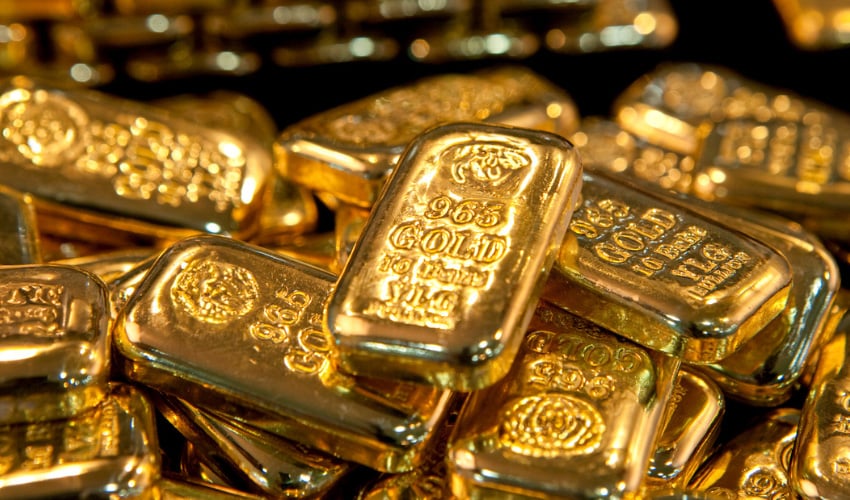
The difference between 24K and 22K gold per gram in Uganda is approximately UGX 45,000 (roughly $12 USD) at today’s prices — 24K carries no purity discount and trades at the full spot-equivalent rate, while 22K (916 fineness) contains 91.6% gold mixed with copper, silver, or zinc alloys that increase hardness and durability, pricing it roughly 8.3% below 24K.
Buying for investment or export? Choose 24K certified bars with full assay documentation. Buying for jewelry or ornamental use? 22K gold offers better durability at a lower per-gram cost.
Buying for resale in international bullion markets? Only export-grade 24K (99.5%+ purity, assayed by a DGSM-approved lab) will be accepted by LBMA-accredited refineries.
Is Gold Cheaper in Uganda Than in Kenya, South Africa, or Ghana?
Not systematically, no — Uganda’s gold price tracks the same LBMA spot rate as every other African market, with local premiums typically differing by only $1–3 per gram between neighboring countries, reflecting dealer margin variation and local supply dynamics rather than a fundamentally different pricing structure.
Uganda’s genuine advantage lies specifically in mine-direct access through licensed dealers, which can reduce intermediary premiums for wholesale buyers purchasing 1kg or more, rather than any structural discount available to smaller retail buyers.
Where to Buy Gold Per Gram in Uganda
Kampala’s licensed dealer district — Speke Road and Nakasero. This corridor hosts the highest concentration of licensed gold dealers in the country. Only buy from dealers registered with the DGSM and URA — ask to see the current Mineral Dealer’s License (MDL) and cross-check the license number on the DGSM registry before transacting.
Comparing quotes from at least two licensed dealers is genuinely worthwhile, since rates can vary by 1–2% between dealers depending on sourcing and overhead.
Jewelry shops on Kampala Road and Nasser Road offer 22K gold bars and coins alongside jewelry pieces, but price gold differently from bullion dealers — typically including a making charge or craftsmanship premium on top of raw spot value. For investment purchases specifically, a licensed bullion dealer is generally the better route than a jewelry shop.
African Gold Refinery (AGR) in Entebbe is one of Uganda’s largest gold refineries, processing artisanal and small-scale gold into export-grade 24K bars. It’s important to be transparent here rather than present an incomplete picture: in March 2022, the US Treasury’s Office of Foreign Assets Control sanctioned AGR and its owner for their role in the movement of gold linked to conflict zones in the eastern Democratic Republic of Congo. AGR has publicly disputed the sanctions.
Anyone sourcing AGR-refined gold specifically should factor this documented history into their own due diligence, independent of AGR’s continued domestic operating status.
Licensed online gold dealers offer secure purchase, assay certification, and insured international shipping for buyers who can’t travel to Uganda in person. The essential requirement is verifying the dealer’s DGSM Mineral Dealer’s License and export permit status before transferring any funds.
Gold Price in Kampala vs. Other Ugandan Cities
National gold price benchmarks report identical UGX-per-gram rates across Uganda’s cities, based on the same live LBMA spot conversion.
In practice, Kampala’s gold rate tends to be the most competitive nationally, since the capital hosts the highest density of licensed dealers with the tightest margins.
Buyers in Entebbe, Jinja, Mbarara, and Gulu may encounter modest surcharges reflecting transport costs and smaller dealer scale. For purchases above 10 grams, working with a Kampala-based licensed dealer or a verified online platform is almost always the more cost-efficient route.
How to Verify Gold Purity When Buying in Uganda
Verifying purity before payment is genuinely non-negotiable — the most common fraud in Uganda’s informal gold market is selling gold-plated or underkarated material as 24K.
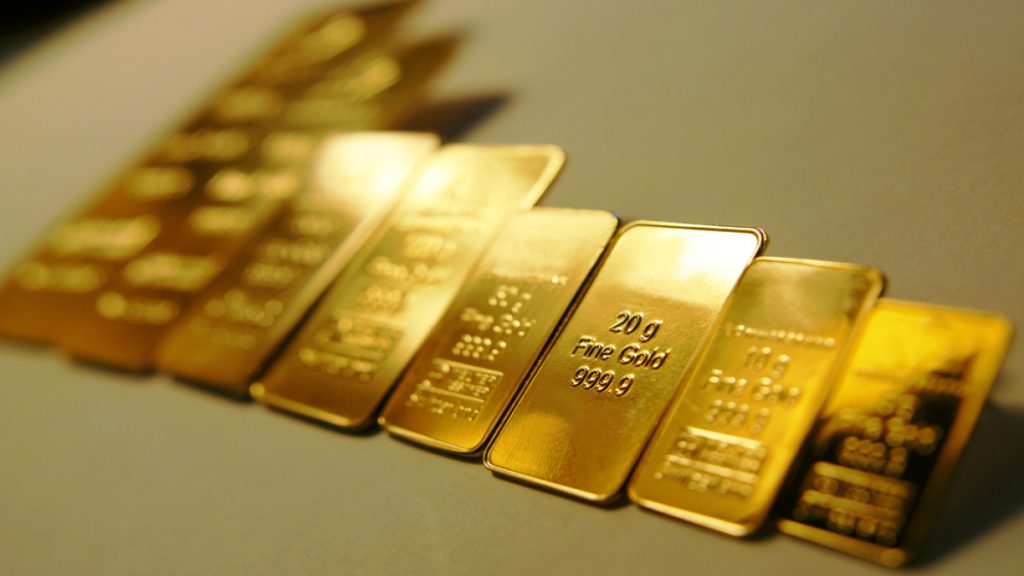
Check the hallmark stamp. Legitimate bars and coins are stamped with karat (24K, 22K, 18K) or fineness markings (999, 916, 750); AGR-refined bars carry the refinery’s own certification stamp and a bar serial number as additional authenticity markers.
Request an independent assay certificate. Any licensed dealer selling certified gold should readily provide an assay certificate from the Uganda Bureau of Standards (UNBS), AGR, or another DGSM-approved testing facility, confirming purity, weight, and serial number.
Insist on XRF or fire assay testing for significant purchases. For purchases above 10 grams, arrange X-ray fluorescence (XRF) spectroscopy or fire assay testing at an independent DGSM-approved laboratory. XRF testing delivers a result within minutes and is the standard verification method used by licensed dealers and DGSM itself.
Weigh the gold in your presence on a calibrated scale, since any significant discrepancy between declared and actual weight is an immediate fraud signal.
Use licensed sources only. Street sellers, social media contacts, or anyone discouraging third-party verification removes your only real protection against fraud — unlicensed informal sellers remain the single largest source of counterfeit and underkarated gold in Uganda’s market.
Gold Bars vs. Gold Nuggets in Uganda: Which Should You Buy?
Gold bars are the correct product for investors, exporters, and international buyers — refined, standardized, stamped with weight and purity, and assayed at a licensed facility with a fully traceable supply chain. Bars refined through Uganda’s licensed facilities meet LBMA quality standards and are accepted by major refineries in Dubai, Switzerland, and the UK.
Gold nuggets appeal more to collectors and small-scale local traders, but carry genuine purity inconsistency — artisanal nuggets from Mubende, Karamoja, and Buhweju typically range from 75% to 92% purity depending on the source deposit.
Always arrange third-party XRF testing before buying nuggets, and factor the cost of subsequent refining to export-grade purity into your total acquisition cost if resale or export is the goal.
Gold Export Documentation Required From Uganda
Exporting gold purchased in Uganda to Dubai, Europe, or Asia requires a specific document set, all of which must be in order before approaching customs at Entebbe International Airport:
- Mineral Dealer’s License (MDL) — from DGSM, required to legally buy or sell gold in Uganda
- Gold Export Permit — from DGSM, a per-shipment authorization for international export
- Assay Certificate — from AGR, UNBS, or another DGSM-approved laboratory, confirming purity and weight
- Certificate of Origin — from the Uganda Export Promotion Board (UEPB)
- ICGLR Regional Certification — mandatory for Great Lakes region gold since Uganda’s accession to the certification mechanism
- Customs Declaration Form (SAD) — filed via URA’s ASYCUDA system
- Commercial Invoice — detailing weight, purity, declared USD value, and buyer/seller details
- Packing List — bar serial numbers, gross weight, and packaging specifications
- URA Tax Payment Receipt — confirming the $200/kg export levy has been paid
- Air Waybill (AWB) — from a secure logistics provider such as Brinks, Malca-Amit, or G4S
How Gold Moves From a Ugandan Mine to an International Buyer
Understanding the supply chain helps identify exactly where fraud and quality risk can enter the process. Mining — artisanal and small-scale miners extract gold from placer deposits and hard rock operations across Mubende, Karamoja, Buhweju, and Kasese, typically in dust, nugget, or raw doré form.
Aggregation — licensed aggregators purchase gold from these miners, consolidate volumes, and maintain chain-of-custody records linking each consignment to its source mine, a genuine requirement for ICGLR certification.
Refining — gold is submitted to a DGSM-approved refinery for processing to export-grade purity, with the refinery issuing the assay certificate. Certification and export — DGSM issues the export permit, UEPB issues the Certificate of Origin, and URA collects the export levy and clears the customs declaration before the gold is handed to a secure logistics provider.
International delivery — shipments typically move by air freight from Entebbe International Airport to receiving hubs where LBMA-accredited refineries accept properly certified, documented Ugandan gold.
Is Buying Gold in Uganda Legal?
Yes, fully legal under the Mining and Minerals Act, 2022 — though only individuals and companies holding a valid Mineral Dealer’s License issued by DGSM are permitted to buy or sell gold commercially in Uganda.
Purchasing from an unlicensed dealer, even in a private transaction, creates real legal liability for the buyer under the Act.
For foreign nationals and international buyers specifically, purchasing through a licensed Ugandan exporter eliminates personal licensing complexity while ensuring all documentation meets export requirements.
Is Buying 1 Gram of Gold in Uganda Worth It as an Investment?
For long-term investors, yes — even small accumulations of certified 24K gold, stored with proper assay certificates, function as a genuine inflation and currency hedge in Uganda’s economic environment, and a single gram represents a genuinely accessible entry point relative to buying a full bar or kilogram lot.
For resale-focused investors specifically, certified bars sourced through licensed dealers maintain the strongest resale value, since documented purity enables sale to refineries or bullion dealers internationally without requiring re-assay.
Storage advice: store gold in a bank safe deposit box or certified vault, and retain every purchase receipt, assay certificate, and piece of documentation — this paperwork is what proves the gold’s value and legal provenance when you eventually sell or export.
FAQs – 1 Gram Gold Price in Uganda
What is the gold price per gram in Uganda today? Approximately UGX 541,000 (~$143 USD) for 24K, UGX 496,000 (~$131 USD) for 22K, and UGX 406,000 (~$107 USD) for 18K, updating continuously with the LBMA spot rate and Bank of Uganda’s UGX/USD rate.
How much is 1kg of gold in Uganda? A 1kg bar of 24K gold costs approximately UGX 541,000,000 (~$143,160 USD) at today’s rate.
Is it legal to buy gold in Uganda as a foreigner? Yes, through a DGSM-licensed dealer — foreigners cannot independently hold a Mineral Dealer’s License without establishing a locally registered entity, but purchasing through a licensed Ugandan dealer or exporter is fully legal and straightforward.
Where is the best place to buy gold bars in Uganda? Licensed dealers in Kampala’s Speke Road and Nakasero areas offer the most transparent, well-documented purchases — always verify the dealer’s MDL number against the DGSM registry before transacting.
What’s the actual price difference between gold in Uganda and Kenya? Typically $1–3 per gram, driven by local dealer margins and currency movement rather than any fundamentally different pricing structure, since both markets price against the same LBMA USD spot rate.
Buy Certified 24K Gold Direct From a Licensed Uganda Gold Exporter
Gold prices move continuously with global spot and the shilling’s exchange rate — any figure you see quoted, including in this guide, should always be confirmed live before transacting.
We’re a DGSM-licensed gold exporter based in Uganda, sourcing certified 24K, 22K, and 18K gold bars, nuggets, and dust directly from licensed mining operations, with every shipment backed by independent assay certification, certificate of origin, and full export documentation.
Browse our guides to sourcing gold in Uganda, the Congo, Kenya, South Africa, and Tanzania, or our dedicated gold bar pricing in South Africa page for direct comparison. For international buyers, our delivery guides cover Dubai, Switzerland, Canada, Singapore, and the USA.
Our guides to gold bar, gold nugget, and raw gold cover the different product forms, and our gold mining overview and gold producing countries in Africa guide put Uganda’s production in continental context. Our FAQs about buying gold in Africa, how to buy gold online safely, and exporting gold bullion guides cover due diligence and documentation in full.
Get a Live Quote From a DGSM-Licensed Uganda Gold Exporter
For wholesale pricing, international shipping quotes, and full export documentation support on certified 24K gold bars sourced directly from Uganda, work with a properly licensed exporter who provides transparent pricing pegged to the live LBMA spot rate — not a static figure from an old guide.
Explore our full range of services or contact us today for a live quote and full export documentation support, backed by real DGSM licensing and operating history in Uganda.
Related Pages
- Buy Gold in Uganda
- Buy Gold in Congo
- Buy Gold in Kenya (Nairobi)
- Buy Gold and Silver in South Africa
- Gold Bar Price in South Africa
- Buy Gold Bullion from Mwanza
- Buy Gold from Local Miners
- Buy Gold Online in Switzerland
- Buy Gold Online in Canada
- Buy Gold in Dubai
- Buy Gold Bars from Africa
- Buy Gold in Singapore
- African Gold Bars for Sale
- Buy Gold in Uganda from the USA
- Gold Bar
- Gold Nugget
- Raw Gold
- Gold Mining in Uganda and Congo
- Gold Producing Countries in Africa
- FAQs About Buying Gold in Africa
- How to Buy Gold Online Safely
- Exporting Gold Bullion
- About Us
- Contact Us