
Aluminum Price 2026: Current Rates, Market Trends & Complete Investor Guide
Aluminum price — also written as aluminium price — has surged to its highest levels in over four years in 2026, driven by a combination of dramatic Middle East supply disruptions, strong Chinese manufacturing demand, energy cost inflation, and the accelerating demand from electrification and packaging sectors.
With LME aluminium hitting $3,676 per tonne on May 13, 2026 — the highest since March 2022 — and prices up over 45% year-on-year, aluminium has joined copper and gold as a standout performer in the 2026 commodities complex.
Whether you are a manufacturer managing input costs, a construction company planning projects, an investor tracking the current aluminium price, or an analyst researching LME aluminium futures, this comprehensive guide covers every dimension of the aluminium market — current prices in all units, the drivers behind 2026’s price surge, supply and demand fundamentals, the world’s largest producers and consumers, and a forward-looking price outlook.
Current Aluminum Price
Aluminium Price Per Tonne (LME) — Live May 2026
The LME aluminium spot price — the global benchmark for all physical aluminium contracts worldwide — was approximately $3,504–$3,676 per tonne through May 2026.
The intra-month high of $3,676/tonne was reached on May 13, 2026, the highest level since March 2022, before consolidating to approximately $3,504–$3,572 per tonne in the following sessions.
Full Aluminum Price Table — May 2026
| Unit | Price (USD) | Basis |
|---|---|---|
| Per tonne (metric) | $3,504–$3,676 | LME spot, Grade A |
| Per kilogram | $3.50–$3.68 | LME derived |
| Per pound | $1.59–$1.67 | LME/COMEX equivalent |
| 4-year high (May 13, 2026) | $3,676/tonne | Highest since March 2022 |
| One year ago (May 2025) | ~$2,531/tonne | Year-on-year +45.16% |
| YTD change (vs Jan 1, 2026) | +2.2% over past 4 weeks | Gradual climb from ~$3,061 in Feb |
| LME spot (May 15, 2026) | $3,572/tonne | $3.57/kg; $1.62/lb |
Prices are indicative and change continuously during LME trading hours. Always verify live rates at Kitco, LME, TradingEconomics, or MetalCharts before transacting.
Regional Aluminium Price Premiums
Physical aluminium contracts are typically priced at LME spot plus a regional delivery premium that reflects local logistics, supply/demand balance, and currency factors:
| Region | Regional Premium (over LME) | All-In Price (approx., May 2026) |
|---|---|---|
| US Midwest | $200–$250/tonne | ~$3,700–$3,900/tonne |
| Japan CIF | $160–$200/tonne | ~$3,700–$3,850/tonne |
| Europe (Rotterdam) | $170–$220/tonne | ~$3,700–$3,880/tonne |
| China (domestic SHFE) | — | ~¥21,000–¥23,000/tonne |
What Is Driving Aluminium Prices in 2026?
The 2026 aluminium price surge to four-year highs reflects a confluence of supply-side shocks and demand-side strength that has fundamentally tightened the global market balance.
1. Middle East Supply Disruptions — The Primary 2026 Price Driver
The single most important factor behind aluminium’s 2026 price surge is unprecedented supply disruption from the Middle East. Aluminium futures rose above $3,670 per tonne — a more than four-year high — amid prolonged supply disruptions from the Middle East, as the US and Iran exchanged threats and extended their impasse that halted commercial vessel flows through the Persian Gulf.
Pre-war Gulf supply accounted for 9% of global aluminium production and nearly 25% of non-Chinese supply. Direct attacks on the region’s largest refineries have caused extraordinary damage:
- EGA (Emirates Global Aluminium) — the world’s fifth-largest aluminium producer and the largest single-site aluminium smelter outside China, located in the UAE — saw its flagship plant damaged, with full capacity expected to return only in approximately one year
- ALBA (Aluminium Bahrain) — one of the world’s largest aluminium smelters — had operations suspended entirely, removing over 1.5 million tonnes of annualised capacity from the global market
The resulting surge in natural gas costs in the Gulf region has also lifted refining costs for aluminium producers who rely on gas-fired power generation, creating a cost-push inflation component alongside the direct capacity losses.
This supply shock is structural in the short to medium term — aluminium smelters cannot be quickly restarted and fully rebuilt. The market will absorb this disruption for 12–24 months regardless of how quickly the geopolitical situation resolves.
2. China’s Demand Surge — Infrastructure and Manufacturing
On the demand side, strong manufacturing activity data from China supported the aluminium price backdrop through Q2 2026.
This was magnified by ample borrowing of special bonds in recent municipal debt auctions for China’s largest cities, which are commonly used for aluminium-intensive infrastructure development — including rail, power transmission, urban construction, and transportation projects.
China’s aluminium demand in 2025–2026 has been particularly strong from:
- Electric vehicle production — aluminium body panels, structural components, battery enclosures, and wheels
- Power transmission infrastructure — overhead lines, cables, and transformer components
- Green building construction — aluminium window frames, curtain walls, and structural extrusions
- Consumer electronics — smartphone and laptop chassis, heat sinks
3. Electrification and Energy Transition Demand
Aluminium is the second most important metal in the global energy transition — after copper — but often receives less attention. Every offshore wind turbine contains significant aluminium in nacelles and structural components. Every utility-scale solar installation uses aluminium in frames and mounting structures.
Every EV contains aluminium in the body, chassis, wheels, and battery components. Overhead power transmission lines — which carry renewable electricity from generation to consumption — are predominantly aluminium (ACSR and all-aluminium conductors).
The structural demand from energy transition investment is adding a new growth category to aluminium demand that did not exist at this scale even five years ago.
4. Packaging and Consumer Goods Recovery
Aluminium’s largest single end-use by volume is packaging — cans, foil, and flexible packaging. Post-pandemic recovery in consumer goods demand, premiumisation of beverage packaging (where aluminium cans are gaining market share from plastic bottles as the more sustainable option), and growth in ready-to-drink beverage categories have all supported packaging aluminium demand in 2026.
5. Energy Cost Dynamics
Aluminium smelting is one of the most energy-intensive industrial processes in existence, consuming approximately 14,000 kWh of electricity per tonne of aluminium produced — roughly equivalent to the annual electricity consumption of 1.5 average European homes.
This means that electricity prices have a direct and significant impact on aluminium production costs and, by extension, on market prices.
The Middle East energy disruption has raised gas prices for Gulf producers. In Europe, the energy cost challenge that emerged in 2022 has created a structural cost disadvantage for European aluminium producers relative to Chinese smelters operating on coal or low-cost hydropower.
In China, where approximately 60% of global aluminium is produced, the government’s management of electricity pricing for energy-intensive industries is a key policy variable for the global aluminium market.
Aluminium Price History — Key Milestones
Understanding the aluminium price history provides essential context for today’s market levels:
| Date/Period | Aluminium Price | Key Driver |
|---|---|---|
| 2015–2016 | $1,400–$1,700/tonne | Oversupply from Chinese capacity expansion |
| 2018 peak | ~$2,700/tonne | US Section 232 tariffs on aluminium imports |
| 2020 COVID low | ~$1,460/tonne | Demand collapse; global recession |
| 2021 recovery | $2,100–$2,500/tonne | Post-COVID infrastructure demand rebound |
| March 2022 peak | ~$3,900/tonne | Russia invasion of Ukraine; energy shock |
| 2022–2023 correction | $2,100–$2,600/tonne | Energy normalization; demand slowed |
| 2024 average | ~$2,407/tonne | Range-bound; supply/demand balance |
| February 2026 | ~$3,061/tonne | Early rally; Middle East tensions building |
| May 13, 2026 | $3,676/tonne | 4-year high; Gulf supply shock + China demand |
| May 15–22, 2026 | ~$3,504–$3,572/tonne | Consolidation; +45% year-on-year |
The March 2022 all-time high of approximately $3,900/tonne remains above current levels, but May 2026 prices are the highest since that peak — and the 45% year-on-year gain is one of the strongest moves in the LME aluminium market in a decade.
Understanding Aluminium Pricing — LME, COMEX, and SHFE
LME Aluminium — The Global Benchmark
The London Metal Exchange (LME) sets the global benchmark price for aluminium. LME aluminium (contract code: AH) is quoted in USD per metric tonne with a standard lot size of 25 tonnes. The LME aluminium contract specifies high-purity primary aluminium at 99.7% minimum aluminium content. Settlement is physical at LME-approved warehouses globally.
Over 75% of physical aluminium contracts worldwide use an LME basis pricing model: the buyer pays LME three-month settlement price plus a regional delivery premium plus any product-specific alloy surcharges.
COMEX (CME Group) Aluminium
COMEX offers aluminium futures contracts used primarily by US market participants for hedging and speculative trading. Contract size is typically 44,000 lbs (approximately 20 tonnes). Prices are often expressed in USD per pound for the US market.
SHFE (Shanghai Futures Exchange)
The Shanghai Futures Exchange lists domestic Chinese aluminium futures in Chinese yuan per tonne. SHFE prices reflect China’s domestic supply/demand balance and policy environment, which can diverge significantly from LME prices when Chinese government interventions, export tax changes, or power rationing policies alter the domestic market.
How Is Aluminium Produced? The Two-Step Process
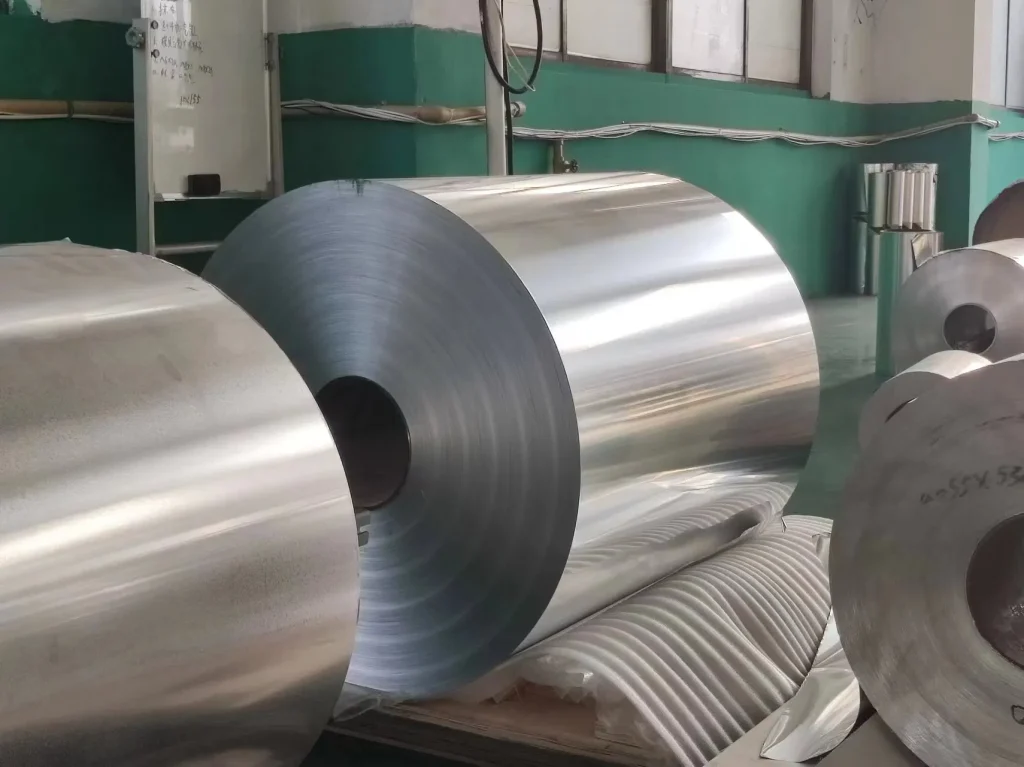
Unlike most metals, aluminium production involves a distinctive two-stage process that has major implications for both cost structure and supply chain geography:
Stage 1: Bauxite Mining and Refining to Alumina
Aluminium is produced from bauxite, a reddish rock ore containing 15–25% aluminium by weight (as aluminium hydroxides). Bauxite is mined in tropical and subtropical regions — Guinea, Australia, Brazil, Jamaica, and India are the largest producers.
Bauxite is then refined to alumina (Al₂O₃) through the Bayer process, which uses caustic soda and heat to dissolve the aluminium content and precipitate pure alumina powder. Approximately 4–5 tonnes of bauxite are required to produce 2 tonnes of alumina, which in turn produces 1 tonne of aluminium metal.
Stage 2: Aluminium Smelting from Alumina
Alumina is smelted to aluminium metal through the Hall-Héroult electrolytic reduction process, which uses massive electrical current to reduce alumina dissolved in molten cryolite to liquid aluminium metal. This process requires approximately 14,000 kWh of electricity per tonne — making electricity supply and cost the single most important input variable for primary aluminium economics.
The energy intensity of aluminium smelting is why aluminium production is geographically concentrated in regions with cheap electricity — China (coal and hydro), Canada (hydro), Norway (hydro), Russia (hydro), and the Middle East (gas).
It is also why Middle East supply disruptions in 2026 have been so price-impactful — that region’s cheap gas-fired power gave it a significant cost advantage that is now removed.
Aluminium Production — Who Makes It?
Global Aluminium Production by Country
| Country | Annual Output (approx.) | Share of Global |
|---|---|---|
| China | ~41 million tonnes | ~58–60% |
| India | ~4.2 million tonnes | ~6% |
| Russia | ~3.8 million tonnes | ~5.5% |
| Canada | ~3.1 million tonnes | ~4.5% |
| UAE (EGA) | ~2.6 million tonnes* | ~3.7%* |
| Australia | ~1.6 million tonnes | ~2.3% |
| Norway | ~1.5 million tonnes | ~2.1% |
| Bahrain (ALBA) | ~1.5 million tonnes* | ~2.1%* |
| United States | ~1.0 million tonnes | ~1.4% |
Note: UAE and Bahrain figures are substantially reduced in 2026 due to Middle East supply disruptions affecting EGA and ALBA operations.
China’s dominance of global aluminium production — at approximately 60% — means that Chinese production policy, energy costs, and environmental regulations have an outsized influence on global supply and prices. Any significant change in Chinese smelting capacity, electricity pricing policy, or export tariffs immediately affects the LME price.
Major Aluminium Producers
Hongqiao Group (China): The world’s largest aluminium producer by capacity, operating primarily on coal-fired power in Shandong province. Hongqiao’s production decisions influence Chinese domestic aluminium prices more than any other single entity.
RUSAL (Russia): The largest aluminium producer outside China, operating primarily on Siberian hydropower. RUSAL aluminium carries ESG concerns related to the Russia-Ukraine conflict — many European and US buyers have reduced purchases from RUSAL since 2022.
EGA (Emirates Global Aluminium): UAE’s state aluminium company and the world’s fifth-largest producer. Partially offline in 2026 due to Middle East conflict damage, with full capacity restoration expected in approximately one year — a major ongoing supply constraint.
Alcoa (USA): The largest Western aluminium producer, with operations in the USA, Canada, Australia, and Spain. Alcoa is the standard-bearer for sustainable aluminium production, with significant hydropower-based capacity.
Norsk Hydro (Norway): Europe’s largest aluminium producer, operating on Norwegian hydropower with some of the lowest-carbon aluminium available anywhere. Strong ESG credentials make Hydro aluminium increasingly sought after by sustainability-focused buyers.
Hindalco/Novelis (India): India’s largest aluminium producer (Hindalco) and the world’s leading aluminium recycler (Novelis, Hindalco’s Canadian subsidiary). Novelis processes over 80 billion used beverage cans annually, making it a major force in the secondary aluminium market.
Aluminium Demand — End-Use Sectors and Key Consumers
Largest Aluminium Consuming Countries
| Country | Annual Consumption | Share of Global |
|---|---|---|
| China | ~42–45 million tonnes | ~57–60% |
| Europe | ~8.5 million tonnes | ~11% |
| USA | ~5.5 million tonnes | ~7.5% |
| Japan | ~3.5 million tonnes | ~4.7% |
| India | ~3.0 million tonnes | ~4% |
| South Korea | ~1.5 million tonnes | ~2% |
Aluminium End-Use Sectors
Packaging (~26% of global demand — largest sector): Beverage cans, food cans, aluminium foil, flexible packaging, and pharmaceutical blister packs. The sustainability credentials of aluminium (infinitely recyclable without quality loss) are driving market share gains from plastic, glass, and steel in many packaging categories. The aluminium can has become the most recycled consumer product in many markets.
Construction (~23% of demand): Window frames, curtain walls, roofing, cladding, structural extrusions, and architectural applications. Aluminium’s combination of light weight, corrosion resistance, formability, and recyclability makes it the dominant material for modern architectural applications. China’s urbanisation and construction boom has been a major driver of aluminium demand for two decades.
Transportation (~19% of demand): Vehicle body panels, structural components, engine blocks, transmission housings, and wheels. Aluminium’s light weight (one-third the density of steel) reduces vehicle weight and improves fuel economy — critically important for EV range optimisation. The average EV contains significantly more aluminium than an equivalent combustion engine vehicle.
Electrical (~10% of demand): Overhead power transmission lines (ACSR and all-aluminium conductors), transformer windings, bus bars, and electrical cables. Aluminium’s combination of conductivity, light weight, and low cost makes it the dominant material for overhead power distribution — a sector seeing significant investment globally as grids are upgraded for renewable energy integration.
Engineering and Industrial (~12% of demand): Heat exchangers, marine components, aerospace structures, industrial machinery, and consumer goods applications requiring light weight combined with corrosion resistance.
Other (~10%): Consumer electronics, defence, and emerging applications.
Aluminium Recycling — The Secondary Market
Aluminium’s most remarkable property from a supply chain perspective is that it is infinitely recyclable without any loss of quality — and recycling requires only approximately 5% of the energy needed to produce primary aluminium from bauxite. This makes secondary (recycled) aluminium dramatically more energy-efficient and lower-carbon than primary production.
Secondary aluminium — produced from recycled scrap — accounts for approximately 35–40% of global aluminium supply and is growing. In mature markets like Europe and the USA, recycling rates for aluminium packaging exceed 70–80%.
The aluminium scrap price (secondary market) typically trades at a discount to primary LME aluminium, with the spread reflecting processing costs and alloy specifications. Common scrap grades include:
- Aluminium UBC (Used Beverage Cans): High-purity, premium scrap. Current price: approximately $1,800–$2,200/tonne in US markets
- Aluminium extrusion scrap (6000 series): Common industrial scrap. ~$1,700–$2,000/tonne
- Cast aluminium scrap: ~$1,400–$1,700/tonne
- Mixed/contaminated aluminium: ~$1,000–$1,400/tonne
Aluminium vs. Other Industrial Metals — 2026 Price Comparison
| Metal | Price (May 2026) | YTD Change | Key Demand Driver |
|---|---|---|---|
| Aluminium | $3,504–$3,676/tonne ($1.59–$1.67/lb) | +45% year-on-year | Middle East supply, China demand, EVs |
| Copper | ~$13,409–$13,631/tonne ($6.08–$6.28/lb) | +30–35% | AI/data centres, EVs, electrification |
| Zinc | ~$2,900–$3,100/tonne | +5–8% | Galvanised steel construction |
| Nickel | ~$15,500–$16,500/tonne | -3–5% | EV batteries; surplus supply |
| Lead | ~$2,100–$2,200/tonne | +3–5% | Automotive batteries |
| Tin | ~$32,000–$34,000/tonne | +10–15% | Semiconductors, solder |
Aluminium’s 45% year-on-year gain is the strongest performance among major base metals in the 12 months to May 2026 — reflecting both the structural tightening from Middle East supply disruptions and strengthening demand fundamentals.
Aluminium Price Forecast 2026 and Beyond
Short-Term Outlook (H2 2026)
Most commodity analysts expect LME aluminium to trade in the $3,400–$4,000/tonne range through H2 2026, with the balance of risks slightly to the upside given:
- EGA’s flagship plant not expected to return to full capacity for approximately one year, keeping Gulf supply constrained
- ALBA operations suspended with uncertain restoration timeline
- Sustained Chinese infrastructure and EV demand
- No near-term alternative supply source to replace lost Gulf capacity
Key downside risks include: a Chinese economic slowdown, energy price normalisation reducing cost-push support, faster-than-expected restoration of Middle East smelter capacity, or a sharp deterioration in global manufacturing activity.
Long-Term Structural Demand
The long-term aluminium demand outlook is positive across multiple vectors:
Energy transition: Every solar panel, wind turbine, and EV requires aluminium. The IEA projects significant growth in aluminium demand from clean energy applications through 2040.
Lightweighting: Automotive and aerospace industries continue to substitute heavier steel and other materials with aluminium to reduce weight and improve fuel/energy efficiency — a trend that accelerates as EV range becomes a competitive differentiator.
Packaging sustainability: The shift from single-use plastics to aluminium in packaging is a growing regulatory and consumer preference trend that will add long-term aluminium demand.
Emerging market urbanisation: India, Southeast Asia, and Africa’s ongoing urbanisation programmes represent decades of construction and infrastructure aluminium demand growth.
FAQs About Aluminium Prices
What is the current aluminium price per tonne? As of May 2026, the LME aluminium spot price is approximately $3,504–$3,572 per tonne, with an intra-month high of $3,676/tonne on May 13 — the highest since March 2022. Prices change continuously during LME trading hours.
What is the aluminium price per kilogram? The current aluminium price per kilogram is approximately $3.50–$3.68 USD/kg based on the LME spot price of $3,504–$3,676/tonne.
What is the aluminium price per pound? Approximately $1.59–$1.67 per pound as of May 2026, derived from the LME tonne price (divide by 2,204.62).
Why is aluminium price so high in 2026? The primary driver is the Middle East supply disruption — attacks on EGA (UAE) and ALBA (Bahrain) removed approximately 9% of global non-Chinese supply, with EGA’s flagship plant not expected to return to full capacity for one year. Secondary drivers include strong Chinese infrastructure and EV demand, the resulting natural gas price surge raising Gulf refining costs, and sustained global demand from packaging and construction.
What is the all-time high aluminium price? The aluminium all-time high was approximately $3,900 per tonne set in March 2022, driven by the Russia-Ukraine invasion and the associated energy shock that threatened European aluminium smelter closures. May 2026 prices are approaching but have not yet exceeded this level.
How much aluminium does China produce? China produces approximately 41 million tonnes of primary aluminium annually — approximately 58–60% of total global production. This concentration makes Chinese production policy, electricity pricing, and environmental regulations the most important supply-side variables for the global aluminium price.
Is aluminium the same as aluminum? Yes — aluminium and aluminum are the same metal (atomic number 13, symbol Al). “Aluminium” is the standard spelling in British English and international scientific usage; “aluminum” is standard in American English. Both refer to identical material.
What is the difference between primary and secondary aluminium? Primary aluminium is produced from bauxite ore through the energy-intensive Hall-Héroult smelting process. Secondary aluminium is produced by recycling scrap metal, using only about 5% of the energy of primary production. The LME price and most commodity references refer to primary Grade A aluminium.
Where can I track live aluminium prices? The most reliable sources for live aluminium price data: LME (lme.com), Kitco (kitco.com/price/base-metals), TradingEconomics (tradingeconomics.com/commodity/aluminum), MetalCharts (metalcharts.org/aluminum-price), and SHFE for Chinese domestic prices.
Is aluminium a good investment? Aluminium’s fundamental demand drivers — energy transition, lightweighting, packaging sustainability, and emerging market infrastructure — provide a positive long-term demand outlook. However, aluminium pricing is highly sensitive to Chinese production policy, energy costs, and supply-side shocks. Investors should consider price volatility alongside the structural growth thesis.
Key Factors to Watch for Aluminium Prices Through 2026
Monitor EGA and ALBA restoration timelines: The Gulf smelter damage is the dominant supply variable. Any update on EGA’s capacity restoration timeline — currently estimated at one year — will be an immediate aluminium price catalyst.
Watch Chinese smelting capacity and policy: Any government-directed curtailments of Chinese aluminium smelting (for energy efficiency, environmental, or policy reasons) would tighten global supply and lift LME prices. Conversely, any relaxation of capacity restrictions would weigh on prices.
Track energy prices — particularly natural gas and electricity: Aluminium’s 14,000 kWh/tonne energy requirement means power costs directly determine production economics. Rising energy prices = higher floor costs = price support; falling energy prices = margin recovery for producers without necessarily reducing output.
Monitor LME warehouse inventory levels: Falling LME aluminium stocks signal tightening physical availability and typically support higher premiums and spot prices.
Follow China’s infrastructure bond issuance: As demonstrated in Q2 2026, special bonds for Chinese urban infrastructure directly support aluminium demand. Track PBOC and Ministry of Finance announcements for signals on infrastructure stimulus.
Aluminium’s 2026 story — a dramatic supply shock meeting sustained structural demand growth — has produced the strongest price rally since the post-Ukraine energy shock of 2022.
With Gulf supply recovery measured in years rather than months, and global electrification and energy transition demand growing inexorably, the structural case for elevated aluminium prices through 2026 and beyond remains compelling.