
Congo Gold Dealers 2026: Top Guide to Licensed Dealers
If you are searching for Congo gold dealers, you are looking at one of Africa’s most extraordinary — and most complex — gold markets.
The Democratic Republic of Congo is home to some of the world’s largest gold reserves, produces over 90 tonnes annually, and hosts Africa’s largest gold mine by output, Kibali, which generated $2.31 billion in consolidated revenue in 2025.
In May 2026, with 24K gold trading at approximately $148–$155 per gram (~CDF 344,000–361,000), the financial stakes of every Congo gold transaction have never been higher.
Yet the same geological richness that makes Congo gold so compelling also makes its market one of the most demanding to navigate. DRC’s new mines minister has publicly acknowledged that the country loses approximately 60 tonnes of gold per year to smuggling — gold that bypasses official channels, lacks proper documentation, and exposes buyers to serious OFAC sanctions risk, conflict minerals liability, and straightforward fraud.
The difference between a legitimate licensed gold dealer in Congo and a scammer operating a WhatsApp number often appears indistinguishable on the surface.
This is the guide that closes that gap. Everything you need to know about Congo gold dealers in 2026 — who is legitimate, what licenses matter, what prices are real, what documentation protects you, which cities are safer for sourcing, the full compliance framework, and why Africa Gold Suppliers Limited is the trusted partner that serious international buyers choose for DRC gold — is in this article.
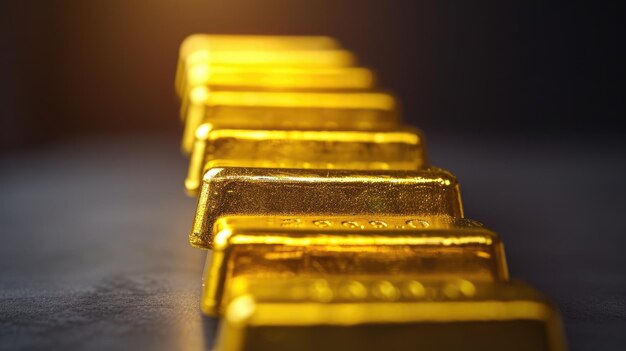
Major Gold Dealers in Congo DRC — City by City
Finding legitimate gold dealers in Congo requires understanding which cities offer the safest transaction environments:
Gold Dealers in Kinshasa — Congo’s Safest Sourcing Hub
Kinshasa is the DRC’s commercial capital and hosts the most established network of licensed gold exporters in Congo. The Gombe district and Mont-Fleury area of Kinshasa are home to the most credible Tier 1 dealers — companies operating from registered commercial premises with Ministry of Mines documentation and access to Kibali-area formal gold.
Africa Gold Suppliers Limited operates from registered premises in Kinshasa, providing international buyers with the complete service stack required for legal DRC gold purchase and export: SMRC authorization verification, independent XRF and fire assay testing, OECD documentation preparation, KYC/AML compliance, and insured logistics from N’djili International Airport (FIH) to any global destination.
Gold buyers visiting Kinshasa to source directly should only conduct transactions at dealers’ registered offices — never in hotel lobbies, restaurants, or any neutral meeting locations.
N’djili Airport serves as the primary departure point for insured DHL, Brinks, and Malca-Amit gold cargo from Kinshasa.
Gold Dealers in Goma — High Risk, Eastern Congo Compliance Complexity
Goma in North Kivu Province sits adjacent to DRC’s most productive artisanal mining zones — and its most active conflict areas. Buying gold from Goma dealers requires the most rigorous compliance framework of any DRC sourcing location.
Gold from North Kivu without comprehensive, independently verified OECD chain-of-custody documentation carries significant OFAC sanctions exposure, EU Conflict Minerals Regulation risk, and Dodd-Frank Section 1502 non-compliance potential.
For international buyers subject to US or EU law, sourcing from Goma-based dealers without verified ITSCI certification and a completed OECD supply chain audit is not advisable.
Gold Dealers in Bukavu — South Kivu Artisanal Market (High Risk)
Bukavu in South Kivu is geographically close to some of the DRC’s most prolific artisanal gold zones. However, South Kivu’s security landscape — FDLR, various armed militia — creates the highest conflict minerals risk of any DRC province. Gold from Bukavu without independently audited chain-of-custody is not recommended for any internationally regulated buyer.
Gold Dealers in Lubumbashi — Katanga Region
Lubumbashi serves Katanga Province’s commercial networks and hosts artisanal and some refined gold trading. Documentation standards here are generally higher than eastern Congo but lower than Kinshasa’s formal exporters. Independent XRF testing is mandatory for any Lubumbashi-area purchase.
Current Gold Price in Congo (DRC) — Live Rates May 2026
Gold prices in Congo DRC are anchored to the international LBMA spot price of approximately $4,720–$4,739 USD per troy ounce as of May 2026 (~$151.55/gram for 24K), converted at the prevailing USD/CDF rate of approximately 2,325–2,330 CDF per USD.
Congo Gold Price Table — All Karats
| Karat | Purity | Per Gram (USD) | Per Gram (CDF) | Per oz (USD) | Per kg (USD) | Hallmark |
|---|---|---|---|---|---|---|
| 24K (formal channel) | 99.9% | $148–$155 | CDF 344,000–361,000 | $4,603–$4,822 | $148,000–$155,000 | 999 |
| 22K | 91.6% | $136–$142 | CDF 316,000–330,000 | $4,219–$4,417 | $136,000–$142,000 | 916 |
| 21K | 87.5% | $130–$136 | CDF 302,000–316,000 | $4,044–$4,229 | $130,000–$136,000 | 875 |
| 18K | 75.0% | $111–$116 | CDF 258,000–270,000 | $3,452–$3,607 | $111,000–$116,000 | 750 |
| Dore/Artisanal (85–95% natural) | Varies | $128–$142 | CDF 298,000–331,000 | — | $128,000–$142,000 | N/A |
Gold Price by Weight in Congo — 24K Formal Channel
| Weight | Price (USD) | Price (CDF) |
|---|---|---|
| 1 gram | $148–$155 | CDF 344,000–361,000 |
| 5 grams | $740–$775 | CDF 1,720,000–1,805,000 |
| 10 grams | $1,480–$1,550 | CDF 3,440,000–3,610,000 |
| 1 tola (11.66g) | $1,725–$1,807 | CDF 4,011,000–4,206,000 |
| 1 troy oz (31.1g) | $4,603–$4,822 | CDF 10,710,000–11,222,000 |
| 100 grams | $14,800–$15,500 | CDF 34,400,000–36,100,000 |
| 1 kilogram | $148,000–$155,000 | CDF 344,200,000–360,850,000 |
Always request a live LBMA-referenced quote — not a fixed price — before any significant transaction. Gold prices update every minute during market hours.
Why Congo DRC Is a Strategic Gold Market in 2026
Understanding why buying gold in Congo attracts serious international investors and traders requires appreciating both the geological reality and the current commercial context.
The Geological Case: Africa’s Most Extraordinary Gold Reserves
Kibali Gold Mine, operated by Barrick Gold, remains Africa’s largest gold mine. Kibali, a Barrick Mining/AngloGold Ashanti/SOKIMO joint venture in Haut-Uélé Province, produced 673,000 oz in 2025 and generated $2.31 billion in consolidated revenue.
The mine accounts for 99.6% of DRC’s formal gold exports — a figure that simultaneously reflects Kibali’s scale and the persistent informality of the broader market.
Beyond Kibali, the DRC’s gold reserves span Haut-Uélé Province, Ituri, North Kivu, South Kivu, and Maniema — collectively representing one of earth’s most geologically productive gold belts.
The eastern Congo goldfields alone have been described by geological surveys as potentially containing hundreds of millions of ounces in undiscovered deposits.
The 2026 Price Environment Makes Congo Gold More Valuable Than Ever
With gold at $148–$155/gram in May 2026 — up from approximately $107/gram in mid-2025 — every tonne of Congo gold is worth approximately $4.8–$5.0 million more today than a year ago.
This extraordinary price environment has simultaneously attracted legitimate international buyers seeking competitive-priced mine-direct material and opportunistic scammers seeking to exploit that demand with fraudulent offers.
Knowing the difference between a legitimate Congo gold dealer and a fraudulent one is not just financially important in 2026 — it is legally essential.
Understanding Congo Gold Dealers: The Two-Tier Market
Congo gold dealers operate in two fundamentally different tiers. Confusing them is the most expensive mistake any international buyer can make.
Tier 1: SMRC-Licensed Formal Exporters — The Only Safe Channel
The highest tier of Congo gold dealers holds current authorization from the SMRC (Service Minier du Ruanda et du Congo) under the DRC Ministry of Mines.
These dealers operate from registered commercial premises, hold verifiable government export licenses, maintain documented transaction histories with international buyers, and source gold exclusively from FARDC-controlled (government military) mining zones with proper chain-of-custody documentation.
What identifies a Tier 1 licensed Congo gold dealer:
- Valid, verifiable Ministry of Mines export authorization number
- Registered commercial premises in Kinshasa’s Gombe district
- ITSCI (International Tin Supply Chain Initiative) conflict-free certification capability
- OECD Due Diligence documentation for every shipment
- Fire assay certificates from named, independently verifiable laboratories
- SWIFT bank wire as the standard payment method
- OFAC SDN clearance on all counterparties as routine practice
Africa Gold Suppliers Limited operates exclusively at Tier 1 — sourcing through SMRC-authorized channels with complete OECD compliance, ITSCI certification, and OFAC-cleared counterparty verification for every transaction.
Tier 2: Unlicensed Operators — The Fraud Zone
The second tier of Congo gold dealers operates without current Ministry of Mines authorization. This tier encompasses unlicensed artisanal gold aggregators, informal border traders, and outright fraudulent operators. Congo’s market reputation for scams originates almost entirely within this tier.
Red flags that identify Tier 2 operators:
- No verifiable Ministry of Mines license number
- Operates solely via WhatsApp or email with no registered business address
- Prices significantly below LBMA-derived rates ($148–$155/gram for 24K in May 2026)
- Demands advance “clearance fees,” “government bonds,” or “insurance deposits”
- Cannot provide OECD Due Diligence or ITSCI documentation
- Counterparties connected to the OFAC SDN watch list
How to Verify a Licensed Gold Dealer in Congo DRC
Verifying Congo gold dealers is the non-negotiable foundation of any safe DRC gold transaction. At $148–$155/gram for 24K, a 100-gram purchase is worth $14,800–$15,500. These steps are mandatory before any payment:
Verification Step 1: Confirm Ministry of Mines Authorization
Request the dealer’s SMRC/Ministry of Mines authorization number and verify it directly with the Direction des Mines, Avenue des Cliniques, Commune de la Gombe, Kinshasa — not from documents the dealer provides. A Tier 1 dealer welcomes this verification. A fraudulent operator deflects it.
Verification Step 2: Check ITSCI Certification
ITSCI operates a mineral tagging program across the Great Lakes region. Kibali-area gold is ITSCI-tagged at the mine gate — the strongest conflict-free credential available from any DRC source. Verify any ITSCI certificate directly at itsci.org using the stated reference number.
Verification Step 3: Run OFAC SDN Screening
Before any USD-denominated DRC gold transaction, check all counterparties against the US Treasury OFAC SDN list at ofac.treas.gov.
This verification takes five minutes and protects against one of the most serious legal risks in DRC gold trading. OFAC violations carry severe financial penalties — even for unknowing parties.
Verification Step 4: Require Independent XRF Testing
For any purchase above 10 grams, insist on XRF (X-Ray Fluorescence) testing in your presence at the dealer’s registered premises.
This 60-second non-destructive test confirms purity to ±0.1%. For bulk purchases above 100 grams, commission full fire assay from a named, independently verifiable laboratory.
Verification Step 5: Inspect Physical Business Premises
Every legitimate licensed Congo gold dealer operates from a registered, verifiable commercial address. No Tier 1 exporter operates solely via WhatsApp with no premises. Verify the address on Google Maps and, for significant transactions, visit in person.
Documents You Must Receive from Every Congo Gold Dealer
When buying gold from Congo DRC, this complete documentation package is mandatory for every legitimate transaction:
| Document | What It Confirms | Issued By |
|---|---|---|
| Ministry of Mines Export Authorization | Legal right to export gold from DRC | DRC Ministry of Mines |
| SMRC Authorization | Service Minier clearance per shipment | SMRC |
| Fire Assay Certificate | Exact purity from named accredited lab | Accredited laboratory |
| Certificate of Origin | Province-specific — MUST confirm Haut-Uélé, NOT North/South Kivu | Ministry of Mines |
| ITSCI Conflict-Free Certificate | Conflict minerals tracking compliance | ITSCI program |
| OECD Due Diligence Documentation | Full chain-of-custody audit | OECD-accredited firm |
| Commercial Invoice | Declared USD value for customs | Dealer |
| OFAC SDN Clearance Confirmation | All counterparties sanctions-free | US Treasury verification (buyer) |
| Insurance Certificate | Full declared-value shipment coverage | Insurer |
Missing any single document from this list is a red flag for the entire transaction. Legitimate Tier 1 Congo gold dealers provide the complete package without being asked twice.
Congo Gold Conflict Minerals Compliance: The 2026 Framework
Conflict minerals in DRC gold remain the most serious compliance challenge facing international buyers. Despite a US-brokered DRC-Rwanda peace deal in late 2025 and Qatar-mediated M23 agreements, fighting continues in eastern DRC in 2026. The UN describes mineral smuggling from Congo as being at “unprecedented levels.”
Compliance Requirements for International Buyers
EU Conflict Minerals Regulation (mandatory since January 2021): EU importers of DRC-origin gold must conduct OECD-aligned due diligence, maintain supply chain documentation, and report to competent EU authorities. Non-compliance carries significant penalties.
Dodd-Frank Section 1502: US-listed companies using DRC-origin gold in manufactured products must disclose conflict minerals status in SEC filings.
OECD Due Diligence Guidance: The five-step framework requiring risk identification, risk mitigation, independent supply chain audit, and annual reporting for all DRC-origin gold.
The Safe Sourcing Path
The only reliable route for internationally compliant DRC gold is through Kibali-area formal channel (Haut-Uélé Province). Kibali is ITSCI-tagged at mine gate, produced by the Barrick/AngloGold JV with NYSE/TSX quarterly reporting, and geographically removed from the conflict-affected eastern provinces. For OECD-audited artisanal material, cooperatives in FARDC-controlled zones of Haut-Uélé or Maniema Province are viable with proper third-party audit.
Africa Gold Suppliers Limited provides the complete OECD, ITSCI, and EU Conflict Minerals documentation package for every DRC shipment, ensuring buyers meet their regulatory obligations.
Congo Gold Export Requirements and Taxes (2026)
Exporting gold from Congo DRC carries the highest formal export tax structure of any major African gold producer:
| Requirement | Rate / Detail | Authority |
|---|---|---|
| Mining Royalty | 3.5% of declared gold value | Ministry of Mines |
| Export Tax | ~10% of declared value | DRC Revenue Authority |
| Total Export Charge | ~13.5% effective rate | Combined |
| SMRC Authorization | Per-shipment mandatory | SMRC |
| OECD Due Diligence | Full audit required | OECD-accredited firm |
| ITSCI Certificate | Required for formal channel gold | ITSCI program |
| Certificate of Origin | Province-specific mandatory | Ministry of Mines |
| Fire Assay Certificate | Export documentation requirement | Accredited laboratory |
With a 13.5% total export charge, DRC is significantly more expensive to export from than Uganda (5% on refined gold), Ghana (~1.5% + royalty), or South Africa (0% on investment gold).
For buyers calculating total landed cost, these taxes substantially affect the final economics of DRC-sourced gold versus competing African markets.
Africa Gold Suppliers Limited handles all export tax payments and compliance filings on behalf of international buyers — from Ministry of Mines royalty payment through DRC Revenue Authority clearance and airport customs documentation.
Gold Products Available from Congo DRC Dealers
Congo gold dealers offer a diverse product range across purity levels and product forms:
24K Gold Bars (99.9% Pure) — Investment Grade
Refined to international investment standards, available in 1g to 1kg from formal-channel Kinshasa exporters. Fire assay certified. Full ITSCI and OECD documentation. The definitive investment product — directly tracks LBMA spot, universally accepted internationally.
Current price (May 2026): $148–$155/gram | $148,000–$155,000/kg
22K Gold (91.6% Pure) — Jewellery Grade
Dominant purity for jewellery manufacturing across Africa, the Middle East, and Asia. Available from licensed Kinshasa dealers. Current price: $136–$142/gram.
Gold Dore Bars (85–93% Gold Content)
Semi-refined artisanal output from licensed cooperatives in Haut-Uélé and Maniema. The genuine “Congo gold discount” — priced at 5–15% below refined spot for buyers with downstream refinery access. Requires OECD-audited chain-of-custody. Current price: $128–$142/gram depending on purity.
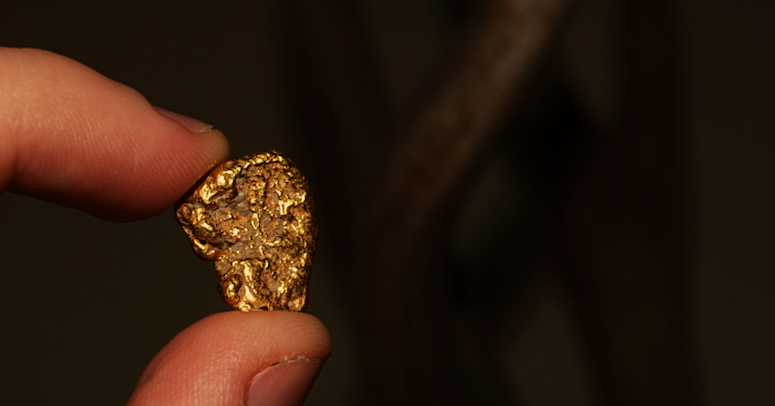
Raw Gold Nuggets (80–95% Natural Purity)
Natural artisanal gold from licensed mining zones. Natural purity varies — independent XRF testing mandatory before pricing. Popular with refineries, specialist buyers, and collectors seeking origin-specific material.
Common Gold Scams in Congo: How to Protect Yourself
Congo gold scams are sophisticated, well-funded, and specifically designed to exploit international buyers. These four patterns cause the most financial damage:
The Conflict Zone Discount Trap
Congo gold offered at 20–40% below current LBMA-derived rates ($148–$155/gram) from “artisanal eastern Congo sources” is either conflict-sourced material carrying serious legal liability or simply does not exist. Genuine artisanal dore at 5–15% below refined spot exists — a 40% discount does not.
The Advance Fee Network
A “licensed Ministry of Mines official” or “trusted dealer” demands payment of a “clearance bond,” “government fee,” or “OECD compliance deposit” before delivering gold.
No legitimate DRC gold transaction requires any advance payment beyond the agreed purchase price. Every documented “advance fee” Congo scam follows this same pattern — once paid, the fee and the “dealer” both disappear.
The Province Misrepresentation Fraud
A seller claims gold originates from Haut-Uélé Province (Kibali area, low conflict risk) while the Certificate of Origin — if examined carefully — actually identifies North or South Kivu sources (high conflict risk, OFAC exposure). Always verify province of origin independently with the Ministry of Mines, not solely from seller-provided documents.
The WhatsApp-Only Dealer with No Premises
Every Tier 1 licensed Congo gold dealer operates from registered commercial premises. Any dealer who insists on conducting significant gold transactions via WhatsApp only, with no verifiable registered business address, is either an unlicensed aggregator or a fraudster.
Congo Gold vs Other African Markets: The True Comparison
Buyers frequently ask whether DRC gold is cheaper than Uganda, Ghana, or South Africa. Here is the honest May 2026 comparison:
| Country | 24K/gram (USD) | Export Tax | Documentation Quality | Net Advantage |
|---|---|---|---|---|
| Congo DRC (formal) | $148–$155 | ~13.5% | Most complex | Dore 5–15% below spot |
| Uganda | $149–$155 | 5% (refined) | High (BGMA/AGR) | Competitive net cost |
| Ghana (GoldBod) | $151–$158 | ~1.5% + royalty | Best in Africa | Best docs + competitive |
| South Africa | $152–$161 | 0% | Highest (LBMA) | Best for bulk |
| Tanzania | $150–$153 | 7% | High (TMAA daily) | Most price transparent |
The DRC advantage is most genuine for:
- Buyers with refinery access purchasing dore at 5–15% below refined spot
- Buyers who specifically need Kibali-area OECD documentation for supply chain certification
- Corporate offtake buyers building formal relationships with Kibali-corridor cooperatives
For general investment gold purchasing where total landed cost is the key metric, South Africa (zero export duty, LBMA-certified) or Ghana (GoldBod best documentation) typically deliver better net economics once Congo’s 13.5% export charge is factored in.
How to Buy Gold from Congo Dealers Safely: Complete Step-by-Step Process
Buying gold safely from Congo DRC through Africa Gold Suppliers Limited follows this fully documented, compliance-forward process:
Step 1: Contact Africa Gold Suppliers Limited with your requirements (weight, purity, product type, destination). Receive a live LBMA-referenced quote within 24 hours — with export taxes stated separately for full transparency.
Step 2: We run OFAC SDN checks on all counterparties and confirm the gold’s province of origin (Haut-Uélé for Kibali-area material) before accepting any order.
Step 3: Independent XRF testing and fire assay at an accredited Kinshasa laboratory. You receive the original assay certificate from the named laboratory.
Step 4: We assemble the complete documentation package: Ministry of Mines export authorization, SMRC clearance, ITSCI conflict-free certificate, OECD Due Diligence documentation, Certificate of Origin (Haut-Uélé Province confirmed), commercial invoice, and insurance certificate.
Step 5: Payment via SWIFT bank wire. Escrow through a licensed escrow service is available for first-time buyers — funds released only on verified delivery and independent destination assay confirmation.
Step 6: Insured air freight departure from N’djili International Airport (FIH), Kinshasa via Brinks Global Services or DHL. Full declared-value insurance. Real-time tracking from departure to delivery signature.
Delivery timelines: Dubai 3–5 days | Europe 5–7 days | USA 6–8 days | Asia 6–8 days.
FAQs: Congo Gold Dealers (2026)
Q: What is the current gold price per gram in Congo? A: As of May 2026, the 24K gold price in Congo through formal SMRC-authorized channels is approximately $148–$155 USD per gram (CDF 344,000–361,000). Artisanal dore runs $128–$142/gram reflecting natural purity discounts. Articles citing $106–$107/gram are using July–September 2025 data, approximately 40% outdated.
Q: What is the best city to buy gold in Congo? A: Kinshasa’s Gombe district is the safest and most document-ready city for international buyers. Lubumbashi is viable with careful due diligence. Goma and Bukavu carry the highest conflict minerals compliance complexity and are not recommended for international buyers without established OECD audit infrastructure.
Q: Is Congo gold conflict-free? A: Kibali-area gold (Haut-Uélé Province) is ITSCI-tagged and OECD-compliant — the strongest conflict-free credential available from DRC. Gold from North Kivu or South Kivu without independently verified chain-of-custody carries significant conflict minerals risk and OFAC exposure. Always verify province of origin independently.
Q: What are Congo gold export taxes? A: Approximately 13.5% total — 3.5% mining royalty + 10% export tax. This is the highest formal export charge of any major African gold producer. Africa Gold Suppliers Limited handles all export tax compliance on behalf of buyers.
Q: Can foreigners buy gold from Congo DRC? A: Yes. Foreigners can legally buy gold from DRC via licensed dealers like Africa Gold Suppliers Limited. You must obtain export permits, comply with OECD and ITSCI requirements, complete OFAC SDN screening, and ensure compliance with your home country’s import regulations. We manage all of this on your behalf.
Q: How do I verify a Congo gold dealer’s license? A: Contact the Direction des Mines, Avenue des Cliniques, Commune de la Gombe, Kinshasa with the dealer’s stated authorization number. Verify ITSCI certificates at itsci.org. Run all counterparties at ofac.treas.gov. Africa Gold Suppliers Limited provides all verification documentation proactively before any buyer commits.
Why Buy Congo Gold Through Africa Gold Suppliers Limited?
You now know everything about Congo gold dealers — the two-tier market, how to verify Tier 1 operators, current prices, city-by-city risk profiles, compliance frameworks, documentation requirements, export taxes, scam patterns, and how DRC compares to other African gold markets.
The only remaining question is who you trust to execute the transaction.
Africa Gold Suppliers Limited has built its reputation on a single commitment: making OECD-compliant, Kibali-area Congo gold accessible to international buyers without requiring them to navigate the DRC’s complex compliance landscape alone.
Here is what we do, systematically, for every DRC gold buyer:
We source only through SMRC-authorized Tier 1 exporters. No Tier 2 unlicensed operators. Ever. Our supply chain traces exclusively through Ministry of Mines-authorized channels in Kinshasa, with Kibali-area ITSCI-tagged material as our primary formal channel product.
We run OFAC SDN checks on every counterparty before accepting any order. This is not optional procedure for us — it is a non-negotiable first step that protects our buyers from sanctions exposure.
We provide Kibali-area ITSCI-tagged gold — the most compliance-ready DRC gold available anywhere. Every shipment carries ITSCI conflict-free certification verified directly with the ITSCI program, not from photocopied dealer documents.
We commission independent fire assay from named, accredited Kinshasa laboratories. You receive the original certificate, not a scan. The assay laboratory’s contact details are on the certificate — you can call them yourself to verify.
We prepare the complete documentation package for every destination: EU Conflict Minerals Regulation compliance documentation for EU buyers, Dodd-Frank Section 1502 supply chain documentation for US corporate buyers, OECD Due Diligence audit records for institutional buyers.
We deliver via insured Brinks or DHL from N’djili Airport, Kinshasa, with full declared-value insurance and real-time tracking.
At current Congo DRC 24K prices of $148–$155/gram, a single kilogram transaction is worth $148,000–$155,000. That is not a context for experimentation with unverified dealers, advance-fee “exporters,” or WhatsApp-only gold sellers with no registered premises. It is the context for a verified, licensed partner who manages every compliance step — from OFAC screening to airport customs — on your behalf.
Congo’s gold is extraordinary. Africa Gold Suppliers Limited is how you access it safely.
Contact Africa Gold Suppliers Limited to buy Congo gold today!
Prices updated May 2026. 24K Congo formal channel: $148–$155/gram; USD/CDF ~2,327. Kibali 2025: 673,000 oz; $2.31B revenue; 99.6% of DRC formal exports. Export taxes: ~13.5% total. LBMA spot: ~$4,720–$4,739/oz. All prices are reference rates — verify before transacting.