
Gold Mining in Sudan 2026 — Third-Largest Gold Producer
Gold mining in Sudan: Sudan is Africa’s third-largest gold producer and the world’s tenth, producing approximately 64–100 metric tonnes of gold annually. Gold became the country’s primary export after South Sudan’s 2011 independence removed 75% of oil reserves.
Today it accounts for 70% of Sudan’s exports. Key production regions: Hassai Mine (Red Sea State), Jebel Amer (North Darfur), River Nile State, and South Kordofan. 80–85% of production comes from artisanal small-scale mining (ASGM).
Major challenges: 50–80% of gold is smuggled, ongoing civil war (since April 2023) controls mining revenue for both warring factions, and mercury contamination poses severe health risks. For legal, certified African gold from stable producing countries, visit africagoldsuppliers.com.
Gold mining in Sudan has transformed from a colonial-era industry into the economic backbone of a nation — yet it has simultaneously become a driver of one of the world’s most severe humanitarian crises. Sudan produces between 64 and 100 metric tonnes of gold annually, placing it among Africa’s most significant gold-producing nations alongside Ghana, South Africa, and Tanzania.
Gold now accounts for approximately 70% of Sudan’s total export revenue — a direct consequence of South Sudan’s 2011 secession, which stripped Sudan of 75% of its oil reserves and 90% of its petroleum export income overnight.
This comprehensive guide covers everything you need to understand about Sudan’s gold mining industry in 2026 — the historical context, key production regions and mines, artisanal vs industrial production methods, economic impact and smuggling scale, environmental and health consequences of mercury use, the regulatory framework, foreign involvement from Russia and the UAE, and gold’s deeply troubling role in funding the civil war between the Sudanese Armed Forces (SAF) and the Rapid Support Forces (RSF).
For international investors and buyers seeking legal, certified gold from stable African producing countries — Uganda, Ghana, South Africa, Tanzania — visit Africa Gold Suppliers Ltd.
Gold Mining in Sudan — Key Statistics at a Glance (2026)
| Metric | Figure | Context |
| Annual gold production | 64.36 metric tonnes (official 2024) | Up 53% from 41.8 tonnes in 2022; unofficial total may reach 90–100 tonnes including smuggled gold |
| Africa ranking | 3rd largest gold producer | Behind South Africa and Ghana by volume |
| World ranking | 10th largest gold producer | Notable given small formal industrial mining sector |
| Share of exports | 70% of total Sudanese exports | Gold replaced oil as primary export post-2011 South Sudan secession |
| ASGM share | 80–85% of total production | Approximately 53.71 tonnes from artisanal miners in 2024 |
| Industrial mining share | 9% (~5.7 tonnes, 2024) | Concentrated at Hassai Mine and emerging projects |
| Gold smuggled | Estimated 50–80% of production | Bypasses official channels; primarily routed to UAE |
| Revenue generated | $2 billion official revenue (2022) | Actual value far higher if smuggling losses are counted |
| Artisanal miners employed | 2 million (estimated) | In a country of 50 million — gold provides critical rural livelihoods |
⚠️ Investment note: Due to Sudan’s ongoing civil war (since April 2023), severe smuggling challenges, and humanitarian crisis, we do not facilitate gold sourcing from Sudan at Africa Gold Suppliers Ltd. For certified, conflict-free gold from stable East and West African producing countries — including Uganda, Tanzania, Ghana, and Congo — see our dedicated sourcing pages.
The Rise of Gold Mining in Sudan — Historical Context from Meroe to 2026
Sudan’s relationship with gold is ancient. Archaeological evidence confirms gold extraction in the Kingdom of Meroe — the ancient Nubian civilisation located in what is now northern Sudan — dating back over 2,500 years. Meroe’s combination of iron smelting and gold mining capacity was so impressive that colonial-era travelers compared it to England’s industrial Birmingham.
The Beni Shanqul mines in the east of the country also contributed to early mineral wealth, establishing gold as central to Sudanese economic and cultural identity long before the modern era.
Modern gold mining in Sudan gained systematic momentum during the British colonial period (1899–1956), when geological surveys identified significant mineralisation across the eastern and northern territories.
However, the truly pivotal transformation in Sudan’s gold industry came in 2011 — when South Sudan’s independence simultaneously removed 75% of Sudan’s oil reserves (which had accounted for 90% of export revenue) and triggered a national economic crisis that forced a strategic pivot toward mineral resources. The response was immediate and dramatic: by 2012, just one year later, gold constituted 60% of Sudan’s total exports
Several factors converged to accelerate this gold rush:
- Jebel Amer discovery (2011): A major gold deposit discovered in North Darfur triggered a grassroots artisanal gold rush, drawing hundreds of thousands of unemployed young Sudanese men to the region
- Sudan Gold Refinery opening: The Central Bank of Sudan established the Sudan Gold Refinery in Khartoum, providing domestic refining capacity for the first time and formalising part of the export chain
- Rising global gold prices: Gold’s 2011 price of approximately $1,500–1,900/oz made previously uneconomic deposits commercially viable, encouraging both artisanal and industrial exploration
- Government incentivisation: Sudan’s government actively encouraged gold production by offering favorable terms to franchise companies and reducing barriers to artisanal mining registration
By 2024, Sudan’s official gold production stood at 64.36 metric tonnes — a 53% increase from 41.8 tonnes in 2022 — though most analysts believe actual production (including smuggled gold) is considerably higher, potentially reaching 90–100 tonnes annually. This remarkable trajectory has transformed Sudan gold mining history from an ancient craft into a contemporary geopolitical contest.
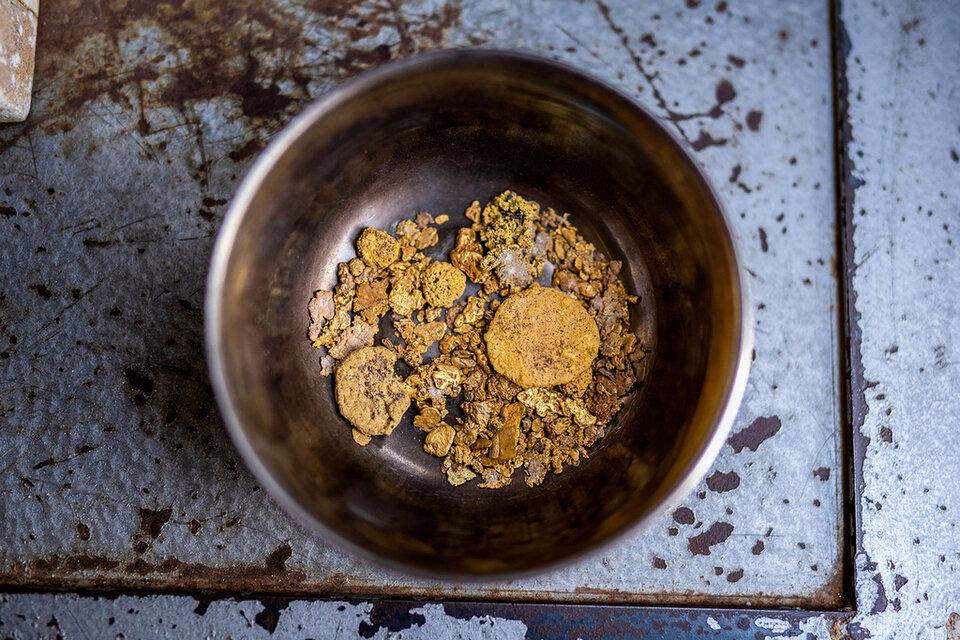
Key Gold Mining Regions in Sudan — Where the Gold Comes From
Sudan’s gold deposits are geologically diverse, distributed across three primary geological formations: Gossan formations in the eastern Nuba Mountains (Eriab region), quartz-vein mineralisation across North Kordofan, Obaidiya, and the Blue Nile region, and alluvial gold along the Nile River and its tributaries. The major Sudan gold mining regions in 2026 are as follows:
Hassai Gold Mine — Sudan’s Largest Industrial Operation
Located approximately 50 kilometres northeast of Khartoum in Red Sea State, the Hassai Gold Mine is Sudan’s largest and longest-operating industrial gold mine. Operational since 1993, it operates across 18 open pits and produces approximately 90,000 ounces (2.8 tonnes) annually, with historical cumulative production exceeding 2.3 million ounces.
Beyond gold, Hassai also extracts iron ore and base metals, making it the country’s most significant multi-mineral operation. The mine is a joint venture involving Sudanese government interests and private foreign capital, and its relative proximity to Port Sudan gives it logistics advantages over inland operations.
Jebel Amer, North Darfur — The Contested Gold Heartland
The Jebel Amer gold region in North Darfur was discovered in 2011 and rapidly became both Sudan’s most productive artisanal gold zone and its most politically volatile mining area.
Estimated to produce gold worth $16 billion annually at peak rates, Jebel Amer has been controlled by the Rapid Support Forces (RSF) since 2017 — a paramilitary organisation whose leadership (particularly General Mohamed “Hemedti” Dagalo) built significant wealth through control of the mine before the April 2023 civil war escalated.
Because most Jebel Amer gold bypasses official channels, it represents a major component of Sudan’s estimated $1–2 billion per year in smuggled gold flowing primarily to UAE trading networks.
River Nile, Northern State, and Red Sea State — The Formal Mining Belt
These relatively stable, sparsely populated northern territories — primarily under Sudanese Armed Forces (SAF) control — host Sudan’s most formalised industrial mining operations. Advanced geological mapping, remote sensing, and systematic exploration have been employed here, attracting franchise companies willing to invest in longer-term development.
These regions contribute most significantly to Sudan’s official gold production statistics and represent the strongest case for future industrial mining growth, subject to resolution of the ongoing conflict.
South and West Kordofan, Blue Nile, and Darfur — The Artisanal Heartland
These regions are dominated by artisanal small-scale gold mining (ASGM), which accounts for 80–85% of Sudan’s total gold production. Local and migrant communities engage in mining on communal and traditional lands using hand tools, mercury, and basic sluice equipment.
The conditions are harsh — exposure to mercury, cyanide, and extreme heat is routine — and armed groups including the RSF extract protection fees from miners or directly control access to deposits. Environmental degradation in these zones is severe, with mining waste contaminating soil, farmland, and water sources including Nile tributaries.
Block 12 and Block 14 — The Future of Industrial Mining in Sudan
Two highly prospective exploration concessions represent the most significant future potential for industrial gold mining in Sudan. Block 12, located 70 kilometres northwest of Port Sudan in the Nakasib Suture Zone of the Arabian-Nubian Shield, is under active exploration by Pan African Resources.
Block 14 (the Meyas Sand Gold Project), developed by Perseus Mining (Australia), has estimated probable reserves of 79.9 million tonnes at 1.11 grams per tonne — representing 2.85 million ounces of contained gold. Perseus Mining has committed $7 million to initial development, signalling serious institutional confidence in Sudan’s northern mineral belt — provided political stability can be achieved.
Gold Production Methods in Sudan — Artisanal, Tailings Processing, and Industrial
Sudan’s gold mining industry operates through three distinct production models, each with radically different characteristics, outputs, and consequences:
Artisanal Small-Scale Gold Mining (ASGM) — 83% of Production
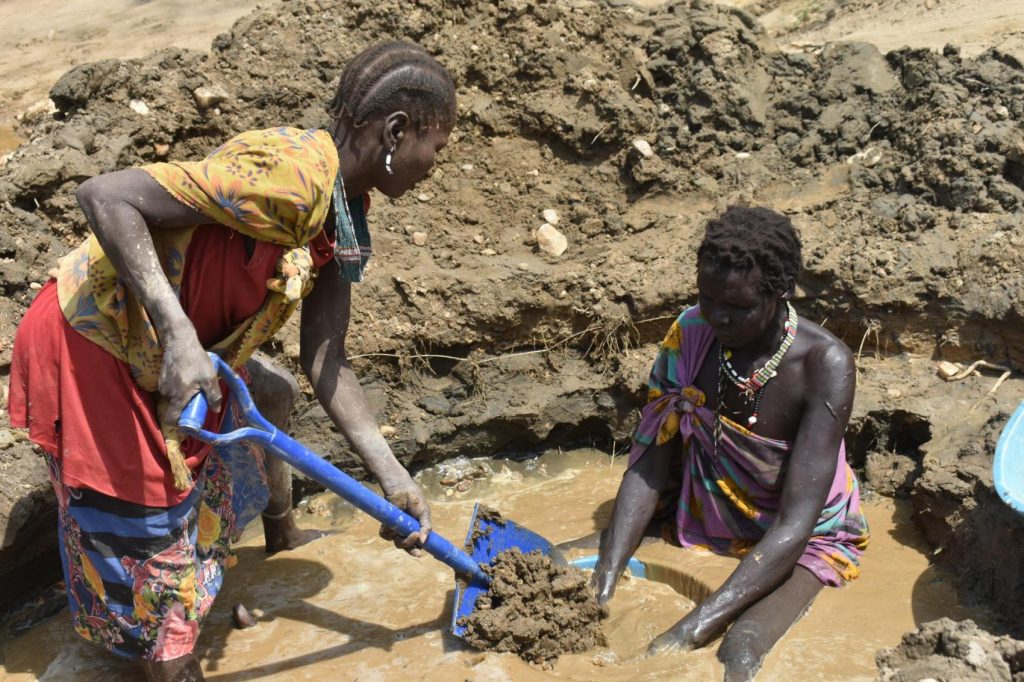
The Sudan artisanal gold mining sector is the industry’s backbone and its most problematic element simultaneously. In 2024, ASGM produced approximately 53.71 tonnes — 83% of total official output — from an estimated workforce of 2 million miners operating primarily in Darfur, South Kordofan, and the Blue Nile region.
These miners use hand tools, basic sluicing equipment, and — critically — mercury amalgamation to separate gold from ore. Mercury is cheap, widely available, and effective — but it is also a potent neurotoxin that causes irreversible neurological damage with repeated exposure.
Artisanal Sudan gold mining methods recover only 30% of contained gold, leaving 70% — and all the mercury used — in tailings that then contaminate soil, groundwater, and rivers.
Tailings Processing — The Quick-Profit Model
A significant and growing segment of Sudan’s gold sector involves franchise companies purchasing and reprocessing artisanal tailings — the mercury-contaminated waste left behind after artisanal extraction.
Companies including Kush for Exploration and Production Co. Ltd. (UAE-owned) and Meroe Gold (linked to Russia’s Wagner Group/Africa Corps) purchase these tailings from artisanal miners, reprocessing them to extract residual gold using industrial cyanide processes.
While economically rational in the short term, this model reinforces Sudan’s dependence on artisanal gold production rather than transitioning to a more sustainable industrial model. It also creates a second wave of cyanide contamination on top of the mercury already present in the tailings.
Large-Scale Industrial Mining — 9% of Production
Industrial gold mining in Sudan — using geological mapping, remote sensing, drilling, and mechanised open-pit or underground extraction — accounts for only approximately 5.7 tonnes (9%) of 2024 output.
The Hassai Gold Mine is the primary industrial operation; Perseus Mining’s Meyas Sand project represents the most significant pending addition. Foreign companies including Zarubezhgeologiya (Russia) are also active in exploration.
Industrial mining offers far higher recovery rates (typically 85–95% of contained gold vs ASGM’s 30%), lower mercury use, and more documentable output — but many franchise companies have failed to meet contractual production obligations, and the civil war has forced 130+ concession companies to halt exploration.
| Mining Method | 2024 Output | % of Total | Recovery Rate | Key Challenges |
| Artisanal ASGM | 53.71 tonnes | 83% | ~30% | Mercury contamination, armed group control, health risks |
| Tailings reprocessing | ~5 tonnes | 8% | 60–80% | Cyanide contamination, short-term profit model, foreign-dominated |
| Industrial / franchise | 5.7 tonnes | 9% | 85–95% | Contract non-compliance, civil war disruption, smuggling |
| Smuggled / unaccounted | 25–35 tonnes | ~35% extra | N/A | RSF and SAF control; UAE primary destination |
Economic Impact of Gold Mining in Sudan — Revenue, Smuggling, and Inequality
Gold is Sudan’s economic lifeline — accounting for 70% of total exports and generating approximately $2 billion in official revenue in 2022. In 2022 alone, Sudan exported $2.29 billion in gold to the UAE, making the Emirates by far the largest destination for Sudanese gold, followed by Italy ($18.7 million), Egypt ($15.2 million), and Turkey ($2.2 million).
These figures represent only officially declared exports — the true value of Sudan’s gold production is substantially higher once smuggling is accounted for.
Despite gold’s dominant role in exports, its contribution to GDP remains only approximately 4% — a paradox explained entirely by smuggling. The Central Bank of Sudan has estimated that 50–80% of Sudan’s gold production is smuggled, bypassing official export channels and depriving the government of revenue that would otherwise fund public services, infrastructure, and social safety nets.
In 2021, the Central Bank reported that 32.7 tonnes of gold were unaccounted for — a figure representing approximately half the year’s official production.
Gold as a Conflict Financing Mechanism
Since April 2023, when civil war erupted between the SAF and RSF, gold has become a direct mechanism for financing both sides of the conflict. The RSF, which controls the Jebel Amer region and other Darfur mining areas, reportedly earned $860 million from Darfur mines in 2024 alone — funds used to purchase weapons, pay fighters, and extend operations across Sudan, Yemen, and other theatres. The RSF’s Al-Junaid Company serves as its primary gold trading vehicle.
The SAF, controlling mines in River Nile and Red Sea States through Sudan Master Technology, similarly derives revenue that sustains its military capacity. Gold smuggling finances both sides of a war that has displaced more than 12 million people — the largest displacement crisis in the world as of 2026.
Who Benefits from Sudan’s Gold Mining?
The distribution of gold mining wealth in Sudan is profoundly unequal. The approximately 2 million artisanal miners who produce 83% of Sudan’s gold receive subsistence-level incomes, work without safety equipment, and are subject to exploitation by armed groups.
In a country where 32.9% of the population lives on less than $2.15 per day, gold provides essential rural livelihoods — but the premium value created by those livelihoods accrues almost entirely to armed factions, smuggling networks, and UAE trading houses rather than to the communities around the mines.
Environmental and Health Impacts of Gold Mining in Sudan — Mercury, Cyanide, and Community Suffering
The environmental impact of gold mining in Sudan — particularly artisanal mining — is among the most severe of any mining sector in Africa. Three factors combine to create a public health crisis that extends far beyond the mine sites themselves: the unregulated use of mercury in ASGM, cyanide contamination from tailings reprocessing, and the complete absence of mine closure and site restoration regulations.
Mercury Contamination — The Central Health Crisis
Mercury is used in Sudan’s artisanal gold mining sector to amalgamate gold particles from crushed ore — a process that recovers gold efficiently but releases mercury into the environment at every stage.
Studies in Gadarif State have confirmed lead and mercury contamination at ASGM sites at concentrations far exceeding WHO safe limits. Mercury is a potent neurotoxin — chronic exposure causes tremors, neurological disorders, kidney damage, and developmental problems in children.
When flooding events (such as the severe floods of 2022 and 2023) inundate mining sites, mercury and mining waste are carried into the Nile River system and onto agricultural land downstream, extending contamination risk to millions of non-miners.
Cyanide Contamination from Tailings Processing
Franchise companies processing artisanal tailings add a second contamination layer through industrial cyanide leaching. Cyanide leaches into groundwater tables, threatening drinking water sources and destroying the biodiversity of river systems where contaminated water drains.
In Talodi, South Kordofan — one of the most intensively mined areas — local residents report rates of infection, convulsions, and unexplained illnesses that doctors attribute to mining chemical exposure, with hospitals operating at far beyond capacity to manage cases.
Absence of Regulatory Protection
Sudan’s mining regulatory framework — the Mineral Wealth and Mining Development Act 2015 — contains no adequate provisions for mine closure, site restoration, occupational health and safety, or chemical handling standards for ASGM operations.
As documented by the African Mining Legislation Atlas, there is effectively no environmental enforcement mechanism for artisanal mining in Sudan. This regulatory vacuum means that gold mining environmental damage in Sudan is essentially permanent — contaminated land and groundwater will persist for decades without remediation.
Growing community protests against mining operations across Darfur, South Kordofan, and the Blue Nile region reflect the depth of local opposition to the sector’s environmental conduct.
Sudan Gold Mining Regulations — The Legal Framework and Its Failures
Sudan’s gold mining sector operates under two principal legislative frameworks: the Mineral Resources and Mining Development Act of 2007 and the updated Mineral Wealth and Mining Development Act of 2015. These laws vest ownership of all mineral resources in the Sudanese state, require licences for all exploration and extraction activities, and establish the Sudanese Mineral Resources Company (SMRC) as the oversight body for production and export reporting.
The Licensing System and Its Corruption
Under the current framework, gold mining in Sudan requires three licence categories: exploration licences for surveying activity, mining leases for extraction, and export licences for international sale. In theory, this system should provide the state with visibility over and revenue from the entire value chain.
In practice, the licensing system is characterised by opacity, corruption, and selective enforcement. The process for awarding franchise agreements to foreign companies lacks transparency. As of 2024, more than 130 concession companies have suspended exploration activity — many citing political risk, conflict, and the impossibility of operating in a zone controlled by armed groups who impose their own taxes on production and movement.
The Central Bank’s Failed Gold Export Controls
In 2022, the Central Bank of Sudan issued a directive banning gold exports by non-concession entities — an attempt to channel gold through official export channels and reduce the scale of smuggling.
The measure has had limited impact: estimates still place 50–80% of production outside official channels in 2024, primarily flowing to UAE-based trading companies through informal networks that operate beyond the Central Bank’s reach. The SMRC reported official production of only 18.637 tonnes in 2022 — a figure that clearly understates actual output by a significant margin.
Foreign Involvement in Sudan’s Gold Mining — Russia, the UAE, China, and the Geopolitical Contest
Sudan’s gold industry has become an arena for geopolitical competition between major foreign powers — each seeking access to Sudan’s mineral wealth and strategic positioning in the Sahel and Red Sea region.
The involvement of Russia, the UAE, and China in Sudan’s gold sector extends beyond commercial interest into the realm of arms flows, sanctions circumvention, and conflict financing.
Russia and the Wagner Group (Now Africa Corps)
Russia’s involvement in Sudan’s gold industry is primarily associated with Meroe Gold — a company linked to the Wagner Group (now rebranded as Africa Corps following Yevgeny Prigozhin’s 2023 death).
Meroe Gold operates tailings processing facilities and has been accused of smuggling Sudanese gold to Russia through front companies including al-Solag. Between February and July 2022, 16 flights reportedly carried gold from Sudan to Russia through informal channels, bypassing official export documentation.
Russian involvement in Sudan intensified following a 2017 meeting between President Omar al-Bashir and Vladimir Putin, with Sudan positioned as Russia’s “key to Africa” — a strategic relationship that encompasses the stalled proposal for a Russian naval base at Port Sudan on the Red Sea.
The United Arab Emirates — Primary Destination for Smuggled Sudan Gold
The UAE is the largest documented destination for Sudanese gold exports — both official ($2.29 billion in 2022) and unofficial. UAE-linked companies are implicated in Sudan’s gold supply chain at multiple levels: Emirati company Emiral Resources holds a significant mining concession in SAF-controlled territory, while UAE trading networks in Dubai’s gold souk are the primary market for smuggled Jebel Amer gold.
Independent investigations have implicated the UAE in funding both the SAF and RSF — a strategy that ensures Emirati commercial interests are protected regardless of which faction ultimately controls specific mining regions. Sudan’s gold flows to UAE are a significant concern for international organisations attempting to apply pressure on the civil war’s economic drivers.
China and Other Foreign Actors
Chinese mining companies and executives are increasingly being courted by Sudan’s government as part of a strategy to diversify foreign partnerships beyond Russia and the UAE. Several Chinese companies have expressed interest in exploration concessions in the Red Sea State and Northern State.
Australia’s Perseus Mining is the most significant Western-aligned investor, with its Meyas Sand project representing the largest foreign direct investment commitment in Sudan’s gold sector.
Gold and Sudan’s Civil War — How Gold Mining Fuels the Conflict
The April 2023 outbreak of war between the Sudanese Armed Forces (SAF) under General Abdel Fattah al-Burhan and the Rapid Support Forces (RSF) under General Mohamed “Hemedti” Dagalo cannot be understood without understanding the role of gold.
The RSF’s transformation from a Darfur militia into a force capable of contesting control of the national capital Khartoum was primarily funded by gold mining revenues from Jebel Amer and surrounding Darfur deposits.
In 2017, the RSF seized direct control of Jebel Amer, displacing thousands of local Zaghawa miners and establishing the mine as a financial foundation for Hemedti’s political ambitions. In 2020, Hemedti nominally sold Jebel Amer to the transitional government for $200 million — but at the war’s outbreak in 2023, the RSF immediately reoccupied the mine and its surrounding areas.
The RSF’s Al-Junaid Company reportedly earned $860 million from Darfur mines in 2024 — funding that enables the RSF to fight, recruit, purchase weapons through UAE channels, and sustain mercenary operations beyond Sudan. The SAF, for its part, controls mines in River Nile and Red Sea States through Sudan Master Technology and periodically bombs RSF-held mining sites to disrupt their financing.
The result is a conflict in which gold functions as both cause and consequence — the pre-war competition for mine control drove the political breakdown, and post-war mine revenue sustains both sides’ capacity to continue fighting. More than 12 million Sudanese people have been displaced since April 2023 — the world’s largest displacement crisis — with famine risk affecting tens of millions.
The UN Security Council and various international bodies have called for targeted sanctions on individuals and entities profiting from Sudan’s gold trade to finance violence, but implementation has been limited by the UAE’s refusal to constrain its gold trading networks.
Future of Gold Mining in Sudan — Prospects, Challenges, and What Needs to Change
Sudan’s gold mining industry holds genuine long-term potential — but realising that potential requires resolving challenges that are simultaneously geological, regulatory, environmental, humanitarian, and geopolitical:
- End the civil war: The most fundamental barrier to gold mining investment in Sudan is the ongoing conflict. No responsible international mining company can safely operate, and no domestic regulatory reform can function, in a country at war. Peace is the prerequisite for every other improvement.
- Address the smuggling crisis: The 50–80% smuggling rate represents a structural failure of the regulatory framework. Effective anti-smuggling measures require cooperation from UAE authorities — the primary destination market — as well as better mine-to-export tracking technology and international monitoring.
- Establish mercury and environmental regulations: Sudan needs urgent legislative reform to establish: mercury use limits and phase-out timelines for ASGM, mandatory mine closure and site restoration requirements, occupational health and safety standards, and environmental monitoring requirements for all mining concession areas.
- Formalise the ASGM sector: The 2 million artisanal miners who produce 83% of Sudan’s gold operate almost entirely informally. Formalisation — through accessible licensing, technical training, safer chemical alternatives (gravity concentration instead of mercury), and cooperative structures — would dramatically increase both state revenue and miner welfare.
- Attract responsible foreign investment: Projects like Perseus Mining’s Meyas Sand demonstrate that responsible foreign investment in Sudan’s gold sector is possible. Regulatory stability, transparent licensing, and credible rule of law are the conditions necessary to expand this type of investment beyond a single project.
For investors and buyers interested in legally sourced, documented, and conflict-free gold from stable African producing countries, Africa Gold Suppliers Ltd sources certified 24K gold from Uganda, Tanzania, Ghana, DRC (conflict-free certified), and South Africa — countries where responsible gold trade directly benefits local communities without financing conflict. Visit our dedicated pages for buying gold from Africa, buying gold in Uganda, gold from Congo, and gold from Tanzania (Mwanza).
Related Pages on Africa Gold Suppliers Ltd
- Africa Gold Suppliers Ltd — Home Page
- Buy Gold Bars from Africa — Certified 24K Stock
- Gold Bullion for Sale — All Formats
- Buy Gold Bullion Online — International Delivery
- Buy Gold from Local Miners in Africa
- Buy Gold in Uganda — East African Gold
- Buy Gold in Congo — Certified Conflict-Free DRC Gold
- Buy Gold Bullion from Mwanza, Tanzania
- Gold Price in Ghana — Current Rates
- Gold Price in Tanzania — Current Rates
- Buy Gold and Silver in South Africa
- Buy Gold in Dubai — African Gold Exported to UAE
- Buy Gold Online in Switzerland — African Gold Delivery
- Buy Gold Online in Canada — African Source
- Buy Gold Online in Netherlands — DDP Delivery
- Buy Gold in Uganda from USA
- Buying Gold in Malaysia from Africa
- Buying Gold in Vietnam from Africa Online
- Buying Gold Online in Africa from Kazakhstan
- Buying Gold Coins — Africa Gold Suppliers
- Our Services — Export Documentation & Delivery
- About Africa Gold Suppliers Ltd
- Contact Us — Live African Gold Quote