How to Transport Gold from Africa to Europe: A 5-Step Guide
How to Transport Gold from Africa to Europe: To transport gold from Africa to Europe legally, you source it from a licensed exporter, have it refined and independently assayed, obtain the export permit and customs clearance in the source country, ship it with a specialist insured carrier, and then clear it through European customs with the correct declarations and tax treatment.
Skip any one of those five steps and the shipment can be stopped, seized, or become impossible to resell, which is why gold is moved through a documented chain rather than posted like ordinary freight. The legal and practical details differ by country, but the order of the steps never does.
This guide walks through each step in sequence, lists the documents you need, and answers the most common questions about shipping gold from Africa to Europe.
How to Transport Gold from Africa to Europe at a Glance
| Step | What Happens | Key Documents |
|---|---|---|
| 1. Legal sourcing and documentation | Buy from a licensed exporter with a verified licence and traceable origin | Dealer licence, certificate of origin, invoice |
| 2. Refining and assaying | Gold is refined and independently tested for purity and weight | Assay certificate with serial numbers |
| 3. Export permits and customs | Source country authorises the export and clears customs | Export permit, customs declaration, proof of taxes paid |
| 4. Secure logistics and transport | Insured, tracked carriage by a specialist carrier | Airway bill, insurance certificate, packing list |
| 5. European import compliance | Declare, classify, and clear the gold into the EU or other European country | Import declaration, cash-control declaration where required, VAT and AML records |
Step 1: Legal Sourcing & Documentation
Everything downstream depends on where the gold came from. Gold that can’t be traced to a lawful source can’t be exported, and can’t be cleanly imported either.
What to confirm before you buy:
- The seller holds a valid licence to deal in and export gold, checked directly with the issuing authority, never from a document the seller emails you. Our guide on how to verify a gold export license walks through exactly how.
- The licence covers the activity you need, meaning export, not only domestic trading.
- The origin is documented: the country, and ideally the mine or region, supported by a certificate of origin.
- Responsible-sourcing checks have been done. Europe expects due diligence aligned with OECD guidance, especially for gold from conflict-affected and high-risk areas.
Documents to collect at this stage:
- Dealer’s licence and company registration
- Certificate of origin
- Commercial invoice stating weight, purity, and declared value
- Contract or purchase agreement
Buying from licensed gold and silver dealers rather than informal sellers is the single biggest risk reducer. If you’re weighing artisanal sources, read our guide to buying gold from local miners first, since informal supply is where documentation most often breaks down. For a country-by-country view of where gold is lawfully produced, see gold producing countries in Africa.

Step 2: Refining & Assaying
Raw gold is rarely exported or accepted by European buyers as it comes out of the ground. It’s refined to a known purity and then independently tested.
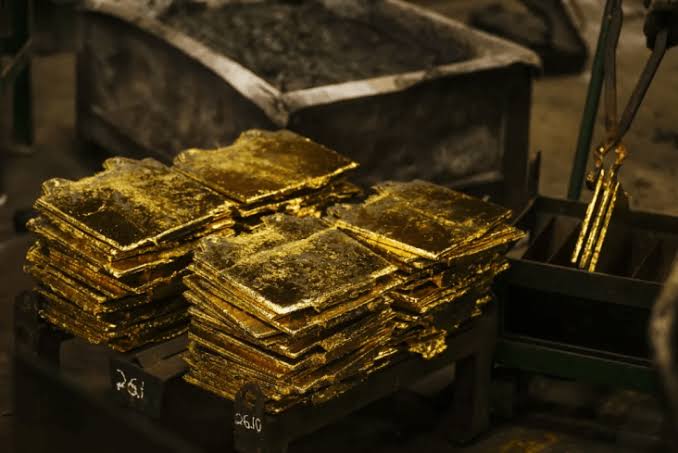
- Refining turns dore, dust, or nuggets into bars or ingots of defined fineness, typically 999.9 (24K) for investment-grade bullion. See our overview of gold refineries in Africa.
- Assaying is independent testing, by fire assay or XRF, that confirms purity and weight and produces a certificate tied to a serial number on the bar.
- Hallmarks and serial numbers let anyone later match the physical bar to its paperwork.
Why this matters for Europe: a bar’s fineness decides how it is treated for tax and declaration purposes. In the EU, investment gold is generally recognised at 99.5% purity or higher for bars, and unrefined or lower-purity gold is handled very differently. An assay certificate you can’t match to a serial number is as good as no certificate, so verify the number on the paper against the number on the bar before anything leaves the country.
Step 3: Export Permits & Customs
Gold can’t leave an African country just because the seller has a licence. Each export needs its own authorisation.
What the source country typically requires:
- An export permit specific to the shipment, separate from the dealer’s general licence
- Proof that royalties and export taxes have been paid at source
- Customs clearance at the point of export, with a declaration of weight, purity, and value
- Assay and origin certificates presented alongside the permit
Requirements, fees, and responsible authorities differ by country, and some have recently restructured their gold sectors, so confirm the current rules rather than relying on an old guide. See our overview of the legal requirements for buying and exporting gold from Africa and our walkthrough of exporting gold bullion.
If you’re sourcing from a specific country, our guides to buying gold in Uganda, buying gold in Congo, buying gold in Nairobi, and buying gold and silver in South Africa cover the local specifics.
Step 4: Secure Logistics & Transport
Gold is high-value and compact, which makes it a target. It is moved by specialist precious-metals carriers, not ordinary couriers or post.
What proper gold logistics includes:
- Secure collection and escorted transport from the seller’s facility to the airport or a bonded facility
- Tamper-evident, sealed packaging with seal numbers recorded on the documents
- Full-value insurance covering the declared value from collection to delivery
- Air freight on a tracked airway bill, with chain-of-custody records at every handover
- A named carrier and tracking number you can check independently
Established global precious-metals carriers such as Brink’s, G4S, and Malca-Amit operate this kind of service. Ordinary postal and express services generally restrict or refuse bullion, so a seller who proposes sending gold by regular post is a red flag, not a saving.
Practical points:
- Ask who owns the risk at each stage. The agreed delivery terms (for example, whether the seller or buyer insures and arranges each leg) decide who pays if something goes wrong.
- Declare the true value. Under-declaring to save on insurance or duty risks voiding cover and breaching customs law.
- Track the shipment yourself, using the airway bill number on the carrier’s own system rather than a link the seller sends.
- Never carry commercial quantities in hand luggage. Personal carriage of bullion triggers declaration duties and is not a substitute for a documented shipment.
See our guide to how to buy gold online safely for the buyer-side checks that go with secure shipping.
Step 5: European Import Compliance
Europe is not one customs jurisdiction for gold. The EU applies a common framework with national implementation, while the UK and Switzerland sit outside it with their own rules. In all cases, plan the import before the gold ships.
1. Customs declaration and classification. The shipment is classified under the Harmonised System, with bullion and jewellery falling under different tariff headings. Confirm the tariff code and applicable duty with the national customs authority or a licensed customs broker, rather than assuming a rate.
2. Cash-control declaration. Under the EU Cash Controls Regulation, gold bars, nuggets, and clumps of at least 99.5% purity, and gold coins of at least 90% gold, count as “cash” for declaration purposes. Anyone carrying EUR 10,000 or more across the EU border must declare it. For gold sent unaccompanied by post, freight, or courier, authorities may require a disclosure declaration from the sender or recipient within 30 days of a request.
3. VAT. Investment gold, generally bars of at least 99.5% fineness and qualifying coins, benefits from a special VAT regime across the EU, with exemption in most cases. Non-investment gold, such as dore, scrap, or jewellery, is treated differently, and the details vary by member state. Confirm the treatment with the importing country’s tax authority.
4. Anti-money-laundering and conflict-minerals due diligence. Dealers and buyers of precious metals have AML obligations, including customer identification and source-of-funds checks for larger transactions. EU rules on conflict minerals also require responsible-sourcing due diligence from importers of gold above set volumes. Keep the full documentation trail from Step 1 for audit and resale.
5. Records. Retain the invoice, assay certificate, certificate of origin, export permit, airway bill, insurance certificate, and import declaration. A buyer, bank, or authority will ask for them.
Requirements change, so confirm current rules for your specific destination before shipping. For Europe-adjacent pricing context, see our guide to gold bar prices in Africa and gold price in Africa.
Common Questions About Shipping Gold from Africa to Europe
Is it legal to ship gold from Africa to Europe? Yes, when the gold is lawfully sourced, exported with the right permits, shipped by a proper carrier, and declared and cleared on import. The legality depends on the documentation chain, not on the route itself.
What documents do I need? Typically the dealer’s licence, certificate of origin, assay certificate, commercial invoice, export permit, proof of taxes paid at source, airway bill, insurance certificate, and the European import and cash-control declarations where they apply.
Can I send gold by regular post or courier? Generally no. Ordinary postal and express services restrict or refuse bullion. Commercial gold shipments use specialist precious-metals carriers with insurance and chain-of-custody tracking.
Can I carry gold in my luggage? Carrying commercial quantities this way is not advisable. Gold bars of 99.5% purity or higher, and gold coins of 90% or higher, count towards the EUR 10,000 cash declaration threshold when entering the EU, and the source country’s export rules still apply.
How long does shipping gold from Africa to Europe take? Transit by air is usually quick, but the full process, including permits, assay, scheduling the carrier, and customs clearance on both sides, takes longer, and timelines vary by country and carrier. Ask for a written timeline before you pay.
Who pays for insurance and shipping? It depends on the agreed delivery terms. Confirm in writing who arranges and pays for each leg, and who bears the risk at each stage.
Is VAT charged on gold imported into the EU? Investment gold, generally bars of at least 99.5% fineness and qualifying coins, benefits from a special VAT regime and is usually exempt. Dore, scrap, and jewellery are treated differently, and rules vary by member state.
Do the UK and Switzerland follow the same rules? No. They are outside the EU and have their own customs, tax, and declaration requirements, so check the specific country’s rules separately.
How do I know a seller’s shipping claims are genuine? Ask for the carrier’s name, the airway bill number, and the insurance certificate, then verify them independently. Be wary of unusually cheap “secure” shipping or any seller who won’t name the carrier.
What if the gold is held at customs? Provide the full documentation set promptly: licence, origin, assay, invoice, export permit, and declarations. A complete, consistent paper trail is the main thing that resolves a hold quickly.
Buy Gold in Africa With Us
Moving gold from Africa to Europe is straightforward when every step is documented and every party is licensed, and that is how we do it. Africa Gold Suppliers is a licensed exporter based in Kampala, Uganda, supplying certified gold bars, nuggets, and dust with independent assay certificates, certificates of origin, export documentation, and insured, tracked shipping built into every order.
If you’re ready to buy gold in Africa and have it delivered to Europe the right way, contact Africa Gold Suppliers, browse our gold bars for sale, see how we work on our services page, or learn more about us.
Check our licence, ask for the full documentation, and buy gold in Africa with a team that handles the entire chain, from the mine to your door.