
African Gold Production: The Complete Guide to the World’s Top Gold-Producing Continent
African gold production now exceeds 1,000 tonnes annually, making Africa the single largest gold-producing region on Earth — ahead of Asia, the Americas, and Oceania combined.
From the century-old Witwatersrand Basin in South Africa to the fast-expanding mines of West Africa’s Birimian greenstone belt, this guide breaks down exactly how gold production in Africa works: the leading countries, the major gold belts, the split between industrial and artisanal mining, and what it all means for anyone looking to buy directly from the source.
How Much Gold Does Africa Produce?
Africa’s total gold production now sits at over 1,000 tonnes per year, representing roughly 20–25% of global gold output — a genuinely staggering share for a single continent. Gold prices surging past $5,000 per troy ounce in early 2026 has only intensified global attention on African gold-producing countries, transforming what was already a major economic sector into one of the most closely watched commodity stories on the planet.
This output isn’t concentrated in one country — it’s spread across a wide belt of nations, each contributing through a mix of large-scale industrial mining and extensive artisanal and small-scale operations.
Our full country-by-country breakdown of gold producing countries in Africa covers all 20 major producers in detail; here’s a summary of the continent’s biggest players.
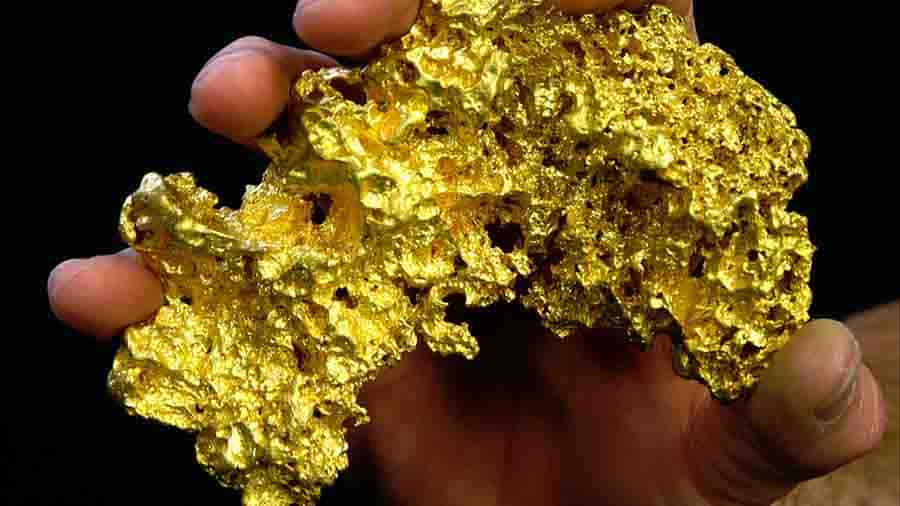
Ghana: Africa’s Largest Gold Producer
Ghana’s gold production consistently leads the continent, with output estimated at 140–150 tonnes annually as of 2025–2026 — and climbing, thanks to major mines like Ahafo and Akyem, operated by companies including Newmont and Gold Fields.
Ghana’s gold sector employs over a million people and contributes roughly 8–10% of national GDP, blending large-scale industrial operations with a vibrant artisanal mining segment known locally as “galamsey,” which accounts for a significant share of total output.
For a deeper look at exactly how much gold Ghana produces year by year, see our dedicated guide on how much gold Ghana produces in a year.
South Africa: The Historic Powerhouse of African Gold Mining
Once the undisputed leader of global gold production, South Africa’s gold mining industry has declined from its historic peak due to aging, increasingly deep mines and rising extraction costs, but still contributes a substantial 99–110 tonnes annually.
South Africa’s real legacy lies in the Witwatersrand Basin, which has produced more gold than any single geological formation on Earth — over 50,000 tonnes since mining began in the 1880s. Major mines like Mponeng, one of the deepest gold mines in the world, continue to yield gold from increasingly challenging depths.
South Africa is also home to the Rand Refinery, one of the world’s largest and most respected LBMA-accredited gold refineries. Our guides on gold deposits in South Africa and the Mponeng gold mine cover this legacy in more depth.
Mali: West Africa’s Gold-Dependent Economy
Mali’s gold production typically runs between 60 and 70 tonnes annually from a combination of industrial and artisanal sources, though output has fluctuated in recent years amid regional political instability.
Gold remains foundational to Mali’s economy, accounting for roughly a quarter of national GDP and as much as 70–75% of total export earnings — making it one of the most gold-dependent economies anywhere on the continent.
Major operations include the Loulo-Gounkoto complex and the Sadiola Gold Mine, both anchoring Mali’s position within the wider West African gold belt.
Burkina Faso, Tanzania, and the DRC: Africa’s Fast-Growing Producers
Burkina Faso’s gold sector has grown dramatically over the past decade, now producing somewhere in the range of 60–90 tonnes annually, driven by extensive industrial mining across the Sahel region alongside a large artisanal workforce.
Tanzania, East Africa’s clear gold-production leader, contributes around 46–55 tonnes annually, centered on the Geita and North Mara mines within the Lake Victoria Goldfields.
The Democratic Republic of Congo produces an estimated 36–42 tonnes annually, with vast untapped reserves — the Kibali complex alone is estimated to hold over 315 tonnes of combined proven and probable reserves — suggesting significant room for growth if governance and formalization efforts continue.
Our guides on gold mining in Congo and gold mining in Uganda and Congo cover this Central African production picture in more depth.
Africa’s Major Gold Belts and Deposits
Gold production in Africa clusters around a handful of world-class geological formations. West Africa’s production is anchored by the Birimian greenstone belt, sweeping from Senegal through Guinea, Sierra Leone, Côte d’Ivoire, Ghana, and into Burkina Faso and Mali — one of the planet’s premier gold-bearing geological terranes, and the reason West Africa alone produces well over 400 tonnes annually, more than East and Southern Africa combined.
Southern Africa’s output centers on the Witwatersrand Basin, while East Africa’s smaller but rapidly growing sector draws on the East African Rift System and associated greenstone belts, with significant untapped prospectivity across Uganda, Ethiopia, and Rwanda. Our full guide on gold deposits in Africa maps out these major geological zones in detail.
Industrial Mining vs. Artisanal Gold Mining in Africa
A defining feature of African gold production is the coexistence of large-scale industrial mining alongside extensive artisanal and small-scale gold mining (ASGM), which accounts for roughly 20–30% of the continent’s total output and directly employs an estimated 10 million people across the continent.
In countries like Sudan and Zimbabwe, artisanal mining dominates, often relying on manual extraction methods that support local economies but carry genuine health and environmental risks. Industrial mining, more prevalent in Ghana and Mali, involves major international mining corporations using modern machinery and offering more stable formal employment.
Reforms aimed at formalizing artisanal mining — including Ghana’s community mining schemes — are increasingly aimed at curbing illegal activity while capturing more of this output within the regulated supply chain.
Why African Gold Production Matters for Global Buyers
The sheer scale of gold production in Africa — over 1,000 tonnes annually from some of the world’s purest deposits — makes the continent one of the most important sources of certified, mine-direct gold available to international buyers today.
Sourcing gold directly from African producers, rather than through multiple layers of intermediaries in London or Zurich, can meaningfully reduce cost, while African gold — particularly from well-documented artisanal sources — is often available at a genuine premium below rates charged by major international bullion dealers.
Our guides on gold in Africa and the African gold jewelry market explore this broader market context in more depth, while our overview of gold investment opportunities in Africa covers exactly how investors are approaching this sector.
Risks and Due Diligence in African Gold Production
Buying gold linked to African gold production does come with genuine risks that responsible buyers need to manage carefully.
Political instability in parts of the Sahel and eastern Congo can affect supply chains, and gold smuggling remains a persistent challenge across several producing countries — our dedicated guide on gold smuggling in Africa explains how this affects legitimate buyers and what documentation genuinely protects you.
Working exclusively with licensed, certified suppliers who provide full assay certification and export documentation is the single most important safeguard against these risks.
See our full FAQ on buying gold in Africa for a complete breakdown of legal requirements, verification steps, and secure payment methods.
Sourcing Certified African Gold Directly
For buyers who want to engage with African gold production directly rather than through layers of international intermediaries, working with an established, licensed supplier is essential.
Africa Gold Suppliers Limited connects international buyers with certified, licensed gold sourced from Africa’s most productive mining regions, including Uganda and the Democratic Republic of Congo, with full assay certification and export documentation handled at every stage.
Browse our African gold bars for sale or explore our full range of gold bars from Africa to see current certified stock, or work with our trusted gold and silver dealer network to establish a long-term supply relationship.

FAQ: African Gold Production
How much gold does Africa produce annually? Over 1,000 tonnes, representing roughly 20–25% of global gold production.
Which African country produces the most gold? Ghana, Africa’s top producer, at an estimated 140–150 tonnes annually.
What percentage of African gold comes from artisanal mining? Roughly 20–30% of total continental output comes from artisanal and small-scale mining.
Which region of Africa produces the most gold? West Africa, anchored by Ghana, Mali, and Burkina Faso, producing well over 400 tonnes annually — more than East and Southern Africa combined.
Is African gold cheaper than gold bought elsewhere? Often yes, particularly for bulk purchases, since buying closer to the source reduces the layers of intermediary markup common in London or Zurich markets.
Related Gold Sourcing & Production Guides
- Gold Producing Countries in Africa: Top 20 Ranked
- How Much Gold Does Ghana Produce in a Year?
- Gold Deposits in Africa
- Gold Deposits in South Africa
- Mponeng Gold Mine
- Gold Mining in Congo
- Gold Mining in Uganda and Congo
- Gold Smuggling in Africa
- Gold Investment Opportunities in Africa
- African Gold Bars for Sale
- FAQs About Buying Gold in Africa
- Gold and Silver Dealers in Africa