Gold in Uganda 2026: Prices, Mining Regions & Best Place to Buy
Gold in Uganda is no longer a well-kept secret. What was once a country associated primarily with agriculture and tourism has transformed, over the past decade, into one of East Africa’s most significant and fastest-growing gold markets — and in 2026, that transformation is accelerating at a pace nobody predicted.
Uganda’s gold exports surged from just $201 million in 2022 to $3.4 billion in 2023 and reached an estimated $3.3 billion in 2024, making gold the country’s single largest export commodity and positioning Uganda as a major player in global gold trade.
The gold price per gram in Uganda has risen by +72.86% year-on-year — from approximately UGX 381,211/gram at the August 2025 low to the current UGX 536,760–564,860/gram in May 2026.
The all-time record was UGX 636,532/gram on January 29, 2026, corresponding to the global gold all-time high of $5,602.22/oz set the same day.
Whether you are an investor asking what is the current gold price in Uganda, a buyer searching for the best place to buy gold in Uganda, a trader sourcing certified 24K bars through Africa Gold Suppliers Limited, or a researcher understanding Uganda’s geology and mining landscape, this comprehensive 2026 guide covers everything — from history and mining regions to live prices, major mines, legal requirements, investment opportunities, and why Africa Gold Suppliers Limited is the trusted partner for gold buyers worldwide.
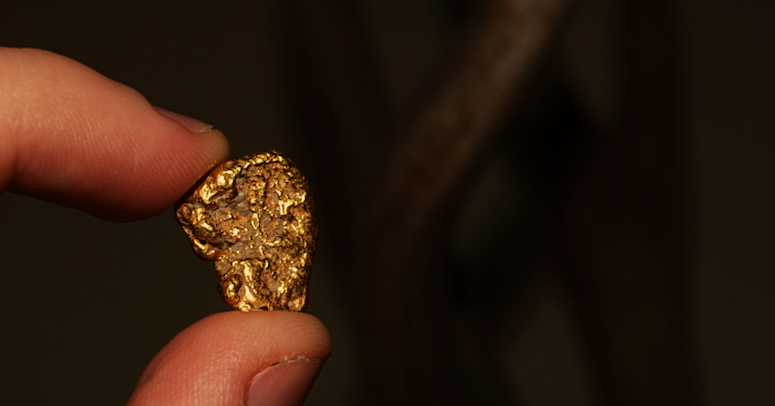
Current Gold Price in Uganda Today — Live UGX and USD Rates
Gold prices in Uganda track the international LBMA spot price of approximately $4,720–$4,739 USD per troy ounce (~$151.55/gram for 24K), converted at the prevailing USD/UGX exchange rate of approximately 3,750–3,770 UGX per USD.
Today’s confirmed gold price per gram in Uganda:
- 24K gold price Uganda: UGX 536,760–564,860 per gram (~$143–$152 USD)
- 1-year price change: +72.86% in UGX terms
- All-time Uganda gold high: UGX 636,532.49/gram (January 29, 2026)
- 1-year low: UGX 381,211.43/gram (August 1, 2025)
Gold Price Table — Uganda (All Karats)
| Karat | Purity | Per Gram (UGX) | Per Gram (USD) | Per kg (UGX) | Per kg (USD) |
|---|---|---|---|---|---|
| 24K (999) | 99.9% | UGX 536,760–564,860 | ~$143–$152 | UGX 536.8M–564.9M | ~$143,000–$152,000 |
| 22K (916) | 91.6% | UGX 492,030–517,332 | ~$131–$138 | UGX 492M–517M | ~$131,000–$138,000 |
| 21K (875) | 87.5% | UGX 469,665–494,252 | ~$125–$132 | UGX 469.7M–494.3M | ~$125,000–$132,000 |
| 18K (750) | 75.0% | UGX 402,570–423,645 | ~$107–$113 | UGX 402.6M–423.6M | ~$107,000–$113,000 |
| 14K (585) | 58.5% | UGX 314,005–330,543 | ~$84–$88 | UGX 314M–330.5M | ~$84,000–$88,000 |
Gold Price by Weight — Uganda 24K
| Weight | Price (UGX) | Price (USD) |
|---|---|---|
| 1 gram | UGX 536,760–564,860 | ~$143–$152 |
| 5 grams | UGX 2,683,800–2,824,300 | ~$715–$756 |
| 10 grams | UGX 5,367,608–5,648,590 | ~$1,430–$1,513 |
| 1 tola (11.66g) | UGX 6,258,644–6,586,148 | ~$1,668–$1,764 |
| 1 troy oz (31.1g) | UGX 16,695,127–17,567,121 | ~$4,452–$4,706 |
| 100 grams | UGX 53,676,082–56,485,994 | ~$14,314–$15,130 |
| 1 kilogram | UGX 536,760,822–564,859,940 | ~$143,136–$151,296 |
Note: Gold prices in Uganda update every few minutes. Retail dealer prices include 1–3% premium above spot. The all-time high was UGX 636,532/gram on January 29, 2026. Always request a live quote before transacting.
History of Gold Mining in Uganda: From Ancient Extraction to Modern Boom
The history of gold mining in Uganda stretches back thousands of years, with indigenous communities extracting gold from riverbeds using traditional panning methods long before any formal mining structures existed. Most of the early gold in Uganda came from river gravels — a characteristic that persists today in Uganda’s dominant alluvial mining zones.
The colonial and post-independence era saw limited development: Uganda was not an attractive investment destination through much of the 20th century, with political instability particularly from the 1970s through early 1980s suppressing economic development across all sectors including mining.
The modern turning point came in 1986 when political stability under President Museveni’s government transformed Uganda’s investment climate. International mining companies began obtaining exploration licenses, and Kanungu, Mubende, and Busia emerged as the earliest commercially recognized gold deposits.
Later, Busitema and Kisita mines were established, alongside the formalization of artisanal operations that had continued throughout the instability decades.
Uganda’s first recorded formal gold production was documented in 1992. By 2002, approximately 56 kilograms of gold were officially produced.
By 2016, Uganda exported gold worth $514 million USD. By 2023, that figure had reached $3.4 billion — a 562% increase in seven years, driven by new mines, rising global prices, and Uganda’s emergence as a regional gold aggregation hub.
The 2022 geological survey announcement by Uganda’s Ministry of Energy and Mineral Development reported approximately 31 million tonnes of gold ore concentrated primarily in Karamoja — one of the largest such discoveries in the world and a declaration that transformed international perception of Uganda’s mining potential.
Key Gold-Mining Regions in Uganda: Where Gold Is Found in 2026
Uganda’s gold is distributed across five primary regions, each with distinct geology, mining character, and commercial significance for buyers and investors:
1. Karamoja Region (Northeastern Uganda) — Uganda’s Richest Gold Zone
Karamoja stands out as the most promising gold-producing area in Uganda in 2026. Geological surveys have revealed approximately 31 million tonnes of gold ore concentrated in this region, primarily in Moroto, Napak, Kitgum, Lamwo, and Gulu areas.
The mineralization is hosted in reworked Archean basement rocks and Neoproterozoic Mozambique fold belt structures — some of earth’s oldest geological formations — with predominantly alluvial gold in riverbeds and lode gold in quartz veins.
The Rupa Gold Mine near Moroto Town is Karamoja’s most prominent active site, drawing licensed artisanal miners alongside growing interest from formal sector operators.
Exploration by Wagagai Mining Limited and other firms confirms significant reserves, with projections of potential production of 10 tonnes annually by 2027 if development proceeds as planned.
Gold characteristics in Karamoja: Natural purity of 85–95% (among East Africa’s highest for artisanal material). Fine gold particles (0.5–5 g/t) in alluvial deposits associated with iron oxides, alongside larger nuggets from ancient riverbeds.
The region’s ancient greenstone belt geology creates low silver co-deposition, contributing to Karamoja’s characteristically high natural gold purity.
For buyers: Africa Gold Suppliers Limited maintains supply relationships with BGMA-licensed cooperatives in Karamoja, providing documented, high-purity Uganda gold nuggets for sale with Certificates of Origin specifying Karamoja District.
2. Busia District (Eastern Uganda) — Uganda’s Largest Industrial Gold Hub
Busia, near the Kenyan border, is home to what is now Uganda’s largest confirmed gold deposit and its first industrial-scale mine. With an estimated 13 tonnes of gold reserves and the Wagagai Gold Mine now operational since August 2025, Busia has transformed from an artisanal-dominated district to Uganda’s most significant industrial mining zone.
The Wagagai Gold Mine — a $50 million Chinese-Ugandan joint venture — has been processing 1,000 tonnes of ore daily from open-pit operations since its commissioning, targeting 5 tonnes of annual production.
The mine employs approximately 1,500 locals and includes an on-site refinery for dore bars, with the facility designed to process up to 5,000 kg of gold ore daily at full capacity.
The Wagagai Mining Company Limited has invested $200 million in establishing this refinery, the largest gold processing facility in Uganda.
Beyond Wagagai, the Tira Gold Mine in Busia maintains its historical artisanal and semi-industrial operations near the Kenyan border, supported by partnerships with licensed companies that provide formal sector structure to what was previously entirely informal production.
Gold characteristics in Busia: Mixed alluvial and hard-rock. The Wagagai operation targets higher-grade ore from confirmed underground reserves. Artisanal material from Busia’s river systems runs 82–93% natural purity.
3. Mubende District (Central Uganda) — Established Artisanal Production Zone
Mubende has been a significant site for gold mining activities for decades, with geological surveys having identified substantial gold deposits in the area.
The district hosts several small-scale and artisanal gold operations, with companies like Simba Gold Corporation focusing on exploration and development alongside active artisanal production.
Mubende’s gold deposits lie in Archean greenstone belt formations — the same ancient geological structures that host some of Africa’s most productive gold zones in Tanzania and Zimbabwe.
Both alluvial and hard-rock gold occur in the district, with artisanal miners working riverbed deposits and some semi-industrial operations targeting quartz vein formations.
For buyers seeking Mubende Uganda gold: Africa Gold Suppliers Limited sources documented artisanal material from BGMA-licensed Mubende cooperatives with complete chain-of-custody documentation.
4. Buhweju District (Western Uganda) — High-Quality Artisanal Gold
Buhweju in Western Uganda is another region with notable gold deposits, primarily in placer (alluvial) formations along the Buhweju-Mashonga gold district. Gold in Buhweju is found in riverbeds and gravel formations, ideal for both panning and mechanized alluvial extraction.
The district has attracted both local and foreign investors, with mining activities primarily artisanal but with growing potential for scaling to larger operations.
Buhweju’s gold is known for its quality, making it attractive for buyers interested in authentic, traceable Uganda gold from western Uganda’s distinct geological formations.
5. Tororo District (Eastern Uganda) — Emerging Potential
Tororo is primarily known for its limestone and phosphate deposits, but reports of gold occurrences in the Sukulu complex area suggest potential for future gold mining development.
Currently in early exploration phases, Tororo represents tomorrow’s opportunity rather than today’s production — but buyers interested in Uganda’s long-term supply landscape should note this area.
Major Gold Mines in Uganda
1. Wagagai Gold Mine (Busia District) — Uganda’s First Industrial Mine
Wagagai is Uganda’s first industrial-scale gold mine and its most significant mining development of the 21st century. Operational since August 2025, the mine processes 1,000 tonnes of ore daily from open-pit operations, with an on-site refinery producing dore bars for export.
The $50 million Chinese-Ugandan venture employs approximately 1,500 local workers and has begun contributing to Uganda’s formal gold export stream.
The Wagagai refinery’s output is targeted primarily at international buyers in the UAE, India, and Turkey — Uganda’s major gold export destinations.
Wagagai’s Busia operation has 12.5 tonnes of confirmed mineable gold, making it Uganda’s most clearly delineated industrial reserve.
2. Tira Gold Mine (Busia District)
The Tira Mine is an artisanal and semi-industrial operation near the Kenyan border with a long history of gold production. Gradually expanding through partnerships with licensed mining companies, the mine supports local communities and contributes to Uganda’s overall gold output.
3. Mubende Gold Mines (Mubende District)
Several small-scale and artisanal operations across Mubende collectively constitute a significant production zone. Simba Gold Corporation’s exploration activities and multiple licensed cooperative operations produce documented artisanal gold that reaches Kampala’s licensed dealer network.
4. Buhweju Gold Mines (Western Uganda)
Primarily artisanal, Buhweju’s scattered deposits are explored by small-scale miners whose production feeds into Uganda’s formal gold buying network through BGMA-licensed buying centres.
5. Rupa Gold Mine (Karamoja)
The Rupa Mine near Moroto Town is Karamoja’s most active informal mining site and a bellwether for the region’s formal development potential. Growing interest from formal operators is bringing progressive structure to what has been primarily an artisanal zone.
Types of Gold in Uganda
Uganda offers various forms of gold to investors and buyers across every budget and investment purpose:
24K Gold Bars (99.9% Pure): The definitive investment product, refined to international standards at the African Gold Refinery (AGR) in Kampala. LBMA-quality bars from 1 gram to 1 kilogram, with fire assay certificates from accredited laboratories. Directly tracks LBMA spot price. Current price approximately at UGX 536,760–564,860/gram (~$143–$152 USD).
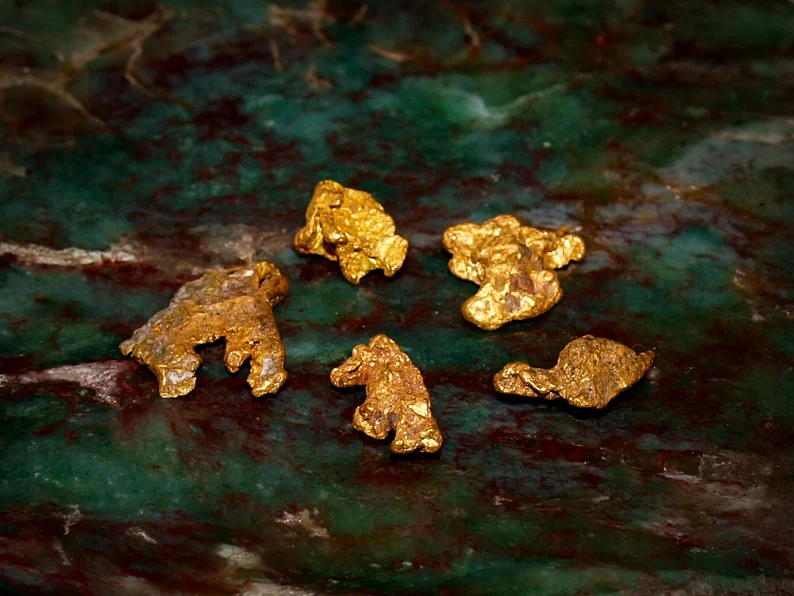
Raw/Unrefined Gold and Nuggets: Sourced from artisanal miners in Karamoja, Busia, Mubende, and Buhweju. Natural purity of 82–95% depending on source district. Requires independent assay verification before pricing.
Priced at buying centre rate — typically 5–15% below world market price for refined 24K gold. Sought by collectors for natural form and refineries for input material.
Gold Dore Bars (85–93% Gold Content): Semi-refined output from artisanal processing facilities. The primary bulk trading form for large-scale artisanal transactions. Offered by Wagagai Mining’s refinery for export buyers with downstream processing access.
Gold Dust: Fine alluvial gold particles from riverbeds across Busia, Karamoja, and Mubende. Variable purity — always require independent laboratory testing. Used primarily as refinery input material.
22K Gold Jewellery-Grade Material: Available from licensed dealers in Kampala for jewellery manufacturers. Current approximate price: UGX 492,030/gram (~$131 USD).
Mining Sector in Uganda Today: Who Are the Key Players?
Uganda’s mining sector in 2026 has become increasingly vibrant, with both artisanal small-scale mining (ASM) and emerging industrial operations defining the landscape.
Africa Gold Suppliers Limited is a leading licensed gold dealer in Uganda, connecting international buyers with verified, certified gold from Uganda’s most productive mining regions through BGMA-compliant sourcing, independent XRF and fire assay verification, and insured worldwide delivery.
As part of Uganda’s formal gold trading ecosystem, Africa Gold Suppliers Limited plays a key role in channelling artisanal production into documented, internationally tradeable gold products.
Wagagai Mining (U) Limited operates Uganda’s first and largest industrial-scale mine in Busia, processing 1,000 tonnes of ore daily with a $200 million refinery investment.
Simba Gold Corporation operates in Mubende, focusing on exploration and development of the district’s substantial gold deposits.
Uganda Gold Refinery Limited specializes in refining gold sourced from artisanal and industrial miners, ensuring purity and facilitating legal exports for local and international markets.
Vangold conducts gold mining explorations along the West Nile Area and the broader greenstone belt connecting to the Kilo-Moto gold fields on the DRC side of the border.
Blaze Metal Resources Ashanti (Ghana-linked) operates in Eastern Uganda’s Bugiri and Namayingo districts, which are also credited for their diverse gold deposits.
Legal and Regulatory Framework for Gold in Uganda
Uganda’s gold industry is regulated by the Ministry of Energy and Mineral Development (MEMD) under the Mining and Minerals Act 2022.
The Buganda Graben Mineral Authority (BGMA) oversees licensing of mineral dealers and artisanal mining cooperatives. The Uganda Revenue Authority (URA) manages export duty collection.
Key legal requirements for buying gold in Uganda:
- Sellers must hold a valid BGMA Mineral Dealer’s Licence — verify directly with BGMA before any significant transaction
- Export requires an Export Permit from MEMD plus URA Tax Clearance
- 5% export levy applies to refined gold; 10% export levy applies to unrefined gold (nuggets, dore, dust)
- KYC/AML compliance required for all transactions under Uganda’s Financial Intelligence Authority regulations
- Assay certificate from an accredited laboratory required for all export documentation
- Certificate of Origin specifying source district required for international trade
Africa Gold Suppliers Limited holds current BGMA licensing and manages all legal compliance — MEMD export permits, URA tax clearance, BGMA documentation, and destination country customs requirements — on behalf of international buyers.
Gold Export and Trade: Uganda’s Major Markets
Uganda exports gold primarily to the UAE (largest recipient), India, Turkey, South Korea, and China. In 2024, Uganda’s gold exports surged over tenfold, reaching $3.3 billion, up from $2.3 billion in 2023.
This remarkable growth is attributed to new processing plants like Wagagai Mining Ltd, Africa Gold Suppliers Limited’s growing international client base, and favorable government policies promoting gold sector formalization.
The Bank of Uganda has announced plans to purchase gold directly from artisanal miners to bolster foreign exchange reserves — a policy that both validates the quality of Uganda’s artisanal gold and is expected to further formalize the sector by creating an official domestic buyer for small-scale production.
Investment Opportunities in Uganda’s Gold Sector
Investing in Uganda gold in 2026 offers multiple pathways across risk profiles and capital sizes:
Physical gold purchases through licensed dealers: The most direct investment — buying certified 24K bars or verified nuggets from Africa Gold Suppliers Limited at 1–3% above LBMA spot, with insured delivery worldwide. At current UGX 536,760–564,860/gram, gold has risen +72.86% year-on-year — one of the strongest asset performances available in Uganda’s investment landscape.
Investing in mining projects or partnerships: Joint ventures with established artisanal cooperatives or equity participation in emerging semi-industrial operations. Higher return potential, higher risk. Requires on-the-ground relationships and legal counsel.
Online trading platforms offering verified Ugandan gold: Africa Gold Suppliers Limited’s online platform connects global buyers with Kampala-based certified gold at transparent, LBMA-referenced prices.
Mining stock exposure: International companies with Uganda gold assets provide listed equity exposure — though most Uganda-focused operations are still pre-revenue or early-stage.
Risks and Challenges in Uganda’s Gold Market
Investing in Uganda gold carries real risks that every buyer must understand:
Illegal mining and smuggling undermine the formal sector. Over 20,000 artisanal miners operate informally, with gold moving through unlicensed channels to the DRC and onwards. The 2021 Mining and Minerals Bill criminalizes illegal mining, but enforcement remains a work in progress.
Market volatility and fluctuating prices affect profits on all gold positions. Uganda’s gold price in UGX has ranged from UGX 381,211/gram (August 2025 low) to UGX 636,532/gram (January 2026 high) — a 67% range within 12 months. Buyers entering at the peak face meaningful drawdown risk.
Environmental and community risks in Karamoja and other mining districts, including mercury use in artisanal processing and displacement of communities, create both ethical and regulatory exposure for buyers without verified, responsible sourcing documentation.
Always work with licensed dealers like Africa Gold Suppliers Limited to mitigate fraud risk — counterfeit gold and purity misrepresentation are real concerns in Uganda’s informal market.
Frequently Asked Questions: Gold in Uganda
Q: What is the current gold price in Uganda per gram? A: Today, the 24K gold price per gram in Uganda is approximately UGX 536,760–564,860 (~$143–$152 USD). The 7-day price has risen by UGX 26,087.95 (+4.84%). The all-time high was UGX 636,532/gram on January 29, 2026. Year-on-year increase: +72.86%.
Q: How much is 1 kg of gold in Uganda in 2026? A: A 1 kilogram gold bar in Uganda is currently worth approximately UGX 536,760,823–564,859,940 (~$143,136–$151,296 USD). This is dramatically higher than prices cited in older articles based on 2024–2025 data.
Q: What is the best place to buy gold in Uganda? A: The best places to buy gold in Uganda are BGMA-licensed dealers in Kampala’s CBD, the African Gold Refinery (AGR) for LBMA-quality refined bars, and online through Africa Gold Suppliers Limited (africagoldsuppliers.com) for international buyers seeking insured delivery to any global destination.
Q: What is the gold price in Uganda in UGX today? A: Today’s gold price in Uganda is approximately UGX 536,760–564,860/gram for 24K gold, UGX 492,030–517,332/gram for 22K, and UGX 402,570–423,645/gram for 18K. The 1 oz 24K price in Uganda is approximately UGX 16,695,127–17,567,121.
Q: Which region in Uganda has the most gold? A: Karamoja in Northeastern Uganda holds the largest confirmed gold ore deposits — approximately 31 million tonnes of gold ore according to the 2022 Ministry of Energy survey. Busia has the largest confirmed industrial reserve (Wagagai Mine, 12.5 tonnes mineable gold). Mubende has the most active artisanal sector by transaction volume.
Q: Can foreigners buy gold in Uganda? A: Yes. Foreigners can legally purchase gold in Uganda from BGMA-licensed dealers with valid identification and source-of-funds documentation.
For export, buyers must work through dealers holding both BGMA Mineral Dealer’s Licences and MEMD Export Permits. Africa Gold Suppliers Limited handles complete compliance for international buyers.
Why Buy Uganda Gold Through Africa Gold Suppliers Limited?
Africa Gold Suppliers Limited is Uganda’s trusted partner for international gold buyers — a licensed, verified, and transparent gold sourcing company with direct supply relationships across Karamoja, Busia, Mubende, and Buhweju and a track record of successful insured deliveries to clients in the UAE, Europe, the USA, Asia, and across Africa.
When you buy gold in Uganda through Africa Gold Suppliers Limited, here is exactly what you receive:
BGMA-licensed supply chain. Every gram we sell traces to a BGMA-registered mineral dealer or artisanal cooperative. Our Ministry of Energy and Mineral Development export permits are current and verifiable. Our URA tax clearance certificates accompany every export shipment.
Independent assay certification. Every transaction is backed by XRF testing at the point of purchase and, for export orders, fire assay from a named accredited laboratory — not an in-house certificate. You receive the original certificate.
Live LBMA-referenced pricing. Our quotes state the current LBMA spot, our premium (1–3%), the applicable Uganda export levy (5% refined / 10% unrefined), and the total landed cost to your destination. No hidden fees. No moving price targets.
Insured worldwide delivery. Brinks Global Services or DHL from Entebbe International Airport to Dubai (3–5 days), Europe (5–7 days), USA (6–8 days), Asia (6–8 days). Full declared-value insurance from departure to delivery signature.
Complete export documentation. BGMA documentation, MEMD export permit, URA tax clearance, Certificate of Origin (district-specific), assay certificate, commercial invoice, and destination country customs preparation — all handled by us.
Uganda’s gold price has risen +72.86% in the past year. The all-time high was UGX 636,532/gram in January 2026. J.P. Morgan forecasts gold reaching $6,300/oz by year-end 2026 — which at current USD/UGX rates would translate to approximately UGX 890,000/gram, a further 58% gain from today’s prices.
The gold is in Uganda. The mining regions are productive. The prices have never been higher. The moment to act is now.
Start investing in Ugandan gold with confidence through Africa Gold Suppliers Limited.