
Gold Bar Prices in Africa: How Much Does a Gold Bar Cost?
Gold bar prices in Africa: A gold bar in Africa costs the international spot price of gold plus a dealer premium, typically 1 to 3% from a licensed exporter on larger bars and up to 8 to 10% on the smallest ones. Today, spot gold is approximately $4,284.20 per ounce, or $137.74 per gram. At that rate, a 1 gram bar costs roughly $149 to $152, and a 1 kilogram bar costs roughly $139,118 to $141,872. Exact prices vary by dealer, bar size, purity, and country.
This guide breaks down gold bar prices by weight, purity, and country across Africa, and explains what actually moves the price you pay.
Gold Bar Prices in Africa Today, by Size
| Bar size | Spot value (USD) | Typical premium | Estimated price (USD) |
|---|---|---|---|
| 1 gram | $137.74 | 8 to 10% | $149 to $152 |
| 2.5 grams | $344.35 | 8 to 9% | $372 to $375 |
| 5 grams | $688.70 | 7 to 8% | $737 to $744 |
| 10 grams | $1,377.40 | 6 to 7% | $1,460 to $1,474 |
| 1 ounce (31.1 g) | $4,284.20 | 5 to 6% | $4,498 to $4,541 |
| 50 grams | $6,887.01 | 4 to 5% | $7,162 to $7,231 |
| 100 grams | $13,774.02 | 3 to 5% | $14,187 to $14,463 |
| 250 grams | $34,435.06 | 2 to 4% | $35,124 to $35,812 |
| 500 grams | $68,870.11 | 2 to 3% | $70,248 to $70,936 |
| 1 kilogram | $137,740.23 | 1 to 3% | $139,118 to $141,872 |
The pattern to notice: the smaller the bar, the more you pay per gram. A 1 kg bar can cost as little as $1.38 per gram above spot at a 1% premium, while a 1 gram bar can cost $11 to $14 per gram above spot. If you’re buying for long-term value rather than flexibility, larger bars stretch your money further. See our full range of gold bars for sale.
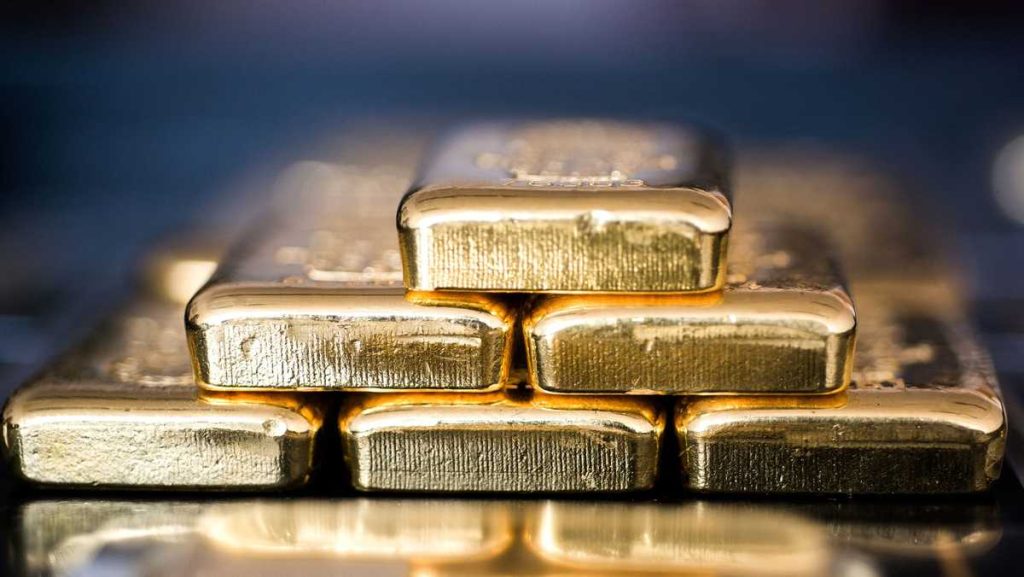
What Determines a Gold Bar Price in Africa
1. The spot price. Gold trades in US dollars per troy ounce (31.1035 grams) on global markets, and every dealer prices from this same benchmark before adding anything else.
2. Purity. Investment-grade bars are usually 24K (99.9% fine) or better. A bar’s price scales with its gold content: a 22K bar (91.6% pure) is worth about 92% of an equivalent 24K bar, and an 18K bar (75% pure) about 75%.
| Purity | Fineness | Value relative to 24K |
|---|---|---|
| 24K | 99.9% | 100% |
| 22K | 91.6% | About 92% |
| 18K | 75.0% | About 75% |
3. Bar size and premium. As shown in the table above, premiums fall as bar size rises, because fabrication, certification, and handling costs spread over more gold.
4. Cast vs. minted. Cast bars, poured into a mold, usually carry lower premiums than minted bars, which are cut from rolled sheets, stamped, and often shipped with an assay card.
5. Local costs and currency. Import duties, local taxes, transport, and the strength of the local currency against the US dollar all affect the price you pay in a given country, even when the underlying gold cost is identical.
Gold Bar Prices by Country
Gold is priced in US dollars everywhere, but local premiums, taxes, and currency movements create real differences country to country.
| Country | What affects local price | Where to read more |
|---|---|---|
| Uganda | Direct mine-adjacent sourcing; competitive export premiums | Buy gold in Uganda |
| Kenya | Local dealer premiums; KES/USD exchange rate | Buy gold in Nairobi |
| South Africa | VAT rules differ for bars versus Krugerrands; SADPMR-licensed dealers | Gold bars price in South Africa |
| DR Congo | Artisanal and industrial supply; export documentation costs | Buy gold in Congo |
| Ghana, Tanzania, Mali | Regional export duties and dealer margins vary by country | Gold producing countries in Africa |
Exchange rates move daily, so a fixed local-currency price table would go stale quickly. For a live, current price in your target country, see gold price in Africa or request a quote directly.
Why Buying Direct From Africa Can Cost Less
Gold exported directly from an African source passes through fewer intermediaries than gold bought at Western retail. Africa Gold Suppliers quotes a premium of roughly 1 to 3% over live spot, against typical Western retail premiums of 4 to 8%. The savings come mainly from:
- Fewer refiners, wholesalers, and retailers between the mine and the buyer
- Lower local operating costs in mining and processing regions
- Direct export, with documentation handled as part of the sale rather than added on afterward
See our services page for how sourcing works, and our gold and silver dealers guide for how to vet a dealer anywhere on the continent.
How to Buy a Gold Bar in Africa Safely
- Compare the quote to live spot, not a price from days earlier. Prices move daily.
- Verify the dealer’s licence directly with the issuing authority, not from documents the seller provides.
- Demand an independent assay certificate with a serial number matching the bar.
- Use traceable payment, such as bank transfer, and keep every receipt.
- Never chase a price far below spot. It is the clearest sign of a scam, not a bargain.
Read our full FAQs about buying gold in Africa and legal requirements for buying and exporting gold from Africa before you commit funds. If you plan to move gold across a border, also read exporting gold bullion.
Gold Bar Prices in Africa FAQs
How much does a 1 oz gold bar cost in Africa? Today, spot price of $4,284.20, a 1 oz bar is worth that in raw gold value, and typically retails for about $4,498 to $4,541 with a 5 to 6% dealer premium.
How much does a 1 kg gold bar cost? The gold content alone is worth about $137,740 at spot. With a typical 1 to 3% premium, expect roughly $139,118 to $141,872.
Why do smaller gold bars cost more per gram? Fabrication, certification, and handling costs are spread across less gold, so the premium per gram is higher on small bars than large ones.
Are gold bar prices the same across every African country? The underlying gold price is the same everywhere, since it’s set globally in US dollars. Local premiums, taxes, and currency exchange rates cause the final price you pay to differ by country.
Is buying gold bars directly from Africa cheaper than buying in Europe or the US? Often yes, because fewer intermediaries are involved. Direct African exporters commonly quote 1 to 3% over spot, against 4 to 8% at typical Western retailers.
What’s the difference between a cast bar and a minted bar? Cast bars are poured into molds and usually carry lower premiums. Minted bars are cut and stamped from rolled sheets, look more polished, and typically cost more.
How do I know if a gold bar price is fair? Compare it to the live spot price. A premium in the 1 to 10% range, depending on bar size, is normal. A price far below spot is a scam signal, not a deal.
Get a Live Quote for Certified Gold Bars
Prices move every day. To get a quote benchmarked to today’s spot, contact Africa Gold Suppliers, learn about us, or browse gold bars for sale.