
Gold Jewelry:How to Buy, Sell, Care for African Gold Jewelry
Gold jewelry is worth what its gold is worth, plus what you pay for craftsmanship and the seller’s markup. Knowing how those three parts fit together is the key to buying well, selling well, and protecting what you own. Today, pure 24K gold jewelry trades at about $137.74 per gram.
That means a gram of 22K jewelry holds roughly $126 of gold and a gram of 18K holds roughly $103, before any making charge. The gap between the gold value and the price tag is where buyers overpay and sellers get short-changed.
African gold jewelry sits at the centre of this market. Ghana, Nigeria, Egypt, and South Africa are known for both their gold and their goldsmithing traditions, and their pieces are now bought everywhere from Accra to Berlin.
This guide shows you how to buy gold jewelry (checking karat marks, weight, and making charges), how to sell gold jewelry for a fair price (what buyers pay for and what they deduct), and how to care for gold jewelry so it keeps its shine and its value.
How to Buy Gold Jewelry in Africa: Understanding Purity and Karat Ratings
Purchasing gold jewelry in Africa starts with understanding purity, since karat rating is the single biggest driver of both price and durability. Gold purity is measured in karats (K), representing the proportion of pure gold in the alloy:
- 24K gold: 99.9% pure, soft, and ideal for investment-grade jewelry — priced around €131/g ($142/g) as of mid-2026.
- 22K gold: 91.67% pure, durable and common in African jewelry — around €120/g, reflecting its near-24K purity.
- 18K gold: 75% pure, popular for luxury jewelry thanks to its balance of strength and value — around €98/g.
- 14K gold: 58.33% pure, the affordable choice for everyday wear — around €76/g.
Tip: Check for hallmarks — “24K,” “999,” or “916” for 22K — stamped directly on the piece to verify purity, and request an independent assay certificate for any high-value purchase. Our guide on the 24K gold price per gram tracks current rates in more depth.
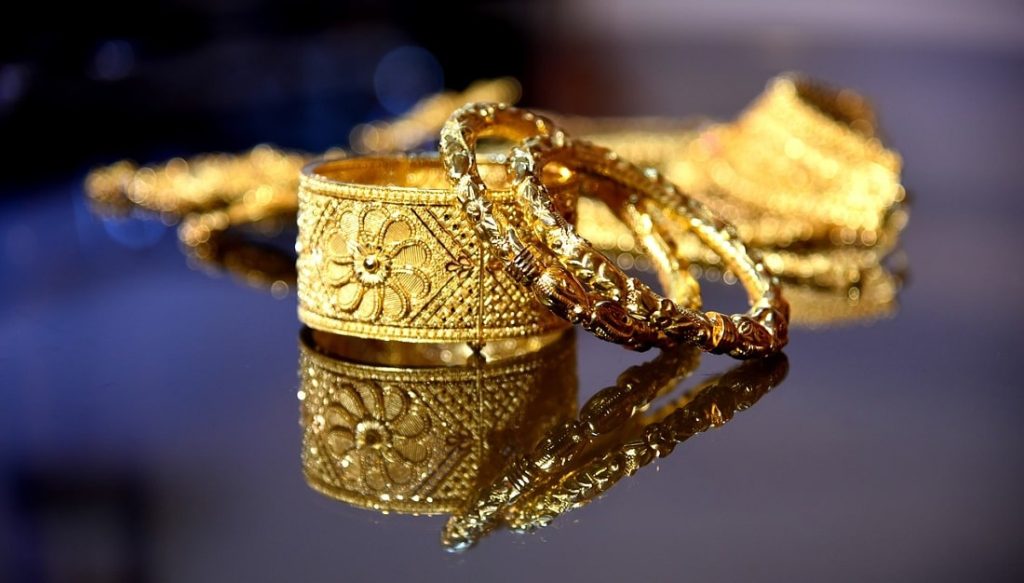
Where to Source Reputable Gold Jewelry Dealers
Avoiding counterfeit gold jewelry starts with buying from properly accredited sources:
- Government-accredited dealers — in Ghana, the Precious Minerals Marketing Company (PMMC) certifies sellers; in South Africa, Rand Refinery partners with reputable jewelers.
- Established jewelers and artisans — from South African boutiques to local craftspeople in Lagos and Cairo.
- Online platforms — Jumia and Takealot offer access to African gold jewelry, but always verify seller ratings and certification before buying.
- Historic jewelry markets — Accra’s Kaneshie Market, Cairo’s Khan el-Khalili, and Johannesburg’s Rosebank Mall remain reliable destinations for authentic pieces.
For buyers specifically seeking investment-grade bullion rather than crafted jewelry, our best gold dealers in Africa guide covers vetted suppliers across the continent.
Craftsmanship Traditions Across Africa’s Gold Jewelry Markets
African gold jewelry is prized for blending traditional motifs with modern design, and the regional variety is genuinely part of the appeal:
- Ghana: Adinkra symbols such as “Gye Nyame” (the supremacy of God) worked into gold necklaces and pendants.
- Egypt: Hieroglyphic-inspired cartouche pendants and scarab bracelets.
- Nigeria: Bold gold chains and intricately worked bangles for ceremonial wear.
- South Africa: Minimalist gold earrings blending African and Western design sensibilities.
Assess craftsmanship by checking for smooth finishes, secure clasps, and well-set gemstones — handcrafted pieces often command a genuine premium above pure melt value for their artistic significance.
What Determines Fine Craftsmanship in Gold Jewelry
Beyond purity, several factors separate genuinely well-made gold jewelry from mass-produced pieces:
Alloy quality. Gold is typically mixed with copper, silver, or palladium to increase strength and shift color — white gold, rose gold, and yellow gold all rely on different alloy ratios. High-quality alloys improve durability without compromising appearance.
Strong joints and soldering. Every point where two parts meet — a chain link, a stone setting joining the band — should be seamlessly soldered, with no visible gaps or weak points that could fail over time.
Proper weight. A well-made piece feels solid and balanced for its size. Overly thin or hollow sections are fragile; excessively heavy pieces become impractical for daily wear.
Attention to detail. Uniformity in design, symmetry in shape, and precision in settings and engravings all signal genuine craftsmanship — worth checking closely before you buy.
Comparing Gold Jewelry Prices Across African Markets
Gold jewelry prices in Africa are shaped by spot gold prices, craftsmanship, dealer premiums, and local taxes. As of mid-2026, with 24K gold trading around €131/gram (~$4,430/oz), here’s how pricing compares across key African markets, inclusive of typical 1–3% craftsmanship and local tax premiums:
| Country | 24K Gold per Gram (€) | 22K Gold per Gram (€) | 18K Gold per Gram (€) |
|---|---|---|---|
| South Africa | €126 – €132 | €115 – €121 | €95 – €99 |
| Ghana | €124 | €114 | €93 |
| Nigeria | €125 | €115 | €94 |
| Egypt | €123 | €113 | €93 |
Note: Prices fluctuate with the live gold spot price. Always compare across multiple sellers, and negotiate directly for bulk purchases.
Verifying Authenticity Before You Buy
Counterfeit gold jewelry remains a genuine risk, with roughly 17% of buyers reporting authenticity concerns in recent market surveys. Protect yourself by:
- Requesting an assay certificate from a government-approved laboratory.
- Using a gold testing kit, or consulting an independent professional jeweler for purity verification.
- Checking for hallmarks or serial numbers on any high-value piece.
- Walking away from deals that seem too good to be true — heavily discounted “gold” is a common vehicle for fake or overplated alloys.
Ethical Sourcing and Conflict-Free Gold Jewelry
Ethically sourced gold jewelry matters more each year, with roughly 19% of African manufacturers now using recycled gold or Fairtrade-certified material. Before buying, ask sellers for:
- A certificate of origin confirming the gold isn’t linked to conflict zones.
- Fairtrade certification confirming fair labor practices across the supply chain.
- Evidence of environmental compliance supporting responsible, sustainable mining.
Our guide on gold smuggling in Africa explains why this documentation matters so much, and how it protects buyers from unknowingly financing illegal or conflict-linked mining operations.
Buying African Gold Jewelry as a European Buyer
European buyers increasingly source gold jewelry from Africa directly, rather than paying the retail premiums typical of jewelers in Paris, Milan, or Frankfurt — and the price gap is real, since African-crafted pieces often carry lower labor costs than equivalent European workshops while using the same investment-grade gold.
If you’re importing jewelry into the EU, a few things matter specifically: investment-grade gold bars and coins at 99.5%+ purity are VAT-exempt under EU Directive 98/80/EC, but crafted jewelry doesn’t qualify for this exemption and is taxed at your country’s standard VAT rate on import — 19% in Germany, 20% in France, 22% in Italy. Anyone entering the EU from outside the bloc carrying cash or cash-equivalent instruments worth €10,000 or more must also declare this at the border.
Proper documentation makes all the difference here: a certificate of origin, an independent assay certificate, and a commercial invoice with accurate valuation are what keep a jewelry shipment moving smoothly through EU customs rather than getting held for further inspection.
Buyers researching this route should also see our guides on gold investment opportunities in Africa and FAQs about buying gold in Africa for the fuller picture on cross-border purchasing.
Setting Your Budget for Gold Jewelry
Set a realistic budget based on current gold prices and the type of piece you want — a 22K gold necklace, for instance, typically runs €500–€2,000 depending on weight and craftsmanship. Some jewelers, particularly in South Africa and Nigeria, offer financing or installment plans for larger purchases, worth asking about directly if you’re buying a significant piece.
How to Sell Gold Jewelry in Africa
Selling gold jewelry can be genuinely profitable, whether you’re realizing investment gains, upgrading your collection, or simply liquidating assets.
Assess your jewelry’s value first. This depends on purity (24K, 22K, or 18K, which determines melt value), weight (measured on a digital scale), craftsmanship (handcrafted or designer pieces can command a premium above melt value), condition, and market demand — culturally significant designs, like Ghanaian Adinkra pieces, can attract genuine collector interest beyond their gold content alone.
Use the current spot price as your baseline, but expect buyers to offer 10–20% below market value to cover their own refining costs and margin.
Choose the right selling platform. Local jewelers in Lagos, Accra, or Cairo will buy for resale or melting — negotiate for competitive offers rather than accepting the first quote. Pawnshops offer fast cash but typically pay 30–40% below market value. Auction houses handle high-value or designer pieces well.
Government-accredited buyers like PMMC in Ghana or Rand Refinery in South Africa purchase jewelry specifically for refining, often at more transparent, spot-linked pricing.
Prepare your jewelry properly. Clean it thoroughly, gather any purchase receipts or assay certificates you still have, and consider a professional appraisal for designer or high-value pieces before you sell.
Taxes and Fees When Selling Gold Jewelry
Selling gold jewelry can trigger several costs worth planning for. Capital gains tax applies in some markets — South Africa taxes gains above ZAR 40,000 at 18%, with Ghana and Nigeria applying broadly similar structures.
Dealer fees for refining or transaction handling typically run 5–10%. International sales must also comply with export regulations, such as Tanzania’s 1% export duty — our South Africa gold export procedure guide covers one country’s process in detail as a useful reference point.
Negotiating and Avoiding Scams When Selling
Always compare offers from multiple buyers before committing, and use escrow services for any online sale to protect against fraud.
Bank transfers or other secure, traceable payment methods are far safer than cash, which also reduces theft risk during the transaction itself. Verify buyer credentials before engaging, insist on an independent assay at the point of sale rather than trusting a buyer’s own valuation, and treat any deal pushing you toward cash-only or unverified brokers as a genuine red flag.
How to Care for Your Gold Jewelry
Proper care keeps gold jewelry looking sharp and holding its value for decades.
Cleaning. Mix warm water with a few drops of mild dish soap, soak your piece for 10–15 minutes, then gently scrub with a soft toothbrush before rinsing and drying with a microfiber cloth. For 18K+ pieces without gemstones, a diluted ammonia solution (roughly 1 part ammonia to 6 parts water) offers deeper cleaning — never use this on gemstone-set jewelry.
Avoid chlorine, bleach, or any abrasive cleaner, all of which can damage gold or loosen stone settings. Clean pieces worn daily every 1–2 months; occasional-wear pieces need attention roughly every six months.
Storage. Store pieces separately in individual pouches or a compartmentalized jewelry box to prevent scratching. Silica gel packets or anti-tarnish strips help absorb moisture and slow oxidation, and a cool, dry environment — away from humid bathrooms — further reduces tarnish risk. High-value pieces belong in a safe or locked box, not left out casually.
Wearing and handling. Remove jewelry before swimming, cleaning, or applying lotion, perfume, or hairspray, all of which can dull gold’s finish or damage gemstone settings over time.
Take off rings and bracelets during sports or heavy manual work to avoid dents and scratches, and inspect clasps, prongs, and settings monthly to catch small issues before they become lost stones or broken chains.
Professional maintenance. An annual visit to a jeweler for professional cleaning, polishing, or re-plating (particularly for white gold, which needs periodic rhodium re-plating) keeps pieces looking their best. Fix bent prongs, broken chains, or loose stones promptly rather than waiting, and update insurance appraisals every 2–3 years to keep coverage aligned with current gold prices.
African Gold Jewelry Market Trends in 2026
The African gold jewelry market continues evolving in several clear directions: growing demand for ethically sourced and recycled gold, a rising share of personalized and customized pieces (engraved initials, cultural symbols, bespoke commissions), continued growth in e-commerce sales through platforms showcasing African design to a global audience, and a genuine surge in demand for lighter-weight 10K–14K pieces among younger buyers prioritizing everyday wearability over maximum gold content.
Traditional designs — Ashanti gold rings, Egyptian cartouche pendants — are increasingly being reimagined for modern buyers, driving export demand toward Europe and North America in particular.
Is Gold Jewelry a Good Investment?
Gold jewelry works as more than a fashion purchase — it’s a genuine, if imperfect, investment vehicle. It offers a real hedge against inflation as gold prices continue their long-term climb, and culturally significant, handcrafted African pieces can appreciate beyond pure melt value thanks to their artistic and historical significance.
Jewelry also offers real liquidity, since pieces can be sold to jewelers, pawnshops, or collectors relatively easily, and adding gold jewelry to a broader portfolio helps reduce overall volatility.
To maximize investment potential specifically: prioritize high-purity pieces (22K–24K) or designer work with genuine cultural significance, store everything in secure, insured conditions, and track gold price movements regularly through resources like our gold investment opportunities in Africa guide.
Regulations and Compliance for Buying and Selling Gold Jewelry
Buying and selling gold jewelry legally in Africa means working within each country’s regulatory framework. Sellers should be registered with the relevant authority — Ghana’s PMMC or South Africa’s SARS, for instance.
International sales require a certificate of origin and export permit to comply with trade law, and while VAT exemptions often apply to qualifying exports, local domestic sales can carry 5–15% VAT depending on the country.
Always verify conflict-free sourcing before buying, both as an ethical baseline and to avoid unknowingly supporting illegal mining operations.

Risks When Buying or Selling Gold Jewelry, and How to Manage Them
Counterfeit jewelry remains the most common risk — mitigate it by buying only from certified dealers, requesting assay certificates, and testing purity independently rather than trusting a seller’s claim.
Price volatility affects resale value directly, given how much gold has moved even within a single year — track market trends and time sales around price peaks where possible.
Theft or loss is a real concern for high-value pieces — use insured storage and avoid wearing expensive jewelry in unsafe areas. Scams targeting inexperienced buyers or sellers are best avoided by working exclusively with reputable, verifiable jewelers and secure payment methods.
Buying, Selling, and Caring for Gold Jewelry: Country-by-Country Tips
South Africa — Shop at Rosebank Mall or Sandton City for luxury pieces, and verify hallmarks tracing back to Rand Refinery. For selling, established auction houses handle high-value pieces well. For care, reputable Cape Town jewelers offer professional cleaning and repair services.
Ghana — Visit Kaneshie Market or PMMC outlets for authentic Adinkra-inspired jewelry. Sell through PMMC-accredited buyers for competitive, transparent pricing. Local Accra jewelers handle polishing and repairs reliably.
Nigeria — Lagos markets like Lekki offer bold, statement gold designs. For selling, online platforms and established local pawnshops both work depending on your timeline. Given Nigeria’s humid climate, anti-tarnish pouches are worth prioritizing for storage.
Egypt — Khan el-Khalili remains the destination for hieroglyphic-inspired and cartouche jewelry. Tourist-focused jewelers often pay premium prices when selling. Avoid chlorine exposure near Nile-adjacent areas, which can accelerate tarnish on lower-karat pieces.
Enjoying Your Gold Jewelry for Generations
Gold jewelry is more than a purchase — it’s an investment in beauty, tradition, and craftsmanship that, cared for properly, holds both value and meaning across generations. Whether it’s a wedding band, a family heirloom, or a bold statement piece bought on a trip to Accra or Cairo, understanding purity, sourcing, and proper care ensures your jewelry stays as striking decades from now as the day you bought it.
If you’re specifically interested in investment-grade gold bars from Africa rather than crafted jewelry, contact our team for current deals across Uganda, Kenya, Tanzania, and the DRC — or browse our gold bars for sale from Africa and African gold bars catalogue directly.
Related Gold Buying Guides
- African Gold Jewelry Market Overview
- Best Country to Buy Gold Jewelry
- 24K Gold Price Per Gram
- Gold Producing Countries in Africa
- Gold Smuggling in Africa: What Buyers Should Know
- South Africa Gold Export Procedure
- Gold Investment Opportunities in Africa
- Buy Gold Bars from Africa
- African Gold Bars for Sale
- Trusted Gold and Silver Dealers
- FAQs About Buying Gold in Africa
- Contact Us