
Cheapest Country to Buy Gold in Africa: Why Uganda Leads
Cheapest Country to Buy Gold: Uganda is genuinely one of the most competitively priced countries to buy gold in Africa, offering certified 24K gold at a meaningfully lower premium than Western retail markets — typically just 1.5–3% above spot when sourced mine-direct from a licensed exporter, compared to the 6–11% premium common at retail dealers in Europe or North America.
This guide explains exactly why Uganda’s gold pricing is so competitive, compares it honestly against other major African producers, and covers everything you need to know to buy safely.
Is Gold Cheaper in Africa?
Yes — gold sourced directly from African mining regions is typically cheaper than buying through Western retail channels, because fewer wholesale and distributor layers sit between the mine and the buyer.
This isn’t a currency illusion or a quality difference; it reflects genuine supply-chain economics. Major African producers, including Uganda, Tanzania, the DRC, and Ghana, can offer certified 24K gold closer to raw spot price precisely because the gold changes hands fewer times before reaching an international buyer.
Which African Country Has the Cheapest Gold?
Uganda consistently offers some of the most competitive gold pricing on the continent, driven by a genuine combination of factors — a growing formal mining and export sector, real artisanal supply from Uganda’s own deposits in Busia, Karamoja, and Mubende, and gold flowing in from artisanal mining activity in neighboring DRC and South Sudan.
This supply depth, combined with a mine-direct sourcing model that cuts out multiple layers of middlemen, is what genuinely drives Uganda’s competitive pricing — not any single dramatic factor, but the accumulation of several real structural advantages.
Today’s Gold Price Comparison: Uganda vs. Other African Producers
At today’s global spot price of approximately $4,453 per troy ounce ($143.16 per gram), here’s how mine-direct 24K gold pricing compares across major African sourcing countries, based on typical premium ranges for each market:
| Country | Typical Premium Over Spot | Approx. Price per Gram (USD) |
|---|---|---|
| Uganda | 1.5–3% | ~$145–$147 |
| DR Congo | 1.5–3.5% | ~$145–$148 |
| Tanzania | 2–4% | ~$146–$149 |
| Ghana | 2–4% | ~$146–$149 |
| South Africa | 2.5–4.5% | ~$147–$150 |
These figures reflect typical mine-direct sourcing premiums, not retail jewelry or coin pricing, which runs meaningfully higher everywhere. Gold spot price and premiums both move continuously — always confirm a live quote before finalizing any purchase.
Why Is Uganda’s Gold Sourcing So Competitive?
Genuine local supply. Uganda has real, commercially confirmed gold deposits in districts including Busia (home to the Wagagai project), Karamoja, and Mubende, developed under licenses issued through Uganda’s Directorate of Geological Survey and Mines (DGSM).
It’s worth being direct here: a widely circulated 2022 government claim that Uganda held 31 million tonnes of gold ore containing 320,000 tonnes of refined gold — valued at roughly $12 trillion — has been extensively fact-checked and found to be geologically implausible, with the implied ore grade exceeding 10,000 grams per tonne, far beyond any known commercial gold deposit on Earth (the world’s highest-grade mine, Fosterville in Australia, runs around 28 g/t).
Uganda’s real gold sector is genuine and growing, but it’s built on confirmed, licensed deposits rather than that specific figure.
Cross-border artisanal supply. Gold from artisanal mining activity in the Democratic Republic of Congo and South Sudan genuinely flows into Uganda’s trading networks, adding real depth to Kampala’s gold market beyond domestic production alone.
Fewer processing layers. Uganda’s mining sector includes a substantial artisanal component alongside its formal licensed operators, and sourcing through licensed aggregators working directly with these networks generally involves fewer intermediary markups than buying through more heavily formalized, industrial-scale markets.
A genuinely active Kampala trading hub. Kampala has developed into a real regional gold trading center in East Africa, with licensed dealers offering everything from single-gram purchases to kilogram-scale bulk orders.
Gold Price by Purity: 24K, 22K, 18K, and 14K
| Purity | Fineness | Price per Gram (USD) |
|---|---|---|
| 24K | 99.9% | ~$143.16 |
| 22K | 91.6% | ~$131.18 |
| 18K | 75.0% | ~$107.37 |
| 14K | 58.3% | ~$83.46 |
24K remains the standard for investment-grade bullion and export, while 22K and 18K are more common in jewelry manufacturing across East African and regional markets.
Is It Safe to Buy Gold in Uganda?
Yes, provided you work exclusively with a licensed dealer — buying from informal local markets or unlicensed sellers carries real, well-documented risk.
Licensed dealers operating under Uganda’s DGSM framework provide assay certificates confirming purity, verified documentation, and legal compliance, dramatically reducing the risk of counterfeit gold or outright fraud.
Informal markets may occasionally offer marginally lower headline prices, but they typically lack authenticity verification, proper record-keeping, and any legal recourse if something goes wrong — a real trade-off that isn’t worth the modest potential savings.
Legal Requirements for Buying and Exporting Gold From Uganda
Buying and exporting gold from Uganda legally requires working with dealers licensed under the Ministry of Energy and Mineral Development‘s DGSM framework, and involves several specific requirements: valid identification for AML/KYC compliance on significant transactions, an independent assay certificate confirming purity and weight, proper record-keeping maintained by the licensed dealer, and — for any international shipment — a formal export permit alongside payment of applicable royalties, export levies, and any VAT that applies to the specific transaction.
Skipping any of these steps risks confiscation, fines, or serious legal complications, making full documentation genuinely non-negotiable rather than optional paperwork.
Is It Legal to Buy Gold From Africa?
Yes, entirely — provided you comply with both the exporting country’s regulations and your own country’s import requirements. Ghana, Uganda, Tanzania, and other major African gold producers issue export licenses, certificates of origin, and independent assay reports specifically to ensure transaction legality.
In the United States, gold shipments valued over $10,000 must be declared through FinCEN, though bullion itself carries no import duty; buyers still need to comply with OFAC sanctions and anti-money laundering rules. In the EU, the Conflict Minerals Regulation requires due diligence specifically to avoid gold sourced from high-risk conflict areas.
The genuine risks lie in smuggling or unverified sourcing, not in the legality of the purchase itself — always work with licensed dealers and verify full provenance to avoid seizure or penalties at your destination.
Gold Bars vs. Coins vs. Nuggets vs. Dust: Which Is Cheapest?
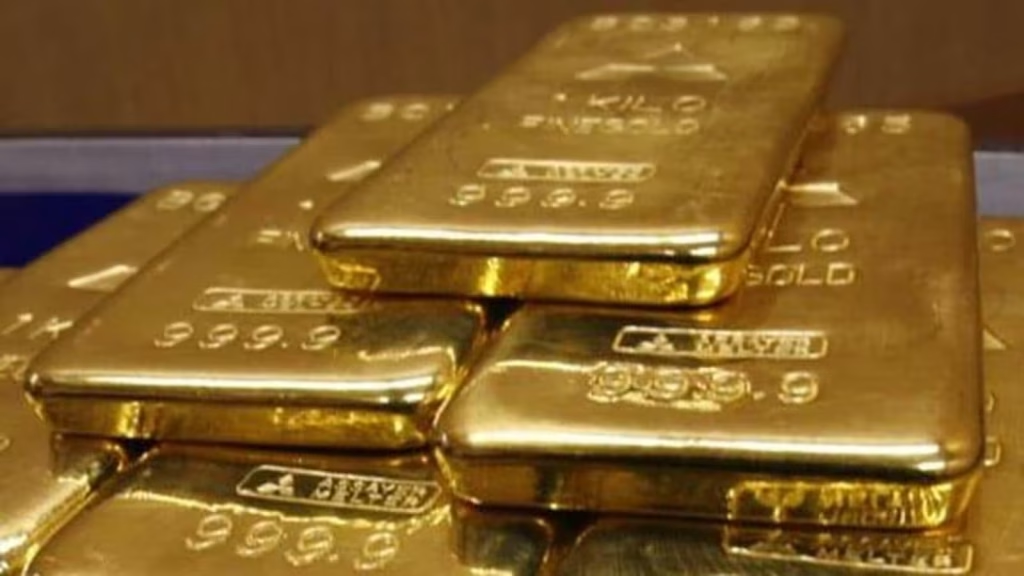
Gold bars are typically the cheapest option per gram, given standardized sizes and minimal manufacturing premium — the best choice for investors prioritizing maximum gold content per dollar spent.
Gold coins carry a genuine collectible premium above their raw gold content value, reflecting minting costs and, in some cases, numismatic appeal.
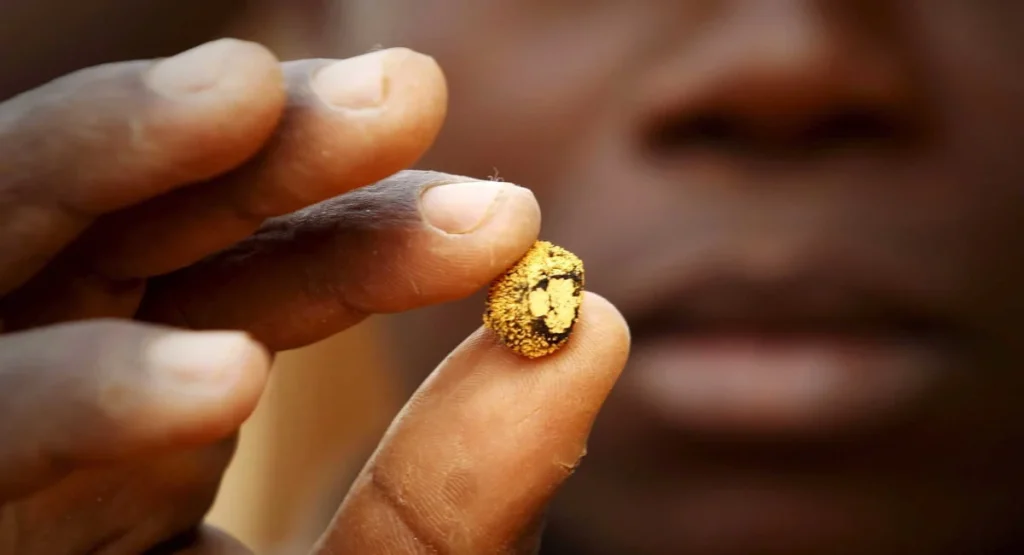
Gold nuggets can be priced above simple melt value depending on size, rarity, and natural appearance, appealing more to collectors than pure investors.
Gold dust offers a genuinely lower entry point for buyers comfortable with some purity variance, though it typically requires further refining before reaching investment-grade certainty.
How to Buy Gold From Uganda Safely: Step by Step
Step 1: Request a live quote from a licensed dealer, confirming current spot price and the premium being applied.
Step 2: Confirm purity and form — bar, nugget, dust, or coin — and the exact documentation that will accompany your purchase.
Step 3: Request an independent assay certificate before payment, not after, ideally from an internationally recognized testing standard.
Step 4: Pay through a traceable method — international bank transfer (SWIFT) is standard for transactions of real size; avoid cash and unverified transfer services entirely.
Step 5: Confirm export documentation, including your dealer’s DGSM export permit and any applicable royalty or levy payments, before your shipment leaves Uganda.
Step 6: Arrange insured, tracked delivery through a specialist courier or armored logistics provider, and verify your gold independently on arrival if the transaction size warrants it.
Risks of Buying Gold From Africa — and How to Manage Them
Fraud and counterfeit gold — mitigated by insisting on independent assay certification before payment and, for larger purchases, independent verification on arrival at your destination.
Regulatory complexity — genuine, but manageable by working exclusively with a properly licensed dealer who handles documentation as a core part of their service rather than an afterthought.
Shipping risk — addressed through insured courier or armored transport partnerships, with full coverage on declared value.
Purity variance in raw or artisanal gold — a real consideration specifically for nuggets and dust, addressed through clear purity labeling backed by independent assay documentation before any payment is finalized.
FAQs – Cheapest Country to Buy Gold
Which country sells gold the cheapest in Africa? Uganda consistently offers some of the most competitive gold pricing on the continent, driven by genuine local supply, cross-border artisanal inflows, and a mine-direct sourcing model with fewer intermediary markups.
Is gold cheaper in Ghana or Uganda? Both offer genuinely competitive pricing given their status as major producers, though Uganda’s blend of artisanal supply depth and fewer formal processing layers often edges out Ghana’s more heavily industrialized, formally taxed market on pure per-gram cost.
How much is gold per gram in Uganda today? Approximately $143–$147 for 24K gold, reflecting today’s global spot price plus a typical 1.5–3% mine-direct sourcing premium — always confirm the live rate before any purchase, since both spot price and premiums shift continuously.
What is Africa’s largest gold exporter? Ghana is currently Africa’s largest gold producer by volume, though Uganda remains highly competitive on price specifically, reflecting different strengths — scale versus sourcing efficiency.
Buy Certified Gold Direct From Uganda and Across Africa
We’re a licensed Africa gold exporter based in Uganda, sourcing certified 24K, 22K, and 18K gold bars, gold nuggets, and dust directly from licensed operations across Uganda, the DRC, Tanzania, South Africa, Ghana, Kenya, and Mali — with every shipment backed by independent assay certification, certificate of origin, and full export documentation.
Browse our guides to sourcing gold in Uganda, the Congo, Kenya, South Africa, Zimbabwe, and Mwanza, Tanzania, or our dedicated gold bar pricing in South Africa page for a direct comparison.
For international delivery, our guides cover Dubai, Switzerland, Canada, Singapore, and the USA, alongside our broader gold bars from Africa and African gold bars for sale collections.
Our guides to gold bar, gold nugget, and raw gold cover the different product forms available, and our gold mining overview and gold producing countries in Africa guide explain exactly where this gold comes from. Our FAQs about buying gold in Africa, how to buy gold online safely, and exporting gold bullion guides cover the full due-diligence process.
Get a Live Quote From a Licensed Uganda-Based Exporter
Now that you know exactly why Uganda offers some of the most competitive gold pricing in Africa — and what to verify before any purchase — the next step is a real, live quote.
As a gold and mineral exporter headquartered in Kampala with real operating history across Uganda and the wider region, we source certified gold with full documentation, not just a competitive headline price.
Explore our full range of services or contact us today for a live quote benchmarked against today’s exact spot price.
Related Pages
- Buy Gold in Uganda
- Buy Gold in Congo
- Buy Gold in Kenya (Nairobi)
- Buy Gold and Silver in South Africa
- Gold Bar Price in South Africa
- Buy Gold in Zimbabwe
- Buy Gold Bullion from Mwanza
- Buy Gold from Local Miners
- Buy Gold Online in Switzerland
- Buy Gold Online in Canada
- Buy Gold in Dubai
- Buy Gold Bars from Africa
- Buy Gold in Singapore
- African Gold Bars for Sale
- Buy Gold in Uganda from the USA
- Gold Bar
- Gold Nugget
- Raw Gold
- Gold Mining in Uganda and Congo
- Gold Producing Countries in Africa
- FAQs About Buying Gold in Africa
- How to Buy Gold Online Safely
- Exporting Gold Bullion
- About Us
- Contact Us