
African Gold: How to Verify Origin,Purity & Export Documents
African gold refers to gold mined, refined, and exported from the continent’s producing countries — led by Ghana, alongside South Africa, Mali, Sudan, Burkina Faso, Tanzania, and the Democratic Republic of Congo — and it accounts for a substantial share of global gold supply, sold as raw nuggets and dust, refined bars and ingots, and finished jewelry.
What buyers most need to understand before purchasing African gold isn’t just where it comes from, but how to verify it: a genuine transaction should always come with a traceable certificate of origin, an independent purity/assay certificate, and valid export documentation from the country of origin — without all three, you have no reliable way to confirm what you’re actually buying.
With gold trading at roughly $4,360 per ounce (about $140 per gram) as of September 2026, verification isn’t a formality; it’s the single step that separates a legitimate purchase from an expensive mistake.
This guide covers what African gold actually is, why it plays such a large role in the global market, and — in detail — exactly how to verify origin, purity, and export documents before you commit to any purchase.

What Makes African Gold Distinct
Africa is one of the world’s most significant gold-producing regions, with Ghana now widely recognized as the continent’s leading producer, followed by major output from South Africa, Mali, Sudan, Burkina Faso, Tanzania, and the DRC.
Gold here is extracted through a mix of large-scale industrial mining and smaller-scale artisanal and small-scale mining (ASM) operations, which together supply both the formal export market and, in less regulated cases, informal local trade.
This dual structure — large licensed mining companies alongside a substantial artisanal sector — is what makes verification so important. Gold from a large, LBMA-linked refinery like South Africa’s Rand Refinery (an LBMA Good Delivery referee since 1974) comes with an established, independently auditable chain of custody.
Gold moving through informal or undocumented channels does not, regardless of how it’s marketed to you. Neither source is inherently “bad gold” — the metal itself doesn’t know where it came from — but only one gives you a verifiable paper trail if something goes wrong, or if you need to resell, insure, or export it later yourself.
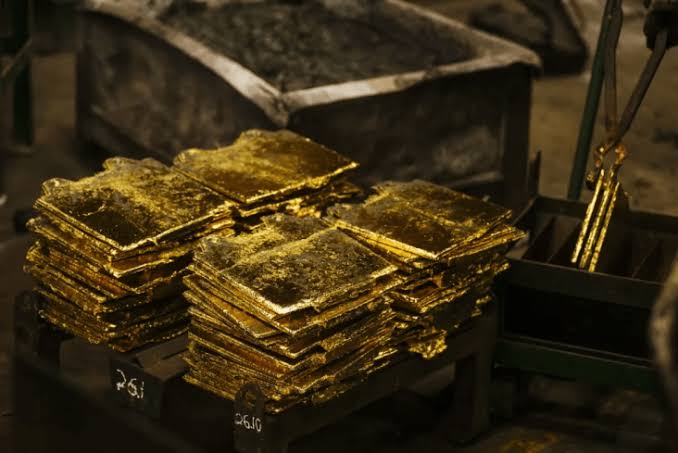
African gold is sold in several common forms: raw gold dust and nuggets (lowest processing, highest verification risk), semi-refined bars from smaller regional refineries, and fully refined bars and ingots from accredited refineries at 22K–24K purity, alongside finished jewelry sold primarily for the domestic and regional market.
How to Verify Origin, Purity, and Export Documents
This is the part that actually protects your money. Every legitimate African gold transaction should be backed by three separate, independently verifiable pieces of documentation — treat any deal missing one of them as high-risk, regardless of how good the price looks.
1. Certificate of Origin
A certificate of origin identifies the specific country, and ideally the specific mine or mining region, the gold was extracted from. This document is typically issued by a recognized authority in the exporting country — a mining ministry, mineral trading authority, or licensed exporter operating under that country’s regulatory framework.
How to verify it: Confirm the issuing authority is real and currently licensed — most African countries publish lists of authorized gold exporters or mineral trading licenses through their mining or trade ministries. Cross-check the certificate’s reference number where the issuing body offers a lookup, and be wary of certificates from authorities you can’t independently confirm exist.
2. Purity (Assay) Certificate
An assay certificate states the gold’s exact fineness — for example, 999.9 for 24K gold, or 916 for 22K — based on independent laboratory testing, not the seller’s own claim. Reputable refineries stamp this fineness directly onto bars alongside a serial number and the refiner’s own mark.
How to verify it: Match the stamped fineness and serial number on the physical gold against the certificate. For any significant purchase, commission your own independent assay through a third-party testing lab rather than relying solely on documentation supplied by the seller — this is standard practice for serious buyers and no legitimate seller should discourage it. If the certificate comes from a refinery you don’t recognize, check whether that refinery holds LBMA accreditation or another recognized industry certification.
3. Export Documentation
This covers the legal paperwork authorizing the gold to leave its country of origin — an export permit, customs declaration, and, for larger shipments, compliance documentation under anti-money-laundering (AML) and know-your-customer (KYC) frameworks that most African exporting countries and destination markets like the UAE now enforce more strictly.
Our guides on the gold export permit process and legal requirements for buying and exporting gold from Africa cover the country-specific detail behind this step.
How to verify it: Confirm the export permit number against the issuing country’s customs or mining authority where a verification channel exists, and make sure the exporter’s business name on the permit matches the entity you’re actually transacting with — a common fraud pattern is presenting someone else’s valid paperwork alongside a different seller’s gold.
Why All Three Matter Together
A certificate of origin without a purity certificate tells you where the gold claims to be from, but not what it actually is. A purity certificate without valid export documentation may describe genuine gold that was never legally allowed to leave the country — a real legal exposure for the buyer, not just the seller.
Only when all three align — origin, purity, and export paperwork all naming the same gold, the same seller, and cross-verifiable against issuing authorities — should you consider a transaction properly documented.
Responsible sourcing frameworks like the LBMA’s Responsible Gold Guidance and the OECD Due Diligence Guidance for Responsible Supply Chains of Minerals from Conflict-Affected and High-Risk Areas exist specifically to formalize this chain-of-custody standard, and reputable African exporters increasingly align with them voluntarily, since it’s what allows their gold to move freely through international markets.
Where African Gold Is Produced
Gold production spans much of the continent, with distinct regional characteristics:
- West Africa (Ghana and neighbors) — currently the continent’s leading production region.
- South Africa — historically Africa’s largest producer and home to its most developed formal refining infrastructure, including Rand Refinery.
- East Africa (Tanzania, Kenya) — a growing formal export sector alongside significant artisanal mining.
- Central Africa (DRC) — substantial gold reserves, though sourcing here requires particular care given the region’s documented conflict-mineral risks; see our guide on where gold is found in Uganda and the DRC for the specific considerations.
- Sudan — a significant producer with its own distinct export regulatory environment.
For current pricing, production rankings, and country-by-country buying guidance, our complete guide to gold in Africa covers the commercial and investment side of this in full depth — this article focuses specifically on what African gold is and how to verify it, so treat that guide as the companion piece for pricing, where to buy, and investment strategy.
FAQs – African Gold
Is all African gold conflict-free? No — sourcing risk varies significantly by country and region. Gold from well-regulated formal mining and refining operations, backed by full documentation, carries far lower risk than gold from areas with active conflict or weak regulatory oversight. Verification of origin and export documentation is exactly how you distinguish between the two.
What’s the difference between a certificate of origin and an assay certificate? A certificate of origin confirms where the gold came from; an assay certificate confirms what it actually is (its purity, based on independent lab testing). You need both — one without the other leaves a real gap in what you can verify.
Can I buy African gold without an export permit? Any gold legally leaving an African country for international sale requires a valid export permit issued by that country’s relevant authority. Gold without one either hasn’t been legally cleared for export or is being misrepresented — either way, a serious red flag.
How do I check if a gold refinery is legitimate? Look for LBMA accreditation (particularly Good Delivery status) or recognition from another established industry body. Refineries with this accreditation are independently audited and their bars are accepted on wholesale bullion markets without further testing.
Does a low price mean African gold is a scam? Not automatically, but pricing significantly below the current spot rate is one of the most consistent red flags in this market. Legitimate sellers price close to spot plus a reasonable, explainable margin — verify documentation regardless of price, but treat unusually cheap offers with extra scrutiny.
Buy African Gold With Confidence
African gold is a legitimate, substantial part of the global gold market — but like any commodity sourced across dozens of regulatory environments, it rewards buyers who verify before they pay rather than after.
Origin, purity, and export documentation aren’t paperwork for its own sake; together, they’re the only reliable way to know what you’re actually buying.
At Africa Gold Suppliers, we provide full documentation — certificate of origin, assay verification, and valid export paperwork — on every transaction, and we’re happy to walk any buyer through how to verify it independently before committing. See our FAQs about buying gold in Africa for more, or contact us directly with questions about a specific purchase.