
South Africa Gold Market 2026: The Complete Expert Guide
South Africa Gold Market: Everything you need to know about the South Africa gold market in 2026 — production data, live prices, Rand Refinery, key mines, companies, investment opportunities, regulations, Krugerrand, and the Witwatersrand Basin explained. The definitive expert guide.
Introduction: Why the South Africa Gold Market Matters
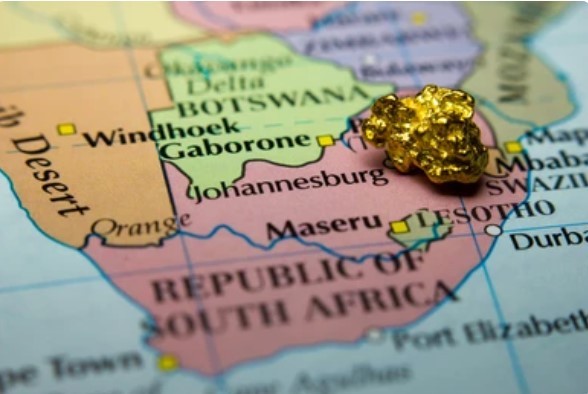
South Africa’s relationship with gold is unlike that of any other nation on earth. The discovery of gold on the Witwatersrand in 1886 transformed a farming republic into an industrial powerhouse, created Johannesburg, and propelled South Africa into the centre of the global gold trade for over a century.
By the 1970s, South Africa was producing over 1,000 tonnes of gold per year — approximately 70% of the world’s entire annual mine output.
Today, production is approximately 100 tonnes annually — a reflection of deep ore bodies becoming ever more costly to extract rather than any diminishment of the country’s underlying geological wealth.
What has not diminished is South Africa’s structural importance to the global gold market:
- Home to the world’s largest remaining gold reserves (South Deep Mine: 32.8 million oz)
- Operates the Rand Refinery — one of the world’s most significant LBMA-accredited refineries
- Producer of the Krugerrand — the world’s most recognized gold bullion coin
- Houses some of the world’s deepest gold mines (Mponeng: 3.8km+)
- Remains Africa’s second-largest gold producer by output (after Ghana) and by far its most sophisticated gold market
In 2026, with gold trading near $4,720–$4,739 per troy ounce — 41% above year-earlier levels and close to the January 2026 all-time record of $5,602/oz — South Africa’s gold market is experiencing a genuine renaissance.
New mines are being developed for the first time in 15 years, mining companies are generating record margins, and the sector’s stabilization after years of disruption is attracting renewed investment.
This guide covers everything you need to know about the South Africa gold market.
South Africa Gold Production: Current Data (2026)
Annual Production Figures
| Year | Gold Production (tonnes) | Global Rank | Notes |
|---|---|---|---|
| 1970 (peak) | ~1,000 | #1 globally | ~70% of world total |
| 2000 | ~431 | #1 Africa | Still dominant |
| 2015 | ~169 | #7 globally | Sharp decline |
| 2023 | ~104 | ~#7 globally | — |
| 2024 | ~100 | ~#7 globally | Slight decline |
| 2025 | ~100–105 | ~#8 globally | Stabilizing |
South Africa’s gold output has stabilized at approximately 100 tonnes per year — a long way from its historic peak but still significant in global terms. More importantly, a genuine recovery narrative is emerging in 2026.
2026 Production Recovery Signals
South Africa’s mining production climbed 4.6% year-on-year in January 2026, with gold registering a 0.7% increase. By February 2026, gold production surged +12.8%, contributing to the strongest pace of mining growth since February 2024.
This is not simply cyclical recovery — it reflects genuine structural changes in the sector:
South Africa opened its first new underground gold mine in 15 years in December 2025, capitalizing on gold’s record-breaking price rally as the metal hovered around $4,300 per ounce at that point.
The South Africa gold revival gaining momentum in 2025 and 2026 is being driven by a fundamentally different project architecture than previous attempts — built on efficiency, modular technology, known geology, and a deliberate retreat from cost structures that made the sector uncompetitive through the 2010s and early 2020s.
New Mine Developments (2025–2027 Pipeline)
Sibanye-Stillwater’s pending final investment decision on the Burnstone project is expected by mid-2026 — the most consequential near-term capital allocation signal in the gold sector.
Theta Gold Mines is targeting commissioning of its TGME operation by early 2027, with a projected output of 160,000 ounces per year over the first five years.
Additional projects in the pipeline include Wits Mining’s shallow Witwatersrand project (targeting ~70,000 oz/year), processing ore at existing Sibanye-Stillwater infrastructure to reduce capital requirements.
The Witwatersrand Basin development encompasses multiple phases with total production targets reaching 200,000 ounces annually at full capacity.
The Witwatersrand Basin: The World’s Greatest Gold Deposit
Understanding the South Africa gold market begins with understanding the geology that created it.
The Witwatersrand Basin (“Ridge of White Waters” in Afrikaans) is an ancient geological formation spanning approximately 400 km across Gauteng, Free State, and North West provinces. It lies on the Kaapvaal Craton — one of the world’s oldest stable continental shields, formed approximately 3.1 billion years ago.
This elliptical basin contains the world’s single most prolific gold deposit in history:
- Total historic production: Approximately 40% of all gold ever mined by humanity has come from the Witwatersrand Basin — an estimated 50,000 tonnes since the 1886 discovery
- Remaining reserves: Estimated 30,000+ tonnes remain in the ground, though much is accessible only at extreme depth and cost
- Active mining provinces: Gauteng, Free State (Welkom/Odendaalsrus), North West (Carletonville, Klerksdorp)
Why the Basin Is So Extraordinary
The gold in the Witwatersrand is found in paleochannel deposits — ancient riverbeds that concentrated gold-bearing sediments over hundreds of millions of years. The gold occurs in thin but remarkably consistent reef layers called “banket” — a Afrikaans word for the almond-studded confectionery the gold-bearing conglomerate resembles.
The challenge: the richest remaining reefs are found at depths of 2–4+ kilometres, requiring extraordinary engineering to reach safely and economically.
South Africa’s Major Gold Mines (2026)
South Deep Mine — World’s Largest Gold Reserve
| Feature | Data |
|---|---|
| Owner/Operator | Gold Fields (100%) |
| Location | 45 km southwest of Johannesburg, Gauteng |
| Depth | Up to 2,998 metres (7th deepest in the world) |
| Reserve base | 32.8 million ounces — largest proven gold reserve of any single mine in the world |
| Annual production | ~270,000 oz (2025) |
| Mine life | Potential 70+ years at current rate |
| All-in sustaining cost | ~$1,400–1,600/oz |
South Deep’s extraordinary reserve base makes it one of the most strategically valuable mining assets on earth — yet its modest annual output relative to its reserves reflects the challenge of ultra-deep mechanical mining at scale. Gold Fields has been steadily optimizing operations, and at current gold prices generating margins above $3,000/oz, South Deep is exceptionally profitable.
Mponeng Mine — The World’s Deepest Gold Mine
| Feature | Data |
|---|---|
| Owner/Operator | Harmony Gold Mining Company |
| Location | Carletonville, Gauteng (west of Johannesburg) |
| Depth | Over 3.84 kilometres — deepest gold mine in the world |
| In operation | Since 1986 |
| Annual production | ~250,000 oz |
| Rock temperature at depth | ~66°C — cooled to below 30°C with slurry ice |
| Mine life | Active through approximately 2029 based on current reserves |
Mining at 3.84km depth requires engineering solutions found nowhere else on earth. Workers travel down in stages over 90+ minutes. Rock temperatures without intervention would exceed 66°C.
The mine pumps 6,000 tonnes of slurry ice underground daily. Despite these extraordinary conditions, Mponeng remains commercially active, generating significant gold production for Harmony.
Driefontein and Kloof Mines — Sibanye-Stillwater’s Heritage Assets
The Driefontein and Kloof mines near Carletonville and Westonaria (Gauteng), both operated by Sibanye-Stillwater, are historic Witwatersrand operations that have been producing for decades.
- Driefontein: One of the world’s historically largest gold mines; consolidated into Sibanye’s western operations
- Kloof: High-grade underground operation; Kloof 4 shaft reaches exceptional depth
- Combined output: ~300,000–400,000 oz/year combined
- Sibanye-Stillwater’s strategic role: Owner of critical processing infrastructure being utilized by new junior mine developers — a key feature of the 2026 gold revival model
Burnstone Project — The Return of New Development
Sibanye-Stillwater’s Burnstone project in Mpumalanga Province is the most watched new mine development in South Africa’s gold sector. Located on historically productive ground, Burnstone represents:
- The potential return of significant new gold mine capital investment
- A test case for whether shallow Witwatersrand deposits can be economically developed at current gold prices
- The most consequential near-term capital allocation signal in South Africa’s gold sector, with final investment decision expected by mid-2026
Barberton Mines and Evander — Pan African Resources
Pan African Resources operates the Barberton Mines complex in Mpumalanga Province and the Evander Gold Mines in the same province — both significant contributors to South Africa’s annual gold output.
Barberton’s Fairview mine accesses high-grade underground ore in the Archaean greenstone belt — different geology from the Witwatersrand, hosting some of the world’s highest-grade ore at 12+ grams per tonne.
Pan African Resources consistently pays among the highest dividend yields in the South African gold sector — approximately 4–5% — making it attractive for income-focused gold investors.
Key Companies in South Africa’s Gold Market
Gold Fields (JSE: GFI / NYSE: GFI)
One of South Africa’s most internationally diversified gold majors. South Deep (world’s largest reserve) is Gold Fields’ primary South African asset, alongside operations in Ghana (Tarkwa, Damang), Australia, and Peru.
- Market cap: ~$8–10 billion (2026)
- South African asset: South Deep (32.8M oz reserve)
- Investment thesis: Premium reserve base provides multi-decade production visibility
Harmony Gold Mining (JSE: HAR / NYSE: HMY)
South Africa’s largest purely domestic gold producer by employment, with operations including Mponeng (world’s deepest), Hidden Valley (Papua New Guinea), and Eva Copper (Australia).
- Market cap: ~$4–6 billion (2026)
- South African operations: Mponeng, Doornkop, Kusasalethu, Moab Khotsong, and others
- Employment: One of South Africa’s largest mining employers
Sibanye-Stillwater (JSE: SSW / NYSE: SBSW)
Originally a South African gold miner (spun out from Gold Fields), Sibanye-Stillwater has diversified into platinum group metals (PGMs) and international operations while retaining significant South African gold assets.
- South African gold operations: Driefontein, Kloof, and deep level operations
- 2026 significance: Processing infrastructure owner; Burnstone potential; recovery from PGM market downturn with gold providing stabilization
- Market cap: ~$3–5 billion (2026)
Pan African Resources (JSE: PAN / AIM: PAF)
Mid-tier producer focused entirely on South Africa, with a strong dividend track record and specialty in higher-grade assets.
- Operations: Barberton Mines (Mpumalanga), Evander Gold Mines (Mpumalanga)
- 2026 production: ~180,000–200,000 oz
- Dividend yield: Among highest in the sector at ~4–5%
AngloGold Ashanti (JSE: ANG / NYSE: AU)
While AngloGold Ashanti has largely divested from South African operations (it sold its remaining South African mines to Harmony in 2020), it retains historical significance and continues to play a major role in global African gold production through Ghana’s Obuasi and Tanzania’s Geita mines.
The Rand Refinery: Africa’s Gold Processing Powerhouse
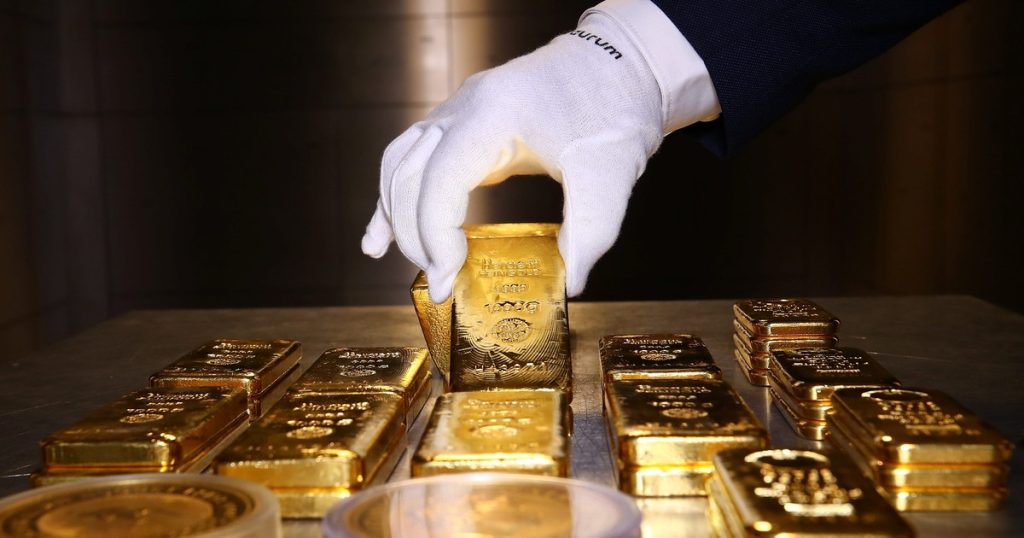
The Rand Refinery in Germiston, Gauteng — established in 1920 — is one of the world’s most significant gold refineries and a cornerstone institution of South Africa’s gold market.
Key Facts About Rand Refinery
| Feature | Data |
|---|---|
| Location | Germiston, Gauteng (adjacent to Johannesburg) |
| Established | 1920 |
| LBMA Status | Good Delivery accredited (gold and silver) |
| Annual capacity | Capable of refining hundreds of tonnes annually |
| Owner | Gold mining companies consortium + South African Mint |
| Products | Investment bars (1g–400oz), Krugerrands, silver products |
| Assay services | XRF, fire assay; issues internationally recognized assay certificates |
Why Rand Refinery Matters for Buyers
When you purchase a Rand Refinery-branded gold bar, you receive:
- LBMA Good Delivery-standard purity (99.99%)
- Globally recognized certification requiring no re-assay at international trading venues
- Complete traceability from mine through refinery
- Legal, documented provenance for import/export compliance
The Rand Refinery’s LBMA accreditation is what makes Johannesburg gold internationally competitive — it places South African bars in the same tier as PAMP Suisse, Valcambi, and Perth Mint products.
The South African Krugerrand: The World’s Gold Coin
The Krugerrand is arguably South Africa’s most enduring gold market contribution — a bullion coin that redefined how the world invests in gold.
History and Significance
Launched in 1967 by the South African Mint in partnership with Rand Refinery, the Krugerrand was designed as a vehicle for South Africa to market its gold production internationally. It was the world’s first modern gold bullion coin — the template for every bullion coin that followed, including the Canadian Maple Leaf, American Eagle, and Australian Kangaroo.
Between 1967 and the mid-1980s, the Krugerrand accounted for approximately 90% of the global gold coin market. Even today, it remains the world’s most widely held gold bullion coin, with an estimated 60+ million ounces minted to date.
Krugerrand Specifications (2026)
| Specification | Detail |
|---|---|
| Gold content | 22K / 91.67% gold (rest: copper) |
| Available sizes | 1 oz, 1/2 oz, 1/4 oz, 1/10 oz |
| Legal tender | Yes — in South Africa (face value in rand) |
| Capital gains treatment (UK) | Not CGT-exempt (unlike Sovereign/Britannia) |
| 1 oz gold content | Exactly 1 troy oz of fine gold (31.1035g) |
| Current 1 oz price (May 2026) | ~ZAR 78,500–80,500 (~$4,784–$4,908 USD) |
| Typical dealer premium over spot | 2–4% |
| Global availability | Universally available through any gold dealer worldwide |
Current Gold Prices in South Africa (May 2026)
Live Gold Price Table — All Karats
As of May 6–8, 2026, with USD/ZAR at approximately 16.41:
Today’s gold price per gram in South Africa is 2,476.64 ZAR (May 6, 2026), representing a 7-day increase of 18.81 ZAR (0.77%).
| Karat | Purity | Price/Gram (ZAR) | Price/Gram (USD) | Price/oz (ZAR) | Price/oz (USD) |
|---|---|---|---|---|---|
| 24K | 99.9% | ZAR 2,470–2,500 | ~$150.60–$152.36 | ZAR 76,843–77,700 | ~$4,683–$4,734 |
| 22K | 91.6% | ZAR 2,263–2,290 | ~$137.90–$139.60 | ZAR 70,390–71,200 | ~$4,290–$4,340 |
| 18K | 75.0% | ZAR 1,853–1,875 | ~$112.90–$114.30 | ZAR 57,630–58,280 | ~$3,512–$3,552 |
| 14K | 58.5% | ZAR 1,445–1,463 | ~$88.05–$89.15 | ZAR 44,960–45,460 | ~$2,741–$2,771 |
| 10K | 41.7% | ZAR 1,030–1,043 | ~$62.80–$63.60 | ZAR 32,040–32,450 | ~$1,953–$1,977 |
2026 Gold Price Performance in South Africa (ZAR)
The average price of gold in 2026 was ZAR 79,346 per ounce. The high point during 2026 was ZAR 85,817 on March 2, 2026. The low point was ZAR 71,440 per ounce on January 2, 2026. Gold in ZAR was up +8.30% year-to-date in 2026.
| Period | ZAR/oz | USD/oz | Notes |
|---|---|---|---|
| Jan 2, 2026 (2026 low) | ZAR 71,440 | ~$4,354 | Year opened here |
| Mar 2, 2026 (2026 high) | ZAR 85,817 | ~$5,230 | All-time ZAR record |
| 2026 average (YTD) | ZAR 79,346 | ~$4,835 | Strong sustained level |
| May 2026 (current) | ZAR 76,843–77,700 | ~$4,683–$4,734 | Moderated from high |
| 2026 YTD change | +8.30% | Similar | — |
| 1-year change | +40%+ | +41% | — |
The Gold-Rand Relationship: How Gold Moves South Africa’s Currency
One of the most significant dynamics in South Africa’s gold market is how gold prices influence the South African rand (ZAR).
When gold prices surged beyond $5,000 per ounce, as witnessed in January 2026, South African mining companies generated substantially higher dollar-denominated revenues from overseas sales. These export earnings flow through the banking system, strengthening South Africa’s balance of payments position.
The year-to-date 3% rand appreciation since January 2026 created immediate portfolio impacts for international investors with South African equity exposure.
The Transmission Mechanism
- Higher USD gold price → South African mines earn more dollars per ounce
- Mining companies convert USD to ZAR for local operational costs (wages, power, maintenance)
- Increased ZAR demand strengthens the currency
- Stronger ZAR partially offsets the USD gold price rise in ZAR terms
- Net effect: ZAR gold price rises less than USD gold price during gold bull markets
This is why the 2026 ZAR gold price (+8.30% YTD) has risen less than the USD gold price (+41% year-on-year) — the rand’s strength has absorbed some of the USD price gain.
South Africa’s Gold Regulatory Framework
South African Diamond and Precious Metals Regulator (SADPMR)
The SADPMR is the primary regulatory authority for precious metals trading in South Africa. All gold dealers, traders, and exporters must be SADPMR-licensed. The regulator:
- Issues licenses for precious metals dealing and trading
- Investigates illegal trading and smuggling
- Enforces compliance with the Precious Metals Act
- Works with SARS Customs and other enforcement agencies
Always verify SADPMR licensing before transacting with any South African gold dealer.
FATF Grey List Removal (2025) — A Market Turning Point
South Africa’s removal from the FATF grey list in late 2025 significantly boosted market confidence, and regulatory reforms have provided improved conditions. Deal flow is expected to increase in 2026, thanks in part to an improved risk profile for the country.
South Africa had been placed on the Financial Action Task Force’s grey list in February 2023 due to deficiencies in its anti-money laundering and counter-terrorism financing frameworks. Its removal in late 2025 — after substantial legislative and institutional reforms — has meaningfully improved:
- International banking relationships for South African gold exporters
- Investor confidence in the regulatory environment
- Access to correspondent banking for gold trade finance
- Perception of South Africa as a safe, credible gold sourcing jurisdiction
VAT on Gold
Investment-grade gold bars and Krugerrand coins are VAT-exempt in South Africa under the Value-Added Tax Act. This is a significant buyer advantage — purchasing LBMA-standard investment gold in South Africa incurs no consumption tax. Gold jewelry is subject to standard VAT.
Precious Metals Act (Act 37 of 2005)
The Precious Metals Act governs the refining, beneficiation, import, and export of precious metals including gold. Key provisions:
- All gold must be processed through SADPMR-licensed channels
- Unlicensed possession, trading, or export of gold is a criminal offense
- Artisanal and small-scale mining operates under specific SADPMR permits
- Export requires compliance with ITAC (International Trade Administration Commission) authorization
How to Invest in South Africa’s Gold Market (2026 Guide)
Option 1: Listed Mining Stocks (JSE-Listed Companies)
The most liquid and accessible way to invest in South Africa’s gold sector:
| Company | JSE Ticker | NYSE ADR | 2025 Dividend (est.) | Primary SA Asset |
|---|---|---|---|---|
| Gold Fields | GFI | GFI | ~3.5% | South Deep |
| Harmony Gold | HAR | HMY | ~2.5% | Mponeng + others |
| Sibanye-Stillwater | SSW | SBSW | ~3% | Driefontein, Kloof |
| Pan African Resources | PAN | — | ~4–5% | Barberton, Evander |
Mining stocks provide leveraged exposure to the gold price — because their costs are partly fixed, a 10% rise in gold price may translate to a 20–30% rise in operating profit. This leverage works both ways.
Option 2: Physical Gold Bars and Krugerrands
Buying physical 24K gold bars (Rand Refinery branded) or Krugerrand coins provides direct gold ownership with no counterparty risk. South Africa’s LBMA-accredited production means locally purchased gold is globally tradeable.
Best sources: Rand Refinery retail, SADPMR-licensed bullion dealers in Johannesburg, Africa Gold Suppliers Ltd for international buyers.
Current 1 oz Krugerrand price: ZAR 78,500–80,500 (~$4,784–$4,908 USD)
Option 3: Gold ETFs (JSE-Listed)
Several gold ETFs trade on the Johannesburg Stock Exchange (JSE), providing rand-denominated exposure to the gold price:
- Absa NewGold ETF (GLD): South Africa’s largest physical gold ETF; backed by LBMA-standard gold bars held in allocated storage
- 1nvest Gold ETF: Physical gold-backed; competitive expense ratio
- Krugerrand-backed ETFs: Some products are backed specifically by Krugerrand coins
Gold ETFs on the JSE offer:
- No physical storage costs or security concerns
- VAT-exempt for qualifying investment gold products
- Capital gains tax treatment as financial instruments
- Rand-denominated gold price exposure
Option 4: Gold Streaming and Royalty Companies
While no major global streaming companies are headquartered in South Africa, international companies including Wheaton Precious Metals and Royal Gold hold stream or royalty agreements on some African gold production. These provide exposure to South African gold output with even more leverage than mining stocks and without operational risk.
Option 5: Junior Mining Company Investment
South Africa’s 2026 gold revival has created a pipeline of junior and emerging producers:
- Theta Gold Mines: TGME commissioning targeting early 2027; 160,000 oz/year projected
- Wits Mining: Shallow Witwatersrand project; processing at Sibanye infrastructure
- Burnstone (Sibanye-Stillwater): FID expected mid-2026
Junior miners offer highest potential returns — and highest risk. Appropriate only for experienced investors comfortable with development-stage company risk.
South Africa Gold Market: Economic Significance
Employment
The Minerals Council South Africa reports approximately 93,841 workers currently employed in the gold sector. Every employee in the gold sector supports between five and 10 other dependants. Every direct job in the mining sector results in two indirect jobs created elsewhere in the economy.
At its 1980s peak, South Africa’s gold mines employed over 500,000 workers. The decline to ~94,000 direct jobs reflects both mechanization and the closure of uneconomic deep-level shafts.
The 2026 revival — driven by both elevated gold prices and new mine openings — is expected to create modest but meaningful new employment, particularly in Gauteng, Free State, and North West provinces.
Export Revenue
Gold remains one of South Africa’s most important foreign exchange earners. At $4,720/oz and ~100 tonnes annual production, South Africa’s gold export value is approximately $15 billion per year — a significant contributor to the country’s balance of payments, particularly as the rand’s value is partly supported by gold export receipts.
GDP Contribution
Gold mining contributes approximately 1–2% of South Africa’s GDP directly, with multiplier effects through the broader economy (equipment suppliers, power consumption, communities) adding several additional percentage points of economic activity.
Communities and Development
Gold mining communities across Gauteng, Free State, and North West Province are economically dependent on the sector. Social compacts between mining companies and host communities are a regulatory requirement under South Africa’s Mining Charter, with companies required to invest in housing, healthcare, education, and infrastructure in mining communities.
South Africa Gold Market: Challenges and Risks
The Depth Problem
The fundamental challenge facing South Africa’s established gold industry is geology — the richest remaining ore bodies are at extreme depths (2–4km+), where extraction costs are high, safety risks are elevated, and logistics are complex. This is why newer approaches focus on shallow, high-grade deposits rather than extensions of existing deep mines.
Electricity Supply and Eskom
South Africa’s power utility Eskom has faced chronic reliability challenges, with load-shedding (rolling blackouts) having been a persistent problem through 2024–2025.
Gold mines have responded by investing in renewable energy (solar and wind) and diesel backup generators, but power disruptions remain an operational risk.
The government’s energy sector reforms, including opening the grid to independent power producers, are gradually improving the situation in 2026.
Labour Relations
South Africa’s gold mining sector has a history of industrial action, with significant strikes in 2012 (Marikana), 2014, and subsequent periods affecting output.
The sector has moved toward multi-year wage agreements that reduce strike probability, and the 2026 labour relations environment is more stable than in the early 2020s.
Crime and Illegal Mining (Zama Zama)
Illegal mining, locally known as zama zama (Zulu for “trying one’s luck”), is a significant problem for South Africa’s abandoned and active mine sectors.
Illegal miners operate in closed shaft systems, often connected to criminal networks, creating safety hazards and illicit gold flows that bypass formal markets.
The government and mining companies are working to address this through formalization programs and enhanced security.
Water and Environmental Management
Ultra-deep gold mines generate significant volumes of contaminated water (acid mine drainage) that requires treatment before discharge. Environmental compliance is a growing cost and regulatory challenge, particularly for older mines with extensive historical legacies.
South Africa Gold Market vs Other African Producers (2026)
| Factor | South Africa | Ghana | DRC | Tanzania |
|---|---|---|---|---|
| 2025 production | ~100 tonnes | ~130–159 tonnes | ~90 tonnes | ~50 tonnes |
| Global ranking | ~#8 | #7 (Africa’s largest) | ~#5 Africa | ~#10 Africa |
| Reserve quality | Highest (deepest, richest) | Very good | Exceptional (Kibali) | Good |
| LBMA refinery | ✅ Rand Refinery | ❌ | ❌ | ❌ |
| Gold coin production | ✅ Krugerrand | ❌ | ❌ | ❌ |
| Regulatory quality | Very High (SADPMR) | High (GoldBod) | Medium-High (formal) | High (TMAA) |
| FATF status | ✅ Clean (removed 2025) | ✅ Clean | ⚠️ Monitor | ✅ Clean |
| Price per gram (USD) | $152–$161 | $151–$158 | $147–$158 | $150–$157 |
South Africa’s primary advantages are its LBMA-accredited refinery (Rand Refinery), Krugerrand coin production, and the deepest, most technically sophisticated mining infrastructure in Africa. Ghana has overtaken it in annual production volume but lacks South Africa’s refining and certification infrastructure.
FAQs: South Africa Gold Market (2026)
Q: How much gold does South Africa produce? A: South Africa produces approximately 100 tonnes of gold annually (2024–2025 data). This is far below its 1970 peak of ~1,000 tonnes/year but represents a stable base with new development activity expected to add modestly to output from 2026–2028 as the Burnstone, TGME, and other projects move toward production.
Q: What is the current gold price in South Africa? A: As of May 6–8, 2026, 24K gold in South Africa is approximately ZAR 2,470–2,500 per gram (~$150.60–$152.36 USD) or ZAR 76,843–77,700 per troy ounce (~$4,683–$4,734 USD). The 2026 all-time ZAR high was ZAR 85,817/oz on March 2, 2026.
Q: What is the Rand Refinery? A: The Rand Refinery in Germiston (Johannesburg) is South Africa’s primary gold refinery, established in 1920, and holds LBMA Good Delivery accreditation for gold and silver. It is one of the world’s most important refineries and produces internationally recognized gold bars and Krugerrands.
Q: What is a Krugerrand? A: The Krugerrand is South Africa’s iconic gold bullion coin — 22K (91.67% gold), containing exactly 1 troy ounce of fine gold, minted since 1967. It is the world’s most widely held gold bullion coin and is legal tender in South Africa. Current May 2026 price: ~ZAR 78,500–80,500/oz (~$4,784–$4,908 USD).
Q: Which is the largest gold mine in South Africa? A: By reserve base, South Deep Mine (Gold Fields) holds 32.8 million ounces — the largest proven gold reserve of any single mine in the world. By annual production, Driefontein/Kloof (Sibanye-Stillwater) and Mponeng (Harmony Gold) are among the largest producers. Mponeng is also the world’s deepest mine at 3.8+ km.
Q: Is VAT payable on gold in South Africa? A: Investment-grade gold bars and Krugerrands are VAT-exempt in South Africa. Gold jewelry is subject to standard VAT. This exemption makes South Africa competitive for investment gold purchases.
Q: How did South Africa’s FATF grey list removal affect the gold market? A: South Africa’s removal from the FATF grey list in late 2025 significantly improved investor confidence, expanded international banking relationships for gold exporters, and reduced compliance friction for foreign buyers. It is one of the key positive factors supporting the 2026 gold sector revival.
Q: Is South Africa still the largest gold producer in Africa? A: No. Ghana overtook South Africa as Africa’s largest gold producer and has maintained that position since approximately 2019, with 130–159 tonnes in 2025 versus South Africa’s ~100 tonnes. South Africa remains Africa’s most sophisticated gold market by infrastructure and certification quality.
Q: What are the best ways to invest in South African gold? A: The main options are: listed mining stocks (Gold Fields, Harmony, Sibanye-Stillwater, Pan African Resources) on the JSE or NYSE; physical gold bars and Krugerrands from SADPMR-licensed dealers or Rand Refinery; JSE-listed gold ETFs (Absa NewGold, 1nvest Gold ETF); and participation in junior mining projects for higher-risk/higher-reward exposure.
Conclusion: South Africa’s Gold Market — Historic Foundations, 2026 Renaissance
South Africa’s gold market in 2026 presents a compelling paradox: a sector built on the world’s richest historical gold deposit, whose annual output has declined from 1,000 tonnes to 100 tonnes over half a century, yet whose underlying asset quality, institutional infrastructure, and investment framework remain the most sophisticated on the African continent — and are now reviving under the stimulus of record gold prices.
The structural case for South Africa’s gold market is built on irreplaceable foundations:
- South Deep’s 32.8 million ounce reserve — the largest in the world
- Rand Refinery’s LBMA accreditation — Africa’s gold certification anchor
- The Krugerrand’s global liquidity — 60+ million oz minted; recognized everywhere
- SADPMR regulatory clarity — strengthened further by FATF grey list removal
- New mine pipeline — Burnstone, TGME, and shallow Witwatersrand projects ending a 15-year development drought
At current gold prices of $4,720+/oz — with miners generating AISC margins above $3,200/oz — South Africa’s gold companies are earning the largest profit per ounce in modern mining history.
This cash flow is funding new projects, paying exceptional dividends, and attracting investment capital back to a sector that spent much of the past decade being written off.
For investors, buyers, and market participants, South Africa’s gold market in 2026 is not simply a legacy industry. It is an evolving, revitalizing sector with extraordinary asset quality, genuine new development momentum, and the best institutional infrastructure for gold trading anywhere on the African continent.
Useful Resources: