
Gold Price in Africa Today: Live Rates by Country
The gold price in Africa today is determined by the international gold spot price, gold purity, local currency exchange rates, and the costs associated with buying, refining, transporting, and exporting gold. Although African gold markets follow international bullion prices, the final price offered by a dealer can vary between countries and between refined gold bars, jewellery, gold nuggets, gold dust, and semi-refined doré.
Use the live gold price widget below to follow international market movements, then explore how gold is priced in major African markets, what affects local buying and selling rates, and how to assess gold quality before making a transaction.
Live Gold Price in Africa Today
Gold prices fluctuate with international market conditions. The live widget below provides a reference for monitoring gold prices in US dollars by karat and troy-ounce weight. Use it as a starting point when comparing dealer quotations across Africa.
The displayed international price is a market reference, not a guaranteed purchase or selling price from an African gold dealer. Local currency conversion, gold purity, refining, documentation, taxes, insurance, and transport can all affect the final quotation.
How Is the Gold Price Determined in Africa?
Gold prices across Africa are influenced by several connected factors. Understanding these factors helps buyers and sellers compare quotations more accurately and identify costs that may not be included in an advertised price.
International Gold Spot Price
The international gold spot price is the main reference point for physical gold trading. It reflects conditions in the global bullion market and is commonly quoted in US dollars per troy ounce.
African gold dealers use international market prices as a reference when valuing gold. However, the amount paid for a particular lot depends on its purity, weight, physical form, and the terms of the transaction.
Gold Purity and Karat
Gold purity measures how much of a piece consists of pure gold rather than other metals. Higher-purity gold generally has a higher underlying metal value per unit of weight.
Common gold purities include:
- 24K gold: Approximately 99.9% or higher purity, depending on the product specification.
- 22K gold: Approximately 91.67% pure gold.
- 21K gold: Approximately 87.5% pure gold.
- 18K gold: 75% pure gold.
- Gold doré: A semi-refined alloy whose gold and other metal content must be established through an assay.
- Gold dust and nuggets: Natural or artisanal material whose purity can vary considerably.
Do not determine a gold lot’s value by appearance alone. An independent assay helps establish its actual gold content and supports a more accurate valuation.
Local Currency Exchange Rates
Gold is widely traded internationally in US dollars, while transactions in African markets may be settled in local currencies such as the South African rand, Ghanaian cedi, Ugandan shilling, Kenyan shilling, Tanzanian shilling, or Congolese franc.
Changes in the USD exchange rate can affect the local-currency value of gold even when the international spot price remains relatively stable. Buyers should therefore confirm both the gold quotation and the exchange rate being used for the transaction.
Dealer Premiums and Processing Costs
The final buying price for refined gold may include charges for refining, assay, certification, packaging, insurance, storage, and dealer services. Unrefined gold may be valued differently because its purity must be tested and additional processing may be required.
A fair comparison should consider the complete transaction cost rather than the headline quotation alone.
Taxes, Royalties, and Export Requirements
Mining royalties, applicable taxes, export charges, customs procedures, licensing conditions, and documentation requirements can influence the total cost of moving gold from a mine or buying office to an international buyer.
These rules differ between jurisdictions and may change. Buyers and exporters should confirm the current requirements with the relevant authorities before entering a transaction.
Gold Price in Africa by Country
There is no single local gold price that applies across every African country. Although international spot prices provide a common reference, exchange rates, refining infrastructure, local trading arrangements, and regulatory requirements affect the quotations available in each market.
Gold Price in South Africa
South Africa has a long-established gold mining, refining, and bullion trading industry. Its refining infrastructure, including Rand Refinery, makes the country an important market for refined gold products.
Buyers comparing gold quotations in South Africa should distinguish between refined bullion, investment products, jewellery, and unrefined material. Product specifications, dealer terms, assay documentation, and applicable taxes can all affect the final cost.
Explore our guide to buying gold and silver in South Africa for more information about the local market.
Gold Price in Ghana
Ghana is one of Africa’s major gold-producing countries and has an established gold trading industry. The Ghana Gold Board (GoldBod) plays a central role in regulating gold purchasing, assaying, licensing, and export activities within the formal market.
Gold prices and purchasing procedures depend on the type of gold being traded and the applicable regulatory framework. Buyers should verify current licensing and export requirements before arranging a transaction, particularly when sourcing gold for international shipment.
Learn more in our guide to buying gold in Ghana and our resources on Ghana’s gold export regulations.
Gold Price in Uganda
Uganda has an active gold trading and export sector, with gold sourced from domestic mining operations and traded through formal and informal supply chains. Kampala is an important commercial center for gold-related transactions.
The price offered for gold in Uganda depends on purity, the form of the material, the USD-to-UGX exchange rate, dealer terms, and the documentation required for the intended transaction. Buyers and exporters should verify the seller’s credentials and confirm the applicable requirements with Uganda’s Directorate of Geological Survey and Mines and other relevant authorities.
For market-specific information, read our guide to buying gold in Uganda.
Gold Price in Tanzania
Tanzania is an established gold-producing country with mining, processing, refining, and trading activities. Gold quotations can vary depending on the material’s purity, the buyer’s requirements, the trading channel, and the costs associated with refining and export.
Before purchasing gold in Tanzania, confirm the legal status of the seller, the available assay documentation, and the current requirements for domestic trade or international export.
Our guide to buying gold in Tanzania provides further information about the market.
Gold Price in the Democratic Republic of Congo (DRC)
The Democratic Republic of Congo has significant gold resources, including mining areas in Ituri, Haut-Uélé, and parts of the Kivu provinces. The market includes artisanal and industrial production, as well as gold in refined and unrefined forms.
Gold sourced from the DRC must be assessed carefully because purity, origin, supply-chain traceability, and documentation can vary. Responsible sourcing is especially important when dealing with material from areas affected by conflict or informal mining.
International buyers should verify the source of the gold, review the required due-diligence records, and confirm the applicable trading, tax, and export rules before entering a transaction.
Read our detailed guide to the gold market in Congo for more information.
Gold Price in Mali
Mali is an important gold-producing country in West Africa. Its market includes industrial mining, artisanal production, processing, and gold trading.
Prices quoted for gold from Mali depend on the material’s purity, how it has been processed, the terms offered by the seller, and the costs of complying with applicable trading and export requirements.
Buyers should independently verify the gold’s weight, fineness, origin, and documentation instead of relying exclusively on a seller’s stated purity.
Gold Price in Côte d’Ivoire
Côte d’Ivoire has a developing gold mining and processing sector. Its gold market includes industrial production and smaller-scale mining activities, with transaction terms varying according to the gold’s form and supply chain.
Anyone buying or exporting gold from Côte d’Ivoire should confirm the relevant licensing, assay, traceability, and export requirements before proceeding.
Gold Price in Cameroon
Cameroon’s gold market includes artisanal mining and trading, alongside efforts to strengthen formal oversight and traceability. Gold may be offered as dust, nuggets, doré, or processed material.
Because the purity of unrefined gold can vary, a reliable assay is essential when assessing a quotation. Buyers should also verify the seller’s legal status and establish whether the material can be sold and exported under the applicable rules.
Gold Markets in Kenya and Nigeria
Kenya and Nigeria also have gold trading markets in which prices depend on international spot movements, purity, currency conversion, product form, and dealer terms.
A quotation for gold jewellery should not be treated as equivalent to one for investment-grade bullion or unrefined material. Buyers should check the purity, weight, any applicable making or processing charges, and the requirements governing the intended transaction.
Gold Price by Karat: Understanding Different Purities
Gold is sold in different purities for jewellery, investment, manufacturing, and refining. The karat system expresses the proportion of pure gold in an alloy.
| Gold type | Approximate purity | Common uses |
|---|---|---|
| 24K | 99.9% or higher, depending on specification | High-purity bullion and investment products |
| 22K | 91.67% | Jewellery and selected gold products |
| 21K | 87.5% | Jewellery in markets where this purity is common |
| 18K | 75% | Jewellery and decorative pieces |
| 14K | 58.5% | Jewellery and gold alloys |
| Gold doré | Variable | Refinery feedstock |
| Gold dust | Variable | Material for testing, aggregation, and refining |
| Gold nuggets | Variable | Natural gold requiring purity assessment |
These purity descriptions are not substitutes for testing. The actual fineness of a product or raw gold lot should be established through reliable assay procedures.
How Purity Affects Gold Value
Gold’s underlying metal value depends on the amount of pure gold contained in the material. Two pieces with the same gross weight may therefore have different values if their purities differ.
For refined products, check the declared fineness, product markings, assay certificate, and the identity of the refinery or manufacturer where applicable. For raw gold and doré, request a suitable assay before agreeing on the final valuation.
Gold Price by Weight: Common Gold Measurements
Gold is commonly measured in grams, kilograms, and troy ounces. Some markets and dealers may also quote gold in tolas or other local trading units.
| Measurement | Equivalent weight |
|---|---|
| 1 gram | 1 gram |
| 5 grams | 5 grams |
| 10 grams | 10 grams |
| 1 tola | Approximately 11.6638 grams |
| 1 troy ounce | Approximately 31.1035 grams |
| 100 grams | 100 grams |
| 1 kilogram | 1,000 grams |
When comparing quotations, confirm that the buyer and seller are using the same unit of measurement. A troy ounce is different from the ordinary avoirdupois ounce used for many everyday goods.
The live gold price widget above provides a market reference. To estimate the underlying metal value of a particular lot, you must also know its weight and actual gold purity. Any dealer premium, assay or refining cost, tax, or export charge should be considered separately.
What Types of Gold Are Traded in Africa?
African gold markets handle several forms of gold. Their suitability, valuation, and documentation requirements differ.
Refined Gold Bars
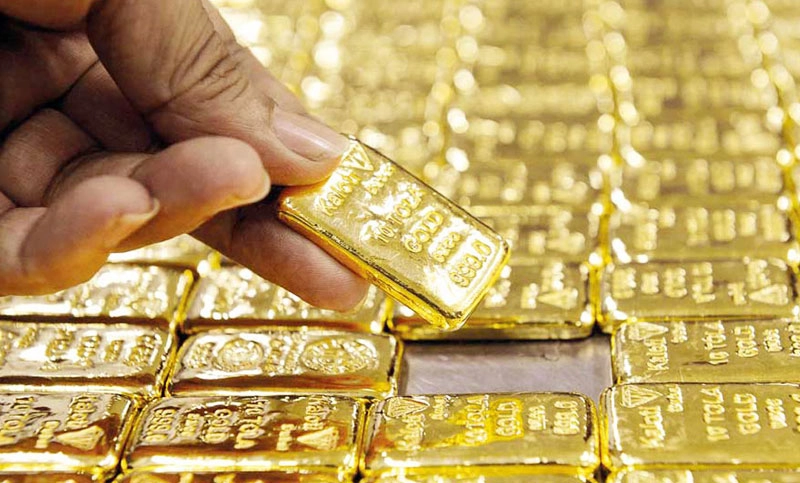
Refined gold bars are processed products with declared fineness and identifiable specifications. Investment-grade bars may come with refinery markings, serial numbers, and assay documentation, depending on the product.
Buyers should confirm that the bar and its documents match and independently verify the supplier’s credentials.
Gold Jewellery
Jewellery may contain gold mixed with other metals to achieve a particular colour, hardness, or design. Its value depends on gold content, weight, workmanship, brand, and any gemstones or other materials.
A jewellery retail price can therefore differ substantially from the underlying value of its gold.
Gold Nuggets
Gold nuggets are naturally occurring pieces of gold-bearing material. Their size, appearance, and purity vary, so an independent assessment is important before assigning a value.
Gold Dust
Gold dust is fine gold-bearing material commonly associated with artisanal mining and processing. Its appearance does not establish purity. Testing should determine the recoverable gold content and identify any other material present.
Gold Doré Bars
Doré is a semi-refined alloy that can contain gold, silver, and other metals. Its precise composition varies, so it is normally assessed and valued according to assay results, applicable processing requirements, and the terms of the transaction.
Do not assume that all doré has the same fineness or that its gross weight represents pure gold content.
Why Do Gold Prices Vary Between African Countries?
Differences between country-level gold quotations do not necessarily mean that the underlying international value of gold is different. Local costs and product specifications can create differences in the final offer.
Key reasons include:
- Exchange rates: Currency movements change the local-currency equivalent of international gold prices.
- Refining infrastructure: Access to refining and assay services can affect processing costs and the form in which gold is sold.
- Supply-chain arrangements: The number and type of intermediaries can influence the final transaction terms.
- Taxes and regulatory costs: Local taxes, royalties, licences, and export procedures vary between countries.
- Gold form and purity: Refined bars, jewellery, doré, dust, and nuggets are not directly interchangeable.
- Transport and insurance: Storage, security, insurance, and shipment requirements affect the cost of delivering gold.
- Documentation and traceability: Verifying the gold’s origin and legal status can create additional compliance requirements.
For this reason, there is no reliable rule that one African country is always the cheapest place to buy gold. The most relevant comparison is between offers for gold of comparable purity, form, origin, documentation, and delivery terms.
Is Gold Cheaper in Africa Than in Other Regions?
Not necessarily. Africa is a major gold-producing region, but being close to a mine does not automatically guarantee a lower price for a buyer.
Refined gold is influenced by international bullion markets, while the final cost of purchasing and delivering it depends on the dealer, product specification, taxes, logistics, and transaction arrangements. Unrefined material may be quoted differently from refined bullion because its purity and recoverable gold content may not yet be fully established.
International buyers should compare the complete documented cost of obtaining the gold rather than focusing only on an advertised discount. A suspiciously low quotation may reflect unverified purity, undisclosed costs, incomplete documentation, or fraud.
How to Buy Gold Safely in Africa
Buying gold requires careful checks, especially when the transaction involves raw material, cross-border trade, or a large shipment.
Verify the Seller’s Credentials: Confirm that the seller holds the licences and approvals required for the activity and jurisdiction concerned. Verify the information with the relevant regulator rather than relying solely on documents supplied by the seller.
Obtain an Independent Assay: Arrange a suitable independent test to establish the gold’s fineness. For refined bars, compare identifying marks and serial numbers with the accompanying documentation where applicable.
Check the Gold’s Origin: Ask for records establishing the source of the material and its legal supply chain. International transactions may require additional responsible-sourcing, traceability, and due-diligence records.
Request a Full Written Quotation: The quotation should identify the gold’s form, weight, declared purity, valuation method, currency, fees, taxes, delivery terms, and any conditions affecting the final amount payable.
Compare like with like. A quotation for raw gold should not be directly compared with one for certified, refined bars without accounting for the differences.
Use Traceable Payment and Secure Delivery: For significant transactions, use an appropriate documented payment method and agree on clear procedures for inspection, transfer of ownership, insurance, and delivery. Confirm who is responsible for transport, customs documentation, and other applicable costs.
Confirm Export Rules Before Shipment: Requirements differ by country, gold form, transaction type, and destination. Before arranging an international shipment, verify the necessary export approvals, customs declarations, tax obligations, and destination-country import requirements.
Avoid paying money based only on promises of unusually cheap gold. Verify the seller, the material, the documents, and the transaction terms before committing funds.
Buying Gold From Africa Through Buy Gold Bars Africa
Buy Gold Bars Africa provides a point of contact for buyers exploring gold products and sourcing opportunities across African markets. The appropriate product, documentation, and delivery arrangements depend on the type of gold requested, its source, and the destination.
Before requesting a quotation, specify whether you are interested in refined gold bars, gold nuggets, gold dust, or doré, along with your preferred purity, quantity, destination, and documentation requirements.
Our country-specific guides provide additional information about gold markets in Uganda, Congo, Kenya, South Africa, and other African countries. You can also explore our resources on gold-producing countries in Africa, gold bars from Africa, and the differences between gold bars, gold nuggets, and raw gold.
For international buyers, review the applicable import requirements for your destination before arranging delivery. Contact our team to discuss product availability and the documentation needed for your intended transaction.
FAQs About Gold Prices in Africa
What determines the gold price in Africa today? The international gold spot price is the main reference. The final local quotation also depends on gold purity, exchange rates, dealer terms, processing costs, taxes, documentation, and delivery arrangements.
Is there one gold price for every African country? No. International spot prices provide a common reference, but local currency conversion, product specifications, regulatory costs, and dealer terms can produce different quotations in different markets.
How can I check the live gold price in Africa? Use the live gold price widget on this page to monitor international gold market movements. Confirm the relevant unit, currency, and purity before comparing the displayed reference with a local dealer’s quotation.
Does 24K gold have the same price as 18K gold? No. The underlying gold content differs. The actual value depends on the product’s verified fineness and weight, as well as any applicable premiums, fees, or other costs.
Is raw gold priced in the same way as refined gold bars? Not necessarily. Raw gold, dust, nuggets, and doré may require an assay and further processing. Their valuation depends on recoverable gold content and the transaction’s processing and compliance requirements.
Which African country is the cheapest for buying gold? There is no country that is consistently the cheapest for every type of gold or buyer. Compare equivalent products using verified purity, documentation, applicable costs, and delivery terms before deciding.
How can I verify gold before buying it? Check the seller’s credentials, arrange an independent assay, confirm the weight and declared fineness, review the source documentation, and verify that any certificates match the gold being offered.
Can gold be exported from African countries? Gold export is subject to the applicable laws and procedures of the country of origin and the destination. Requirements may include licences, assay records, proof of origin, customs declarations, taxes, and other approvals. Confirm the current rules before arranging shipment.
Get a Gold Quotation Based on Current Market Conditions
The live gold price provides a useful starting point, but a reliable quotation must also account for purity, weight, product form, documentation, and delivery requirements.
Use the live widget to follow international market movements, compare documented offers carefully, and verify the seller and applicable regulations before completing a transaction.
Contact Africa Gold Suppliers to discuss your gold requirements and explore available sourcing and delivery options.