
Gold Bullion Rounds Explained: Are They Worth Buying in 2026?
What are gold bullion rounds, and how do they compare to coins and bars? A clear guide to purity, premiums, and verification — plus how to buy certified 24K African gold direct from the source.
Gold bullion rounds look almost identical to gold coins, but the two are legally different products — and understanding that difference is the first thing to get right before you buy either one.
This guide explains exactly what gold bullion rounds are, how they compare to coins and bars on purity and premium, how to verify a round is genuine, and where certified investment-grade gold — rounds, bars, or otherwise — should actually come from if you want the best price for the purity you’re paying for.
What Are Gold Bullion Rounds?
A gold bullion round is a privately minted, round, flat piece of gold — shaped like a coin, but without legal tender status. Only a national government, through its official mint, can issue legal tender gold coins (think the South African Krugerrand, the Canadian Maple Leaf, or the British Sovereign). Private mints produce rounds instead: same general shape, similar purity, but no face value and no government backing as currency.
That distinction is exactly why rounds tend to cost less than coins of equivalent weight and purity. A coin’s premium reflects government minting costs, legal tender status, and — for collectible issues — scarcity.
A round’s premium reflects almost nothing but the gold itself and the private mint’s production cost, which is why gold bullion rounds are consistently one of the lowest-premium ways to buy physical gold in bulk.
Most investment-grade rounds are struck in .999 or .9999 fine gold — the same purity range used for 24K gold bars — and are stamped clearly with the mint’s mark, the weight (commonly 1 oz, though fractional ½ oz and ¼ oz rounds exist), and the purity.
Collectible rounds, carrying artistic or historic designs, generally carry a higher premium than plain investment-grade rounds, which are priced to stay as close to spot as possible.
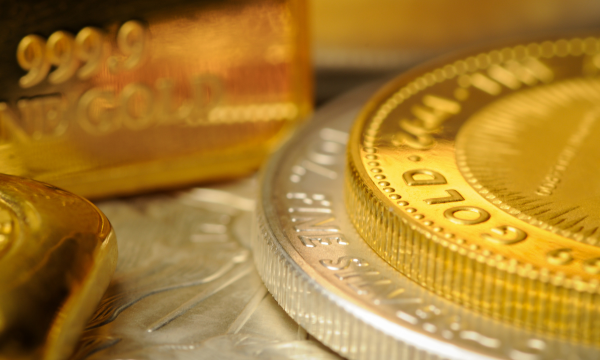
Gold Rounds vs. Gold Coins vs. Gold Bars
All three can share the same purity — the difference is legal status, premium, and how each trades on the secondary market:
- Gold coins are minted by national governments, carry legal tender status and a face value, and usually command the highest premium of the three because of that official backing and, in some cases, collectible demand. Our guide on buying gold coins and our breakdown of South African Krugerrand gold coins cover this category in more depth.
- Gold rounds are privately minted, share similar purity to coins, but carry no legal tender status — which is exactly why they trade at a lower premium and appeal to investors who care about ounces of gold owned rather than the coin’s collectible value.
- Gold bars — the category 24K gold bars fall into — typically carry the lowest premium per ounce of all three, especially at larger weights, because bar production is the most cost-efficient minting format and bars carry no artistic tooling costs. If you’re prioritising the lowest possible cost per ounce over form factor, a bar usually beats a round, and a round usually beats a coin.
Where you land on that spectrum comes down to what you actually want from the purchase: liquidity and easy trading favour rounds and coins; the lowest possible premium favours bars, particularly for larger allocations. You can compare purity grades directly across our gold bar, gold nugget, and raw gold pages.
Purity: What 24K, 22K, and 18K Actually Mean
Whether you’re evaluating a round, a coin, or a bar, purity is the number that actually determines what you’re paying for:
- 24K (99.9% pure) is the investment standard — the purity used for serious bullion rounds and bars where maximum gold content matters most.
- 22K (91.6% pure) balances durability with strong intrinsic value, common in fine jewellery as well as some bullion products.
- 18K (75% pure) is more durable still and more affordable, typically used for everyday jewellery rather than investment bullion.
- Doré (roughly 80–95% pure) is unrefined gold straight from processing — not a form you’d buy as a finished bullion round, but the raw material that eventually becomes one. See our gold doré bars price page if you’re sourcing at that earlier stage of the supply chain.
Whatever the format, always confirm purity against an independent gold certificate rather than taking a seller’s stamped marking alone as proof.
How to Verify a Gold Round Is Genuine
Verification matters more with rounds than with government coins, precisely because there’s no national mint standing behind the product. Before buying:
- Check the stamped details. Genuine rounds carry a clear mint mark, weight, and purity stamp — inconsistent or blurry stamping is an immediate red flag.
- Weigh and measure it. A genuine 1 oz round has a known, fixed diameter and thickness for its declared purity; a round that’s noticeably off on either dimension for its stated weight deserves a closer look.
- Ask for an assay certificate on larger purchases. Independent laboratory testing confirms purity and weight beyond what a visual inspection alone can tell you — the same standard we apply across every product we supply, covered in full in our guide on buying genuine gold.
- Compare the price against live spot. A round priced meaningfully below the current spot rate for its purity is the clearest scam signal in the bullion market — genuine gold, in any form, doesn’t sell materially under spot. Check 1 oz 24K gold pricing and the current price of 22k gold before you negotiate anything.
- Buy from a verifiable, licensed source. Whatever the format, the underlying question is the same one that applies to any bullion purchase: can the seller prove where the gold came from and that it’s genuinely the purity claimed? Our full guide on how to buy gold online safely walks through the complete verification process.
Why Buy African Gold Instead of a Retail Round
Here’s the part worth being direct about: gold rounds from Western private mints are a legitimate product, but their price still includes minting, design tooling, and retail distribution costs layered on top of the metal itself.
Gold sourced directly from Africa’s producing regions — Uganda, the Democratic Republic of Congo, Kenya, Tanzania, Ghana, and Mali — skips several of those layers entirely, because you’re buying closer to the mine rather than through a chain of intermediary distributors.
Africa Gold Suppliers Limited is a fully registered gold and mineral supplier based in Kampala, Uganda, with over a decade in the gold and timber trade and established sourcing links across Uganda and the DRC.
We supply certified 24K, 22K, and 18K gold in bar, nugget, and raw form — every shipment backed by independent assay and certification confirming purity and weight before it ever leaves our hands.
If a round or coin’s main appeal to you is owning verified, investment-grade gold at the lowest achievable premium, a certified gold bar or gold nugget sourced mine-direct is very often the more cost-efficient way to get there.
We also supply silver bullion bars and silver bullion coins for investors diversifying beyond gold — our gold vs. silver comparison is worth reading if you’re weighing the two.
How to Buy Gold Direct from Africa Gold Suppliers
Our process follows the same verification standard this guide recommends for any bullion purchase, round or otherwise:
- Sourcing — gold is extracted or purchased from verified sources in Uganda and the DRC.
- Assay and certification — independent testing confirms purity and weight before any shipment moves.
- Export documentation — licensing, royalties, and export permits are prepared and filed correctly.
- Secure transport — insured logistics move your order under full customs declaration and tracking.
- Delivery — your gold arrives with complete documentation, ready for customs clearance at your end.
We ship to buyers internationally, including established routes to Dubai, Canada, and Switzerland, with full documentation on every order. Full details on our sourcing and export process are on our services page, and our FAQs about buying gold in Africa cover the questions we get asked most.
FAQs – Gold Bullion Rounds
Are gold bullion rounds a good investment? They can be, particularly for investors who want gold’s purity without a government coin’s added premium. Just weigh that against gold bars, which typically carry an even lower premium per ounce, especially at larger order sizes.
What’s the difference between a gold round and a gold coin? Legal tender status. Coins are minted by national governments and carry a face value; rounds are privately minted, share similar purity, but have no legal tender status — which is exactly why they cost less.
How do I know a gold round is genuine? Check the stamped mint mark, weight, and purity; verify the weight and dimensions match the declared purity; and for any purchase of real size, insist on an independent assay certificate rather than relying on the stamp alone.
Is African gold the same purity as Western-minted rounds? Yes — certified 24K African gold is refined to the same 99.9% standard used globally for investment bullion. Purity comes from refining quality, not the country the gold happens to be minted or sourced in.
Can I buy gold bars instead of rounds for a lower premium? Yes, and for larger allocations this is usually the better move. Browse our gold bar range or contact our team with the weight and purity you’re after.
Buy Certified Gold Direct from the Source
Gold bullion rounds are a legitimate, lower-premium entry point into physical gold — but they’re still one step removed from the mine, and every step in the chain adds cost.
If you’d rather buy certified 24K, 22K, or 18K gold direct from a licensed African source, with full assay documentation and export paperwork on every shipment, that’s exactly what Africa Gold Suppliers Limited does. Contact our team today to discuss the weight, purity, and format that fits your investment — bar, nugget, or bullion.
Related Pages
Gold & mineral products
- Gold Bar
- Gold Nugget
- Raw Gold
- 24K Gold
- Gold Doré Bars Price
- Silver Bullion Bar
- Silver Bullion Coins
- Gold vs. Silver
Coins & pricing
- Buying Gold Coins
- South African Krugerrand Gold Coins
- 1 oz 24K Gold Price
- What Is the Price of 22K Gold
Guides
Buying by destination
Company