
Africa Gold Refinery Top Guide — Facilities, Processes, Regulations & How to Buy
| AGR DAILY CAPACITY
600 kg/day African Gold Refinery, Uganda |
RAND REFINERY FOUNDED
1920 World’s largest single-site refinery |
AFRICA GOLD OUTPUT 2024
690 t 27% of world supply |
TOP PURITY ACHIEVABLE
99.99% 24K LBMA-standard gold |
INTRODUCTION
What Is an Africa Gold Refinery — and Why Does It Matter for Every Gold Buyer and Investor?
Africa is home to some of the world’s most important gold refineries — facilities that transform raw gold ore, doré bars, artisanal gold dust, and scrap metal into high-purity, investment-grade gold bars and bullion.
Understanding how Africa gold refinery operations work, which refineries matter most, what purity standards they achieve, and how to legally purchase refined gold from them is essential knowledge for any international investor, jewellery manufacturer, commodity trader, or institution looking to buy African gold at source.
Africa produced over 690 metric tonnes of gold in 2024 — approximately 27% of the entire world’s supply. Yet for much of the continent’s history, that gold left in semi-processed form, with value addition happening in Swiss, UK, and UAE refineries.
That is changing rapidly. In 2025, a network of licensed, professionally managed African gold refineries is processing gold on-continent, adding value locally, and connecting international buyers directly to refined bars certified to international standards.
The rise of African gold refining is not just an economic story — it is the most important structural shift in the global gold supply chain of the last decade.
This guide tells you everything you need to know: the major gold refineries in Africa, their locations and capacities, the gold refining process, purity standards, regulatory environment, how to buy refined gold from Africa, and — most importantly — how Africa Gold Suppliers Limited connects you directly to this supply chain with full legal compliance, certified documentation, and insured international delivery.
THE FLAGSHIP REFINERY
African Gold Refinery (AGR) Uganda — East Africa’s Leading Gold Refinery
When investors, traders, and refiners search for the most prominent Africa gold refinery in East Africa, one name consistently leads the answer: African Gold Refinery Limited (AGR), based in Entebbe, Uganda. Established in 2014, AGR is Uganda’s leading gold refinery — a fully licensed and regulated precious metals processing facility that provides refining, assaying, and export services for gold across Africa. It is one of the most important gold refining facilities on the entire continent.
AGR Capacity and Technical Specifications
The scale of AGR’s gold refining operation in Uganda is remarkable. Within four years of operations, AGR proved that it has the competence to produce up to 600 kilograms of high-finished fine-gold kilo-bars per day — a refining capacity that rivals established refinery facilities in Switzerland and the UAE.
AGR’s state-of-the-art facilities offer the highest quality standards in line with gold refining, assaying, manufacturing, and broader service to the mining industry across the continent.
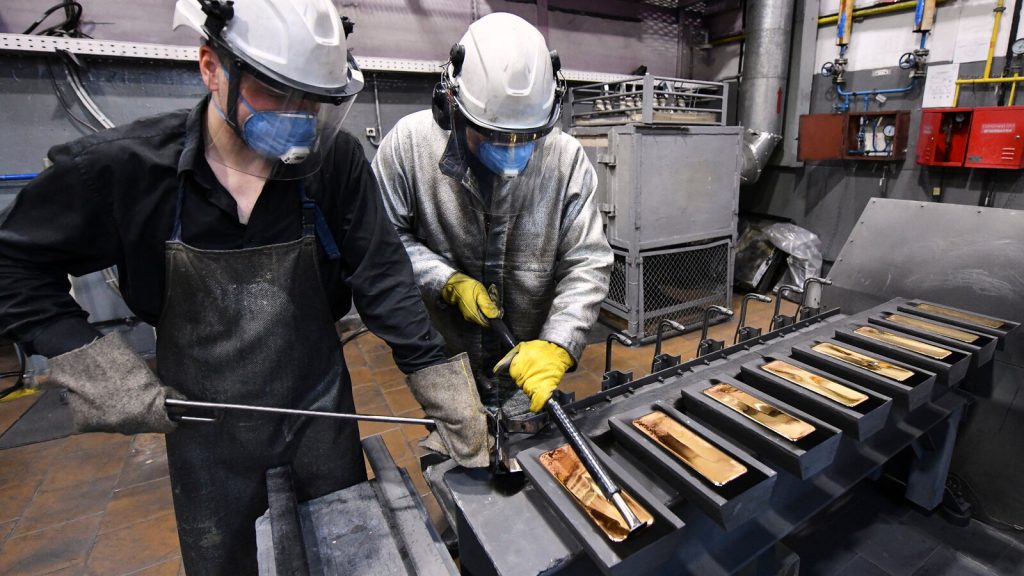
AGR specialises in melting of gold and silver through a High Performance Electric Induction Furnace — an environmentally friendly technique that converts large lots of gold and silver into grains or bars of several sizes and purity levels.
The refinery has exclusively developed its own chemical process of gold and silver refining, using advanced systems to purify scrap gold and silver as well as high-grade doré. The result: gold refined to 99.99% purity — the international standard for investment-grade bullion bars.
AGR’s Role in the Regional Gold Supply Chain
The African Gold Refinery in Entebbe is strategically positioned to serve not just Uganda’s domestic gold production, but the entire East and Central African regional supply chain.
Uganda sources gold from the DRC, South Sudan, and Rwanda — gold from neighbouring countries is channelled through AGR for refining before export.
This positions AGR as the East African gold refining hub for the entire sub-region, processing material from some of the richest artisanal mining zones on the continent.
AGR goods are fully insured from the point of delivery up to the time of shipment until it reaches the destination. An authority assigned by the government monitors each and every single gram entering AGR facilities, ensuring that whatever quantity is received is processed and then exported.
Everything is documented and declared — the production and export figures are exponentially increasing as the refinery continues to grow its throughput.
| AGR Key Facts — African Gold Refinery Uganda
Founded: 2014 | Location: Entebbe, Uganda Daily Refining Capacity: Up to 600 kg of fine-gold kilo-bars per day Purity Achieved: 99.9%–99.99% (24K investment-grade bullion) Services: Refining, assaying, bullion casting, export logistics, investment advisory Government Oversight: Each gram entering AGR is monitored by a government-assigned authority Insurance: All goods fully insured from delivery through international shipment Regional Role: Processes gold from Uganda, DRC, South Sudan, Rwanda, and Tanzania |
THE CONTINENTAL GIANT
Rand Refinery South Africa — The World’s Largest Integrated Gold Refinery
No comprehensive guide to Africa gold refinery operations can proceed without addressing the Rand Refinery in Germiston, near Johannesburg, South Africa.
Established in 1920 by the Chamber of Mines of South Africa, Rand Refinery is the world’s largest integrated single-site precious metals refining and smelting complex.
For more than a century, it has been the backbone of the African gold export trade — and in 2025 it remains the continent’s most important gold processing facility by value.
The Rand Refinery in Germiston is the largest single-site gold refining complex in the world. Virtually all South African gold passes through it before export, ensuring bullion purity that meets international trading standards.
Rand Refinery refines bullion for companies such as AngloGold Ashanti and Harmony Gold Mining, as well as producers from Ghana, the Democratic Republic of Congo, and Tanzania, which it sells on their behalf on the London market.
The refined gold produced by Rand Refinery meets the LBMA Good Delivery standard — the benchmark that unlocks access to Swiss vault storage, London bullion banks, and institutional gold buyers worldwide.
South Africa also exports gold in the form of the Krugerrand coin — one of the world’s most popular bullion coins since 1967 — which is produced at Rand Refinery. This gives South Africa a unique financial export stream on top of standard bullion sales, further boosting export value.
As of 2024–25, South Africa remains Africa’s largest gold exporter by value, despite Ghana surpassing it in production volume — a distinction that flows directly from Rand Refinery’s value-addition capability.
THE FULL LANDSCAPE
Major Gold Refineries Across Africa in 2026 — Country by Country
Beyond AGR in Uganda and Rand Refinery in South Africa, a rapidly growing network of licensed gold refineries in Africa is transforming the continent’s ability to process and export gold at international standards. Understanding who operates where is essential for buyers sourcing refined gold across different jurisdictions.
Ghana — Gold Coast Refinery and GoldBod-Licensed Facilities
Ghana is Africa’s largest gold producer by volume in 2025, projecting approximately 159 tonnes of output. Ghana’s gold refining sector is regulated by the Minerals Commission and, from 2025, the Ghana Gold Board (GoldBod).
Gold Coast Refinery is Ghana’s first gold refinery, providing gold refining, assaying, and export services, recognised by international markets and offering competitive prices for gold sellers.
It operates in partnership with the Precious Minerals Marketing Company (PMMC) and aims for LBMA accreditation.
All gold refineries in Ghana must be licensed as Precious Minerals Refineries, adhere to PMMC standards, comply with local content laws, and satisfy the Environmental Protection Agency (EPA) and the Minerals and Mining Act, 2006 (Act 703).
Uganda — A Network of Licensed Refineries Beyond AGR
Uganda has developed into a genuine regional gold refining hub in East Africa, with a network of several licensed refineries beyond AGR. These include Niton Refinery, GAZHAS (U), Afriswiss, Oasis, Kenexa, and emerging players like Glossy Africa — each offering services ranging from assaying and smelting to bullion casting, vault storage, and export logistics.
In 2023 alone, Uganda’s refined gold exports skyrocketed from approximately $201 million in 2022 to $2.3 billion, driven by operations including the Chinese-backed Wagagai plant and additional capacity from local refineries.
The spread of refining capacity helps reduce bottlenecks, improves competition, and has brought costs down while raising quality across the board.
The Wagagai Mining facility in Alupe, Busia District — a $200 million joint venture between Uganda and China’s Liaoning Hongda Group — is designed to process up to 5,000 tonnes of gold ore per day, with an annual refined gold output of 1 to 1.5 tonnes at 99.99% purity.
The completion of the beneficiation plant in November 2024 marked a significant milestone, enabling the extraction of gold from rock ores and positioning Uganda further as a regional refining hub for East and Central Africa.
Tanzania — Emerging Refinery Sector
Tanzania is East Africa’s leading gold producer, with output of approximately 61 tonnes in 2024, driven by major mines including Geita, Bulyanhulu, and North Mara.
Tanzania’s gold refining sector is developing rapidly, with Kalgold elevated as a key regional player processing gold from artisanal and small-scale miners.
The government’s Mining Commission oversees refinery licensing, mandates a royalty of 6% on refined gold, requires local partnership or majority local ownership for approval, and may hold shares in strategic refining projects.
Tanzania’s government has also mandated that miners and dealers sell 20% of output to the government at market prices as part of its formalisation strategy for the refining sector.
Mali and West Africa — Developing Refinery Capacity
Mali has been developing significant gold refinery capacity in West Africa, with government plans for a facility with an annual capacity of 200 tonnes of gold by late 2026 — nearly four times Mali’s current refining output, with the government holding a controlling 62% stake.
Despite political challenges in 2025, Mali’s gold sector — producing approximately 60–70 tonnes annually — continues to drive refinery investment.
Across the broader Sahel region, Burkina Faso and Niger are adjusting mining laws to mandate domestic gold refining, signalling that value-addition on the African continent is no longer optional but central to national mineral strategy.
HOW GOLD REFINING WORKS
The Africa Gold Refinery Process — From Raw Ore to Investment-Grade Bullion Bar
Understanding the gold refining process in Africa helps buyers appreciate both the quality of the gold they receive and why purity certification matters so much. Here is how raw gold is transformed into the certified bars that international buyers purchase:
Step 1: Intake and Compliance Assessment
Before any African gold refinery accepts material for processing, a rigorous intake and compliance assessment must occur. At AGR and Rand Refinery, the principle is explicit: before commencing the refining and melting process, the refinery endures an assessment of whether customers or business partners have carried out proper due diligence.
AML/KYC verification, proof of gold source, mining licences, and purchase records are required at intake. A government-assigned authority monitors each gram entering the facility.
Step 2: Assaying — Purity Verification
The submitted gold is sampled and tested for purity at an accredited assay laboratory. Fire assay (cupellation) is the gold industry’s traditional standard: a small sample is melted with lead, base metals are burned off, and the remaining bead is weighed to determine gold content.
XRF (X-ray fluorescence) scanning provides faster but slightly less precise results. The resulting gold assay certificate confirms the karat rating, weight in troy ounces, and fineness percentage — the document that must accompany every subsequent step.
Step 3: Smelting and Chemical Refining
The refining itself proceeds through several possible technical pathways, depending on the purity of the input and the target output purity.
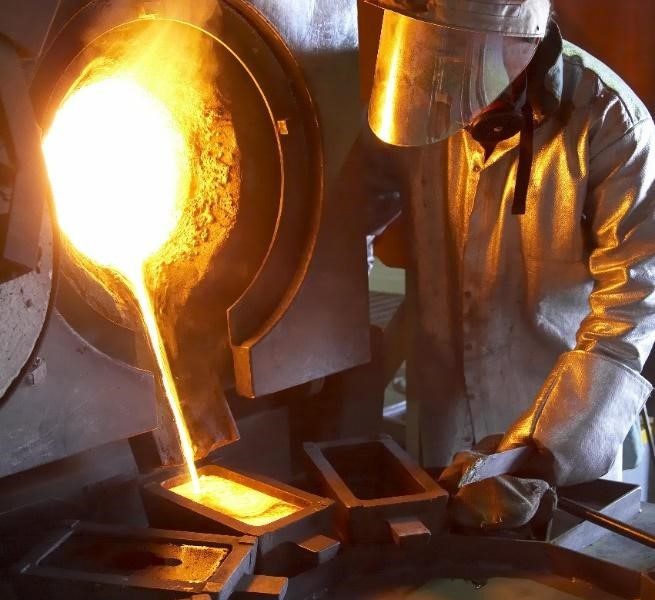
At AGR in Uganda, gold is melted via High Performance Electric Induction Furnace and then subjected to a proprietary chemical refining process to purify scrap gold, silver, and high-grade doré.
At Rand Refinery in South Africa, the Miller Chlorination process removes base metals and silver, followed by Wohlwill electrolysis for 99.99% final purity. The specific method determines both the cost and the achievable purity grade.
Step 4: Casting and Bar Production
Refined gold is cast into bars of specified sizes — 100g, 500g, 1kg, or up to 12.44kg LBMA Good Delivery bars. Each bar is stamped with the refinery’s hallmark, a unique serial number, the fineness grade (e.g. 999.9), and the weight in troy ounces.
At Rand Refinery, bars are certified to LBMA Good Delivery standards, enabling direct placement into Swiss vault storage or London bullion bank accounts. At AGR Uganda, bars certified to 99.9%–99.99% are exported to buyers in the UAE, India, Switzerland, and beyond.
Step 5: Export Documentation and Secure Logistics
The final stage of the African gold refinery export process involves compiling the complete documentation package and arranging secure international logistics. Export permits from DGSM (Uganda), Minerals Commission (Ghana), or SADPMR (South Africa) are obtained.
Tax and royalty payments are evidenced. The gold is sealed and handled by specialist precious metals carriers — Brinks or Malca-Amit — insured at 101% of declared value and routed via air freight to the buyer’s destination.
Table 1 — Gold Refinery Purity Standards and What They Mean for Buyers
| Purity Grade | Karat | Fineness | Refining Method | Best Use Case | Key Refineries |
| Investment Grade (LBMA) | 24K | 999.9 (99.99%) | Wohlwill Electrolysis | Swiss vaults, central banks, institutional | Rand Refinery, AGR Uganda |
| High Purity Bullion | 24K | 999 (99.9%) | Miller + Wohlwill | Investment bars, export bullion | AGR, Wagagai, GoldBod Ghana |
| Doré Bar Output | 22–23K | 916–958 | Fire Assay + Smelting | Refinery feedstock, intermediate | Artisanal mines → refineries |
| Jewellery Grade | 22K | 916 (91.6%) | Chemical Refining | Jewellery manufacturing | Ghana, Uganda refineries |
| Artisanal Raw Gold | Variable | 80–95% | Minimal / Panning | Refinery input; not for direct trade | Source: ASM mines, Karamoja |
| Investment-grade 24K / 999.9 gold is required by LBMA, Swiss vaults, and institutional buyers. AGR Uganda and Rand Refinery South Africa are the continent’s primary producers of this standard. | |||||
Table 2 — Major African Gold Refineries: Capacity, Purity and Services (2025)
| Refinery & Country | Est. | Capacity | Purity | Certification | Key Services |
| Rand Refinery — South Africa | 1920 | World’s largest | 99.99% | LBMA Good Delivery | Refining, assay, Krugerrand minting, export |
| African Gold Refinery (AGR) — Uganda | 2014 | 600 kg/day | 99.99% | Govt. licensed | Refining, assay, bullion casting, export advisory |
| Wagagai Mining — Uganda Busia | 2024 | 5,000t ore/day | 99.99% | Govt. licensed | Mining + refining + smelting + export |
| Gold Coast Refinery — Ghana | Recent | Moderate | 99.5%+ | PMMC-aligned | Refining, assay, export, LBMA-seeking |
| Niton Refinery — Uganda | 2020s | Growing | 99.9%+ | DGSM licensed | Assay, smelting, bullion, export |
| GAZHAS (U) — Uganda | 2020s | Growing | 99.9%+ | DGSM licensed | Assay, refining, East Africa supply |
| Kalgold — Tanzania | 2020s | Mid-scale | 99%+ | Mining Commission | ASM refining, doré, export |
| Mali Government Refinery | 2026 planned | 200 t/yr target | 99%+ | Ministry of Mines | Domestic production refining |
| Only Rand Refinery currently holds LBMA Good Delivery accreditation among African refineries. AGR Uganda and others produce LBMA-equivalent purity but are not yet formally accredited. This has not prevented them finding markets in Dubai, India, and Europe. | |||||
HOW TO BUY
How to Buy Gold from an Africa Gold Refinery — What Every International Buyer Needs to Know
For international buyers, investors, and commodity traders, the pathway to purchasing refined gold from an African gold refinery involves several critical steps. Working with a licensed intermediary who has established relationships with these refineries dramatically simplifies the process and eliminates the most common failure points.
Step 1: Choose the Right African Refinery for Your Needs
The first decision is which African gold refinery best matches your product requirements. For LBMA-standard 24K gold bars for Swiss vault or London bank placement, Rand Refinery in South Africa remains the only fully accredited African option.
For investment-grade 24K bullion at competitive mine-direct pricing in East Africa, AGR Uganda’s 600 kg/day output and government-monitored supply chain makes it the leading choice.
For buyers sourcing gold in West Africa, Ghana’s PMMC-GoldBod channel and Gold Coast Refinery are the appropriate route. Your choice determines both the documentation package and the regulatory jurisdiction you operate under.
Step 2: Verify Licensing and Compliance
Before engaging any African gold refinery for a purchase, always verify the facility’s licensing directly with the relevant government authority: DGSM for Uganda, GoldBod/Minerals Commission for Ghana, SADPMR for South Africa, Mining Commission for Tanzania.
A licensed refinery will proactively provide its licence number and encourage verification. Never purchase refined gold from a facility that cannot evidence current, valid government licensing — it is illegal, and the gold cannot be legally exported.
Step 3: Confirm Purity with an Independent Assay
Even purchasing from a reputable African gold refinery requires an independent assay to confirm purity before finalising payment. Request that the transaction include third-party assay verification from an accredited laboratory — SGS, Bureau Veritas, or the refinery’s government-monitored assay facility.
The resulting assay certificate must state the fineness (e.g. 999.9), weight in troy ounces and grams, and lot reference number.
This is the document that will clear your import customs authority and satisfy any institutional buyer or vault receiving the gold.
Step 4: Secure Payment Through Escrow
Payment for gold purchased from an African gold refinery should always be structured through an escrow mechanism: 30% advance payment upfront via SWIFT bank transfer, 70% on release after assay is confirmed and export documentation is complete.
This structure protects both buyer and seller, and is the standard used by every reputable gold trading house operating in Africa.
Cash transactions are not only impractical for large gold purchases — they are a red flag for AML compliance and will complicate customs clearance at your destination country.
Step 5: Export Documentation and Secure Logistics
Once assay is confirmed and payment secured, your African gold refinery export package must include: the export permit from the relevant authority, assay certificate, Certificate of Origin, commercial invoice, tax and royalty payment receipts, customs declaration form, air waybill, and insurance certificate.
The gold is sealed by a government monitor and transported by armoured Brinks or Malca-Amit carriers to the international airport — Entebbe for Uganda, Kotoka for Ghana, OR Tambo for South Africa — and shipped to your destination with full cargo insurance.
| CRITICAL WARNING — Fake Refinery Operators
The success of African gold refineries has attracted fraudulent operators claiming to represent legitimate refinery facilities. Common scams include fake refinery certificates, misrepresented purity, advance-fee fraud targeting first-time buyers, and non-existent facilities claiming AGR or Rand Refinery affiliation. Always verify directly with government licensing portals, insist on video verification of facilities, and never wire funds without a signed, notarised Sales and Purchase Agreement specifying all transaction terms and dispute resolution mechanisms. |
Table 3 — Gold Refinery Licensing Regulators by Country (2026)
| Country | Licensing Authority | Assay Standard | Export Auth. | Key Legislation |
| South Africa | SADPMR / DMRE | Rand Refinery / SANAS labs | SARS | Precious Metals Act 2005; MPRDA |
| Uganda | DGSM — Directorate of Geological Survey and Mines | DGSM-approved labs / AGR | Uganda Revenue Authority (URA) | Mining and Minerals Act 2022 |
| Ghana | Minerals Commission / Ghana Gold Board (GoldBod) | PMMC labs / GoldBod | Ghana Revenue Authority (GRA) | Minerals & Mining Act 2006; Gold Board Act 2025 |
| Tanzania | Mining Commission | Tanzania Minerals Audit Agency (TMAA) | Tanzania Revenue Authority (TRA) | Mining Act; Mining (Mineral Trading) Regs |
| DR Congo | CEEC / Ministry of Mines | CEEC labs | OFIDA Customs | Mining Code 2018 |
| Mali | Ministry of Mines and Energy | Ministry-accredited labs | Direction Générale des Douanes | Mining Code (revised 2023) |
| Always cross-check refinery and exporter licences directly with the above authorities before committing funds. Verified licence numbers can be confirmed on official government portals. | ||||
THE INVESTMENT PERSPECTIVE
Why Buying Gold from an African Refinery Makes Strategic Financial Sense in 2026
The case for buying gold from an African gold refinery rather than from a Swiss mint, US dealer, or retail channel is built on three converging advantages: price, purity, and provenance.
Price Advantage — Mine-Direct African Gold Pricing
When you purchase gold directly from or through an African gold refinery, you eliminate the wholesale, import, and retail distribution layers that inflate gold prices by 5–10% in Western markets.
At 2025 spot prices of approximately $3,665 per troy ounce ($118 per gram), the premium charged by a Swiss mint or US bullion dealer of 3–8% over spot translates to $3.54–$9.44 per gram of unnecessary cost.
Mine-direct African gold from a licensed refinery, sold through a compliant intermediary, typically carries a premium of just 1.2–1.8% over the LBMA spot price — saving $1.90–$7.54 per gram. On a one-kilogram purchase, that is a saving of $1,900–$7,540.
Purity Equivalence — Same Standard, Lower Cost
The gold produced by AGR Uganda, Rand Refinery South Africa, and Gold Coast Refinery Ghana meets the same 99.9%–99.99% purity standards required by every reputable institutional buyer, vault, and jewellery manufacturer worldwide.
The metal is chemically identical to a PAMP Suisse bar or a Perth Mint bar — the only difference is the refinery hallmark. For buyers whose criterion is purity rather than brand recognition, certified African gold bars represent the same value at a meaningfully lower cost.
Supply Chain Transparency and Ethical Sourcing
The rise of government-monitored African gold refineries in 2025 has significantly enhanced supply chain transparency. At AGR Uganda, each gram is monitored by a government-assigned authority from intake through export.
Everything is documented and declared. This is precisely the kind of traceable, ethical gold sourcing that ESG-focused institutions, EU Conflict Minerals Regulation compliers, and responsible supply chain managers require.
Buying gold from a licensed African refinery with proper documentation satisfies every international compliance standard — OECD Due Diligence, FATF AML requirements, and LBMA Responsible Gold Guidance.
| “The rise of African gold refining is the most important structural shift in the global gold supply chain of the last decade. For buyers willing to engage directly and compliantly, it represents an unmatched opportunity to secure investment-grade gold at source-level pricing.”
— Africa Gold Suppliers Limited — 2025 Market Assessment |
YOUR INVITATION
Buy Refined African Gold With Africa Gold Suppliers Limited — The Trusted Gateway to Africa’s Gold Refineries
You now understand the Africa gold refinery landscape completely: the facilities, the processes, the purity standards, the regulatory framework, and the investment case.
There is only one conclusion: the most powerful thing you can do with this knowledge is act on it — and act on it with the right partner.
Africa Gold Suppliers Limited is a licensed gold trading and export company with direct relationships across Africa’s leading gold refineries — including AGR Uganda, Ghana’s GoldBod-compliant supply chain, and Rand Refinery-certified South African bullion.
We are the bridge between Africa’s richest gold refinery network and international buyers who want the best gold at the most competitive prices, with zero regulatory risk.
| What You Get When You Buy Refined African Gold Through Africa Gold Suppliers Limited:
✓ Direct access to AGR Uganda, GoldBod Ghana, and South African Rand Refinery supply chains ✓ 24K gold at 99.99% purity — certified by government-monitored assay at source ✓ Mine-direct pricing at 1–3% above LBMA spot — 10–15% below retail channel premiums ✓ Full export documentation package: export permit, assay certificate, Certificate of Origin, commercial invoice, tax receipts, AML/KYC compliance ✓ Insured Brinks or DHL air freight to the USA, UK, UAE, Switzerland, India, Singapore, and beyond ✓ 30/70 escrow-protected payment structure — funds only released after assay confirmation ✓ Full refund guarantee if purity fails third-party assay on arrival ✓ 24/7 expert support and investment advisory from licensed African gold professionals Minimum order: 1 gram. Maximum: 1,000 kilograms. Individual investors, jewellery manufacturers, commodity traders, and institutional buyers all welcome. Contact Africa Gold Suppliers Limited today — visit africagoldsupplierslimited.com or WhatsApp our team to receive a live LBMA-referenced quote within 24 hours. No obligation. Just the finest gold Africa’s refineries produce, at the fairest price on the market, delivered to your door. |
Africa’s gold refineries are producing more, refining to higher standards, and exporting more transparently than at any point in the continent’s mining history.
Gold is up over 30% year-to-date in 2025. The buyers who establish direct, compliant relationships with Africa’s refinery supply chain now are capturing value that others are still paying retail premiums to access.
Africa Gold Suppliers Limited is your gateway. The gold is refined. The documentation is ready. The only decision left is yours.